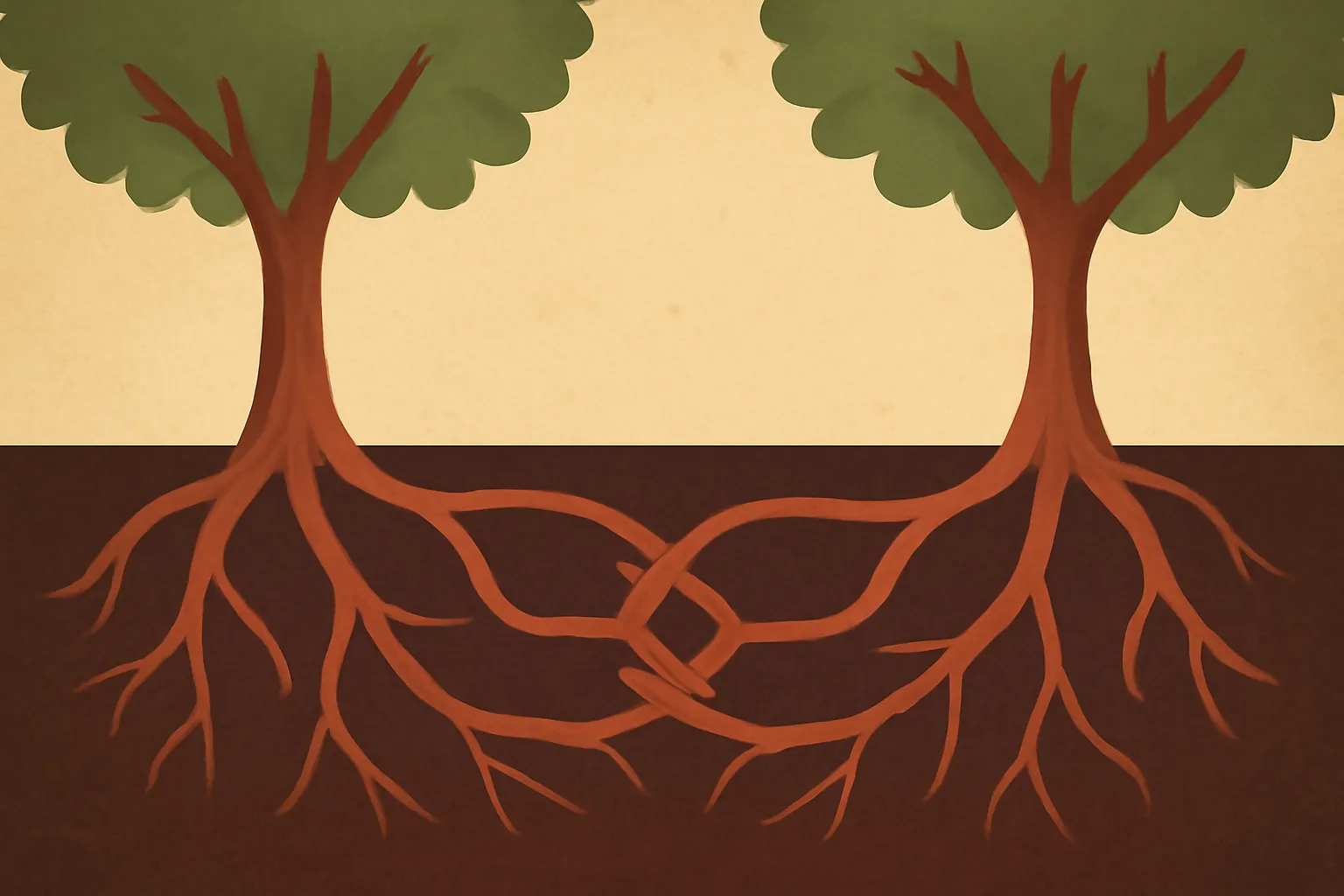
Plants do not live in isolation. Beneath the soil, a bustling, dynamic network links roots, fungi, bacteria, and even other plants. This underground connectivity is not a metaphor but a real, observable phenomenon that shapes how plants acquire nutrients, defend themselves, and respond to changing environments. When we talk about roots connect, we are describing a suite of interactions that allow plant root systems to link with each other and with their surrounding biotic community. These connections enable the sharing of water, nutrients, signaling compounds, and even carbohydrates, creating a web of exchange that sustains entire ecosystems. In this article, we explore how root networks form, how they function, and why they matter—from forests and grasslands to home gardens and urban farms.
The Underground Network: How Roots Connect
Root connections arise from a combination of direct physical associations, chemical signaling, and symbiotic partnerships. Three core pathways stand out as the main channels through which root linkages emerge:
Direct root-to-root interfaces: In some cases, roots from neighboring plants physically touch and exchange resources through soil pores, capillary action, or shared tissues in rare circumstances. The extent of direct contact varies among species and soil conditions, but even opportunistic contact can set the stage for local resource sharing.
Fungal networks (mycorrhizae): The most influential and well-studied channel is the mycorrhizal network, in which fungal hyphae connect to the roots of many plants. These filaments extend far into the soil, connecting disparate root systems via a common fungal network. Through these mycorrhizal linkages, plants trade nutrients like phosphorus and nitrogen, and receive moisture, while the fungi receive carbohydrates produced by the plants through photosynthesis.
Rhizosphere interactions and microbial mediation: The zone around the root, the rhizosphere, is teeming with bacteria, fungi, and other microorganisms. These microbes metabolize root exudates and, in turn, influence nutrient cycling and disease suppression. Some microbes act as intermediaries, helping to ferry nutrients across plant neighbors or signaling plants to adjust their growth strategies.
These pathways collectively underpin what scientists often call the wood-wide web—a poetic term for the interconnected underground networks that link trees and other plants. While many people picture a single, centralized system, the real picture is a mosaic of overlapping connections that vary with plant type, microbial community, soil texture, moisture, and nutrient status. When we say roots connect, we’re embracing this mosaic view of belowground cooperation and competition.
Rhizodeposition and Chemical Communication
One of the most important mechanisms that enhances root connectivity is rhizodeposition—the release of organic compounds from roots into the surrounding soil. These exudates include sugars, amino acids, organic acids, and a variety of signaling molecules. They serve multiple roles:
Attracting beneficial microbes that form symbiotic associations, such as nitrogen-fixing bacteria and mycorrhizal fungi.
Modulating the structure and function of the microbial community in the rhizosphere to favor nutrient availability.
Sending chemical signals that influence neighboring plants’ growth, defense responses, and even root architecture.
Through rhizodeposition, plants establish chemical dialogues with their environment. This signaling can coordinate resource use, dampen or amplify competitive pressures, and contribute to the overall stability of plant communities. When we discuss root-to-root communication, we are often referring to a combination of direct contact, shared mycorrhizal networks, and these subtle chemical cues that permute growth patterns across the neighborhood.
Mycorrhizal Networks: The Wood-Wide Web Explained
Perhaps the most famous and important component of root networks is the mycorrhizal symbiosis—a partnership between plant roots and fungi. There are two major categories worth noting:
Arbuscular mycorrhizal (AM) fungi: The most common type, which penetrates the root cortical cells and forms arbuscules inside. AM fungi are widespread in agricultural crops and many temperate grasses and trees. They primarily assist with phosphorus uptake and improve drought tolerance, while receiving carbohydrates from the host plant.
Ectomycorrhizal (ECM) fungi: Common in many trees such as pines, oaks, and birches. ECM fungi envelop the root tips with a mantle and extend hyphae into the soil, forming extensive networks that transport nutrients, water, and signaling compounds between trees. ECM associations often enable large, linked root systems that share resources across a forest stand.
In both AM and ECM systems, the fungal hyphae connect thousands of roots, weaving a spatially expansive network that individual plants could not achieve alone. These networks enable:
Nutrient transfer, including phosphorus, nitrogen, and micronutrients, from nutrient-rich to nutrient-poor neighbors.
Water distribution, aiding plants during drought or dry spells by distributing moisture through the connected hyphal web.
Defense signaling, where plants under attack release compounds that travel through the network to alert neighboring plants, often triggering defensive mechanisms such as the production of protective chemicals or structural changes in roots.
Seedling establishment, where established trees and shrubs support the growth of saplings by sharing mycorrhizal networks that port nutrients and water to young plants during critical early stages.
The term mycorrhizal networks captures a key concept: some plants “borrow” services from their neighbors through the fungal intermediaries, creating a more resilient, cooperative landscape. Yet, this is not a perfectly altruistic system. When resources are scarce, competition and prioritization occur. Still, the rhizospheric economy—the balance of exchanges, costs, and benefits—often tilts toward overall community stability and productivity.
Interplant Resource Sharing: Real, Not Just Theoretical
Plants can share a surprising array of resources through their connected root networks. The most well-documented forms include:
Carbon transfer via mycorrhizal networks, where carbon compounds move from mature, photosynthesizing plants to younger, shaded, or stressed neighbors. This carbon sharing can support seedling establishment and survival in challenging conditions.
Nutrient fluxes, especially phosphorus and nitrogen, often moving along mycorrhizal conduits to balance growth among connected individuals.
Water movement in times of drought, helping less-watered plants by tapping into the collective moisture pool represented by the fungal network.
Defense signaling, including phytohormones and volatile compounds that can prime distant roots to resist pathogens and herbivores.
Many researchers emphasize that networks of roots connect in ways that can reallocate resources to favor the entire plant community, particularly in forests with diverse species. In agricultural settings, understanding these subterranean linkages has practical implications for crop rotations, intercropping, and soil management, where the goal is to maximize beneficial exchanges while minimizing competition that reduces yield.
Roots Connect Across Ecosystems: Variations in Form and Function
Different ecosystems exhibit distinct patterns of root connectivity. Understanding these variations helps explain why some environments foster robust cooperation while others emphasize competition. Here are a few key contrasts:
Forests often host robust ECM networks that tether large trees together. In such systems, root connectivity supports nutrient cycling and resilience to pests and drought, particularly through diverse fungal partners and a dense understorey of plants.
Grasslands rely heavily on AM associations, with rapid nutrient exchange and a dynamic rhizosphere where grasses and forbs share access to nutrients and water through widespread fungal hyphae. The result is a highly interconnected yet competitive environment where fine-root foraging strategies are continually adjusted.
Agricultural systems typically minimize complex root networks through monocultures and soil disruption. However, managed intercropping, cover crops, and deliberate inoculation with beneficial fungi can recreate elements of shared root networks, improving nutrient use efficiency and reducing disease risk.
Urban soils present a unique substrate with compaction and fragmentation, but even here, small pockets of connectivity can persist, and microbial networks can be fostered by organic amendments and diverse plantings.
In each case, the question of who connects with whom is influenced by root architecture, soil structure, and the microbiome. Some plants extend their reach through extensive root systems; others rely more heavily on fungal intermediaries. The degree of connectivity can shape community dynamics, nutrient cycling, and the resilience of plant communities through stressors like drought, disease pressure, and extreme temperatures.
For scientists and curious gardeners alike, identifying evidence of root networks involves a combination of observation, sampling, and experimentation. Here are some practical indicators that roots connect in meaningful ways:
Shared mycorrhizal networks observed with staining, microscopy, or advanced imaging techniques showing hyphae bridging multiple plants.
Water and nutrient transfer demonstrated by tracer studies using isotopes or dyes that reveal movement from one plant to another via the network.
Similar growth responses in neighboring plants under resource limitation, where shaded or nutrient-poor individuals show accelerated growth or altered root architectures when connected to other plants.
Defense priming indicated by heightened resistance or quicker responses to pest pressure in connected plants.
Although field observations can hint at root connect events, definitive proof often requires lab-based assays and molecular analyses. Nevertheless, even without direct measurements, land managers and gardeners can adopt practices that support healthy subterranean networks, such as maintaining soil structure, fostering microbial diversity, and planting companion species that share beneficial root interactions.
Why care about roots connect and the networks they form? The reasons span ecological integrity, crop productivity, and resilience:
Resource efficiency: Networks help plants access otherwise unavailable nutrients and water, increasing overall ecosystem fertility and crop yields when managed properly.
Community resilience: In forests and prairie ecosystems, connected root systems contribute to collective resilience, enabling quicker recovery after disturbances such as fire, pest outbreaks, or drought.
Soil health: Root exudates and microbial partners support soil structure, organic matter turnover, and nutrient cycling, improving soil quality over time.
Genetic and species diversity: Diverse plant communities with complementary root architectures may maximize nutrient uptake and reduce disease transmission compared to uniform monocultures.
From an agricultural perspective, leveraging root networking can reduce input costs, improve water-use efficiency, and promote sustainable farming. Practices like intercropping with mycorrhizal-friendly species, inoculating soils with beneficial fungi, maintaining living roots year-round, and applying mulch to retain moisture all support robust underground connections.
If you want to encourage root networks in your garden or land, consider a holistic approach that focuses on soil biology, plant diversity, and minimal disturbance. Here are practical guidelines to foster strong underground connectivities:
Minimize soil disruption: Excessive tillage disrupts fungal networks and aggregates that support root connectivity. When possible, use no-till or reduced-till methods to preserve soil structure and the mycorrhizal web.
Increase soil organic matter: Add compost, mulch, and cover crops to feed soil microbes and improve soil texture. A thriving microbial community supports more robust rhizospheric interactions and nutrient cycling.
Promote plant diversity: Plant a mix of species with different root architectures and mycorrhizal associations. This diversity fosters complementary resource use and strengthens overall network resilience.
Use mycorrhizal inoculants wisely: In some settings, inoculating with AM fungi or ECM fungi can jump-start beneficial networks, especially in degraded soils. Monitor responses to ensure inoculation aligns with your crop or plant goals.
Maintain living roots: Perennial groundcovers, cover crops, and crop residues that keep living roots in the soil year-round support continuous microbial activity and network maintenance.
Manage irrigation thoughtfully: Drought management that avoids extreme water deficits helps maintain stable networks. Avoid overwatering, which can create anaerobic conditions detrimental to fungi and root health.
Protect soil biodiversity: Reduce chemical disturbances that harm beneficial microbes. Use integrated pest management and organic amendments to reduce reliance on broad-spectrum pesticides.
Monitor soil health: Regularly test soil for nutrient balance, pH, and organic matter. Healthy soils with balanced nutrients support more efficient root networks and better plant performance.
Intercropping and Companion Planting for Network Benefits
Intercropping, a traditional farming strategy, can enhance root connectivity by creating complementary root zones and enabling nutrient sharing through fungal networks. Some practical ideas include:
Pair legume crops with cereals to improve nitrogen availability via microbial mediation and root exudate interactions.
Include wide-ranging root types in the same bed—shallots or onions with leafy greens, for example—to exploit different soil depths and reduce direct competition.
Incorporate cover crops such as clover or vetch that support AM fungi and enrich soil organic matter, strengthening the belowground web for subsequent crops.
In forest ecosystems, root networks accompanying ECM fungi create a surprisingly cooperative economy among trees and understory plants. Notable features include:
Support for seedlings: Mature trees can supply younger individuals with carbon and nutrients through the network, increasing seedling survival during establishment in shaded or nutrient-poor microhabitats.
Shared defense: Signaling molecules travel through the mycorrhizal web to prime neighboring trees’ defenses against herbivores and pathogens, reducing outbreak risks across the stand.
Selective resource allocation: The network can bias resource distribution to favored species or individuals, influencing forest dynamics and succession patterns.
These dynamics highlight the forest as a massive, living system of interconnected root networks. For forest managers, preserving intact mycorrhizal communities and avoiding disruption to soil structure are crucial for maintaining the health and productivity of the wood-wide web.
To illustrate how root connections play out in nature and agriculture, consider the following hypothetical yet representative scenarios based on ecological principles and field observations:
Old-growth forest: A mature hardwood stand with a dense ECM network supports saplings and understory species. When a drought hits, the network redistributes moisture and nutrients, helping endangered understory plants survive until rains return.
Managed orchard: An orchard interplanted with nitrogen-fixing legumes shows improved nutrient cycling and resilience against soil-borne diseases due to a thriving mycorrhizal community and diversified root networks.
Urban green space: A rain garden with a mixture of grasses and flowering perennials fosters a robust rhizosphere, reducing nutrient leaching and promoting pollinator-friendly plant communities through shared resources.
Despite the appealing narrative of a cooperative underground world, there are caveats and common myths about root networks that deserve clarification:
Not all plant species form extensive networks: Some species rely more on roots alone or on particular microbial partnerships. The strength of connectivity varies widely across taxa and soil types.
Sharing is not universal: Resource transfer often depends on the relative needs and physiological status of connected plants. In some cases, dominant individuals may preferentially allocate resources to their own roots and offspring.
Distance matters: The efficiency of resource sharing declines with distance. Proximity and the presence of functional mycorrhizal networks increase the likelihood of meaningful exchanges.
Human interference can disrupt networks: Agricultural practices that destroy soil structure or reduce microbial diversity can weaken root networks and diminish ecosystem services.
Understanding how root connect and root networks function provides a framework for more sustainable land management. The following strategies translate theory into practice:
Soil-first management: Prioritize soil health to support all root functions. Healthy soils foster robust rhizosphere biology, which in turn strengthens network connectivity.
Long-term cropping plans: Design crop rotations and intercropping systems that maintain living roots throughout the year, supporting continuous microbial activity and network integrity.
Balanced nutrient inputs: Avoid excessive fertilizer that can disrupt microbial balance. Instead, aim for targeted, measured inputs guided by soil tests and plant needs.
Habitat heterogeneity: Create diverse plant communities with complementary root traits. A heterogeneous root landscape supports more resilient networks capable of withstanding stressors.
Scientists studying root connectivity use a mix of methods to uncover the hidden world beneath the soil. Common approaches include:
Molecular tracing with isotopes and DNA markers to track resource flows between plants through fungal networks.
Microscopy and imaging to visualize hyphal connections and root interfaces in soil cores or transparent growth media.
Ecophysiological measurements such as photosynthetic rate, nutrient uptake efficiency, and water-use strategies to infer network contributions.
Controlled experiments that manipulate resource availability, plant composition, or soil microbial communities to observe network responses.
These investigations reveal how root links support plant performance, how networks respond to disturbances, and how we can leverage this knowledge to steward ecosystems and farms more effectively.
As technology advances, our understanding of root connect evolves. Cutting-edge developments include:
High-resolution imaging techniques that map belowground networks in situ, enabling researchers to observe growth patterns and resource flow in real time.
Genomic and metabolomic profiling that reveals how microbial communities and plant partners exchange signals and nutrients at the molecular level.
Modeling and simulations that predict how root networks respond to climate change, land-use changes, and management interventions.
Biomimicry and soil engineering approaches that apply principles learned from root networks to broken or degraded soils, helping to restore productivity with less input.
Ultimately, the future of root connectivity research holds promise for healthier ecosystems, more productive agriculture, and a deeper appreciation for the subtle, powerful ways plants cooperate beneath our feet.
From seedlings to ancient trees, root networks connect life in a hidden, bustling web. These connections—whether realized through direct root contact, fungal bridges, or rhizosphere-mediated signaling—shape nutrient cycling, drought resilience, and community dynamics. The idea that roots connect to share resources challenges us to rethink plant competition as a simple, zero-sum game and to recognize the complexity of belowground cooperation that sustains entire ecosystems. By nurturing soil health, promoting biodiversity, and embracing practices that support beneficial microbiomes, humans can participate in and sustain this remarkable network, turning underground cooperation into aboveground resilience for crops, forests, and urban landscapes alike.
Root networks — the web of connections among plant roots, soil microbes, and fungi.
Rhizosphere — the zone of soil influenced by root secretions and associated microbiota.
Wood-wide web — a popular term describing tree-to-tree and plant-to-plant networks via mycorrhizal fungi.
ARbuscular mycorrhizal (AM) fungi — fungi forming arbuscular associations with most crop species.
ECTomycorrhizal (ECM) fungi — fungi forming sheath-like networks around root tips, common in many trees.
Rhizodeposition — release of organic compounds by roots into the soil.
Intercropping — growing two or more crops in proximity to enhance resource use and network interactions.
As we continue to study the remarkable root connect mechanisms, the narrative shifts from “plants compete in the soil” to “plants cooperate through subterranean networks.” This perspective not only enriches our understanding of ecology but also informs practices that optimize land use, agricultural productivity, and environmental stewardship. By recognizing and supporting these underground connections, we can foster healthier ecosystems that endure for generations to come.
Ward Family Tree: How to Trace Ward Ancestry with Free Tools Tracing a Ward family tree is a journey that blends detective work, careful recordkeeping, and smart use of free research tools. This article provides a thorough, step-by-step guide to uncovering the Ward surname lineage without paying for premium databases....
Origins and Etymology: Understanding the Smith Surname The story of the Smith surname begins in the heart of medieval Europe, where occupations often gave rise to surnames that would travel far beyond their places of origin. The word smith denotes a skilled craftsman who worked with metals—blacksmiths, goldsmiths, silversmiths, and...
Tracing a Caldwell family tree can be a rewarding journey into the past. This guide outlines a step-by-step approach to document your Caldwell ancestors, from initial clues to a well-sourced family history you can share with relatives. The article uses variations such as Caldwell lineage, Caldwell surname, and Caldwell family...