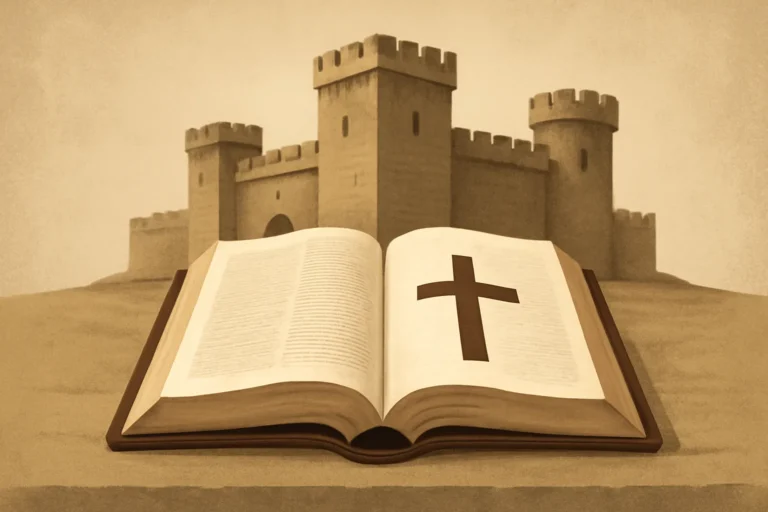
Scripture Stronghold: A Practical Guide to Spiritual Resilience
In a world full of rapid change, personal storms, and constant noise, the idea of a Scripture Stronghold offers a practical path to steadiness. This guide presents a clear, actionable approach to cultivating spiritual resilience through the disciplined use of Scripture, prayer, community, and daily habits. By framing God’sWord as a refuge in times of trouble and a fortress for daily life, you can build a resilient inner life that endures when external circumstances shake.
The concept of a stronghold drawn from Scripture invites us to imagine our inner life as a fortified place—not a fortress built by stubbornness, but a sanctuary strengthened by truth, grace, and faithful practice. This article uses the language of Scripture Stronghold as a portable structure you carry with you: a mental map, a prayerful posture, and a practical routine that helps you stand firm, steady, and hopeful no matter what comes.
Throughout this guide you will encounter alternative phrases—biblical fortress, divine bulwark, Word-centered sanctuary, and Scripture as anchor—each highlighting the same core idea: that the lasting resilience of a person of faith is rooted in God’s promises, truth, and presence.
Foundations of a Scriptural Stronghold
A Scripture Stronghold rests on several interlocking foundations. When these foundations are sound, the structure becomes robust enough to weather both predictable seasons and sudden crises. The core foundations include: Scripture as anchor, intentional prayer, community and accountability, rituals and habits, and a resilient mindset that aligns with truth.
Scripture as anchor: The Bible offers a reliable reference point when feelings run hot or fear rises. When you turn to verses that speak to identity, love, and victory, you restore perspective rather than being carried away by circumstance.
Prayer and contemplation: Prayer is not just asking for things; it is listening for guidance, confessing, and surrendering to God’s will. Contemplative practices slow the pace and invite divine wisdom into everyday life.
Community and accountability: We are built for connection. A trustworthy circle—pastors, mentors, friends, or study partners—helps you stay grounded and reminds you of truths you might forget in isolation.
Rituals and habits: Repetition shapes memory and character. Regular practices—like a morning verse, an evening reflection, or a weekly study—strengthen the stronghold over time.
Mindset and attention: A disciplined mind learns to spot distractions and to reorient toward truth, gratitude, and hope. This is not denial of pain but informed resilience rooted in reality.
How to Build Your Personal Stronghold from Scripture
Building a Scripture Stronghold is a process with concrete steps. It combines time-tested spiritual disciplines with practical routines. Below is a practical blueprint you can adapt to your context, temperament, and life stage. Each section includes concrete actions you can take this week.
Step 1: Clarify your aim
Start by naming the kind of resilience you want to cultivate. Are you seeking steadiness in daily stress, endurance during long trials, confidence in moral decisions, or hope amid grief? Write a one-paragraph aim that identifies the core flavor of resilience you want to grow. This clarity will guide your Scripture choices, prayer practices, and daily reminders.
Select a small, focused set of verses that speak to your aim. These will become your verses for resilience—the backbone of your stronghold. Examples include:
“The Lord is my rock and my fortress” (summarized from several Psalm themes) for enduring safety and steadfastness.
“God is our refuge and strength, a very present help in trouble” (Psalm 46:1-3, paraphrased in practice).
“Trust in the Lord with all your heart, and do not lean on your own understanding” (Proverbs 3:5-6).
“In me you may have peace; in the world you will have trouble” turned into a reminder to seek peace in Christ (John 16:33 reframed for daily practice).
“I can do all things through Christ who strengthens me” (Philippians 4:13) as a reminder of divine enablement.
Write each verse on a card, and keep them in a place you can see often—on a wall, in a journal, or as a screensaver. The aim is not memorization for its own sake but the internalization of truth that reinforces your spiritual resilience.
Step 3: Establish a daily Scripture routine
Create a short routine that you can perform every day, even in busy seasons. A typical routine might include:
Reading a brief passage (5–10 minutes)
Reflecting aloud or in writing on a single verse or phrase
Praying through what you read, asking for wisdom, protection, or perspective
Recording one concrete action you will take based on what you read
Consistency beats intensity. Over weeks and months, this simple routine cements a stronghold of truth that is robust enough to sustain you through pressure.
Step 4: Memory, recitation, and mediation
A stronghold is not built solely in quiet study; it also rests on memory and recitation. Memorize a short verse each week and recite it during moments of stress, waiting periods, or transitions between activities. Meditation can accompany recitation by focusing attention on the meaning of the verse and asking reflective questions such as:
What does this verse reveal about God’s character?
What does it require of me in this moment?
How would living this truth change my next decision?
Step 5: Journaling as a resilience tool
Journaling helps you externalize your inner life and see God’s faithfulness over time. Use a simple format:
What challenge did I face today?
Which verse or principle guided my response?
What is one adjustment I will make tomorrow?
Periodically review entries to notice patterns: recurring doubts, responses that bore fruit, or seasons of spiritual dryness. This reflection strengthens the Scripture Stronghold by tracking growth and identifying gaps.
Step 6: Community support and accountability
Share your aims and verses with a trusted partner or small group. Accountability is not about judgment; it is about mutual encouragement. Consider:
Regular check-ins (weekly or biweekly) about progress and struggles
Shared verses or devotional reflections
Prayer circles that lift you in difficult seasons
A scriptural fellowship can nurture resilience by offering encouragement, reminding you of God’s promises, and helping you to keep your focus on the divine steadfastness.
Step 7: Practical disciplines that support a stronghold
A deep, durable resilience also requires healthy routines. Consider practical disciplines that complement your spiritual practice:
Healthy sleep patterns to restore cognitive clarity
A balanced routine that includes time for work, rest, and relationships
Moderation in media consumption to protect attention and reduce noise
Physical activity to manage stress and energize the spirit
Strategic reflection on what matters most in each season
When these practicalities are aligned with your scriptural aims, the Word-centered sanctuary you cultivate becomes a sustainable fortress rather than a temporary coping mechanism.
Practices That Reinforce Your Stronghold
The following practices reinforce the idea that Scripture can stand as a divine bulwark in daily life. You can implement these gradually or adopt an integrated program, depending on your season.
Verse-a-day routine: Pick a single verse and reflect on it for a full day. Return to it in the evening and note one practical takeaway.
Prayer-in-motion: Transform worries into brief prayers through the day—when traffic is heavy, when meetings start, when you feel discouraged.
Memory cards: Create a small set of verse cards and review them while commuting or waiting in lines.
Quiet mornings: Dedicate a few minutes to silent listening for God before the day begins.
Community accountability: Pair with a friend to share one verse and one act of obedience weekly.
These practices, when consistently practiced, shape habits that endure beyond feeling or circumstance, building a long-lasting Scripture Stronghold.
Common Challenges and How to Overcome Them
Even with a solid plan, you may encounter obstacles. Below are typical barriers to building a resilient spiritual life, along with practical strategies to overcome them.
Doubt: Doubt can be unnerving, but it can also deepen faith. Write down your questions and seek clarifying Scripture, pastoral counsel, or trusted mentors. Let doubt drive you toward greater inquiry rather than away from practice.
Busyness: When life is crowded, simplicity becomes a virtue. Reduce one nonessential activity to create space for a 5–10 minute daily routine.
Spiritual dryness: If you feel distant from God, lean into shared worship, Scripture memory, and short, honest prayers. Dry spells often yield to steady, faithful practice over time.
Emotional overwhelm: In times of acute stress, anchor yourself with a short verse, breath prayers, and a few minutes of quiet. Short, repeated acts of faith can sustain you when larger plans feel fragile.
Distraction: Create environmental cues—designate a specific space for reflection, limit digital interruptions, and set a timer to focus on your routine for a defined period.
Remember that resilience does not demand perfection but perseverance. A Scripture Stronghold grows through repeated, faithful effort even when the harvest isn’t immediately visible.
Variations on the Theme: Expanding the Language of Resilience
For breadth and flexibility, you can use a family of terms to describe and practice the same underlying principle. Each variation emphasizes a facet of resilience and invites different sensitivities.
Scripture Stronghold: Emphasizes the fortified, protective role of God’s Word in daily life.
Scriptural Fortress: Highlights the sense of safety and shelter in the presence of God.
Word-centered Sanctuary: Focuses on the human interior as a sacred space governed by truth.
Divine Bulwark: Conveys the protective power of God’s promises when facing danger.
Biblical Fortress: Connects to the broader biblical narrative of courage, faith, and perseverance.
Faith-based Refuge: Emphasizes rest and renewal found in faith communities and personal devotion.
Using these phrases interchangeably can help you teach and share the concept in different contexts—devotions, group studies, or counseling conversations—without losing the central idea of resilience rooted in God’s Word.
Stories of Resilience: Brief Narratives
Real life offers countless illustrations of how a Scripture Stronghold operates. The following short vignettes are fictional, but they reflect common patterns observed in disciplined spiritual practice.
When Lina faced a career shift and a family health scare, she turned to a word-centered sanctuary approach. Each morning she opened a single verse, repeated it aloud, and wrote one action she could take that day to reduce stress for her family. Over weeks, Lina discovered a growing sense of clarity. The fortress of truth around her heart did not remove difficulty, but it reoriented how she faced it. The practice became a dependable anchor during medical appointments, budget anxieties, and decisions about schooling for her children.
Story 2: A Quiet Life with Purpose
Marcus, a retiree, built a life around a divine bulwark that supported meaningful days after a long period of work. He kept a small card of verses and spent ten minutes each morning in meditation and prayer. He joined a local study group where verses were memorized and discussed in practical terms. The result was not a dramatic transformation but a steady, faithful life marked by patience, gratitude, and generous service to neighbors.
Story 3: A Young Adult Finding Ground
A university student named Amina used a biblical fortress framework to navigate social pressure and academic stress. She posted a weekly resilience verse on her dorm door and kept a journal of one challenge and one small obedience per day. Over time, her confidence grew, and she learned to voice her values clearly in conversations and group projects, anchored in love and truth.
Practical Exercises You Can Try This Week
The following exercises are designed to be short yet impactful. They can be used solo or in a group setting, and they aim to reinforce the habit of turning to Scripture as a source of spiritual resilience.
One-verse challenge: Pick one verse and keep it in view throughout the day. Each time you feel tension or doubt, pause and repeat the verse aloud.
Verse mapping: Take a verse and write a brief map: what it reveals about God, what it requires of you, and an everyday application.
Prayer sprint: In three minutes, turn fear into prayer. Thank God, ask for help, and commit to a concrete action.
Weekly check-in: Meet with a friend or mentor to share one verse, one struggle, and one success from the week.
Quiet-to-action cycle: Start with a five-minute quiet contemplation, move to a short Scripture reading, switch to a brief journaling entry, and finish with one practical step.
The aim of these exercises is to cultivate a habit loop that makes the Scripture Stronghold a natural response rather than a last resort.
Conclusion: Living with a Stronghold Bound to Truth
A Scripture Stronghold is not a magical shield but a consciously constructed interior space where truth governs response. It is a living practice—reliable in ordinary days and powerful in crisis. By grounding yourself in God’s Word, nurturing disciplined prayer, fostering healthy relationships, and maintaining practical routines, you can cultivate a resilience that is robust, flexible, and hopeful.
Remember that resilience grows through steady work, not through occasional bursts of motivation. As you continue to build the Scripture Stronghold, you will find that the strongest moments of faith are often not dramatic but humble: a quiet morning, a short verse, a simple act of love, and a faithful choice to return to the truth that sustains you.
Introduction to Stronghold Scriptures In many faith communities, the phrase stronghold scriptures conjures images of safety, defense, and unshakable confidence in times of trouble. These verses, drawn from biblical poetry, history, and letters, describe God as a refuge, a fortress, a rock, and a tower—a set of images that together...
Introducción: qué es la still strength fortaleza y por qué importa En un mundo en movimiento constante, la idea de still strength fortaleza representa una visión integrada de la resiliencia y la capacidad física. No se trata solo de levantar más peso o de soportar periodos cortos de tensión; se...