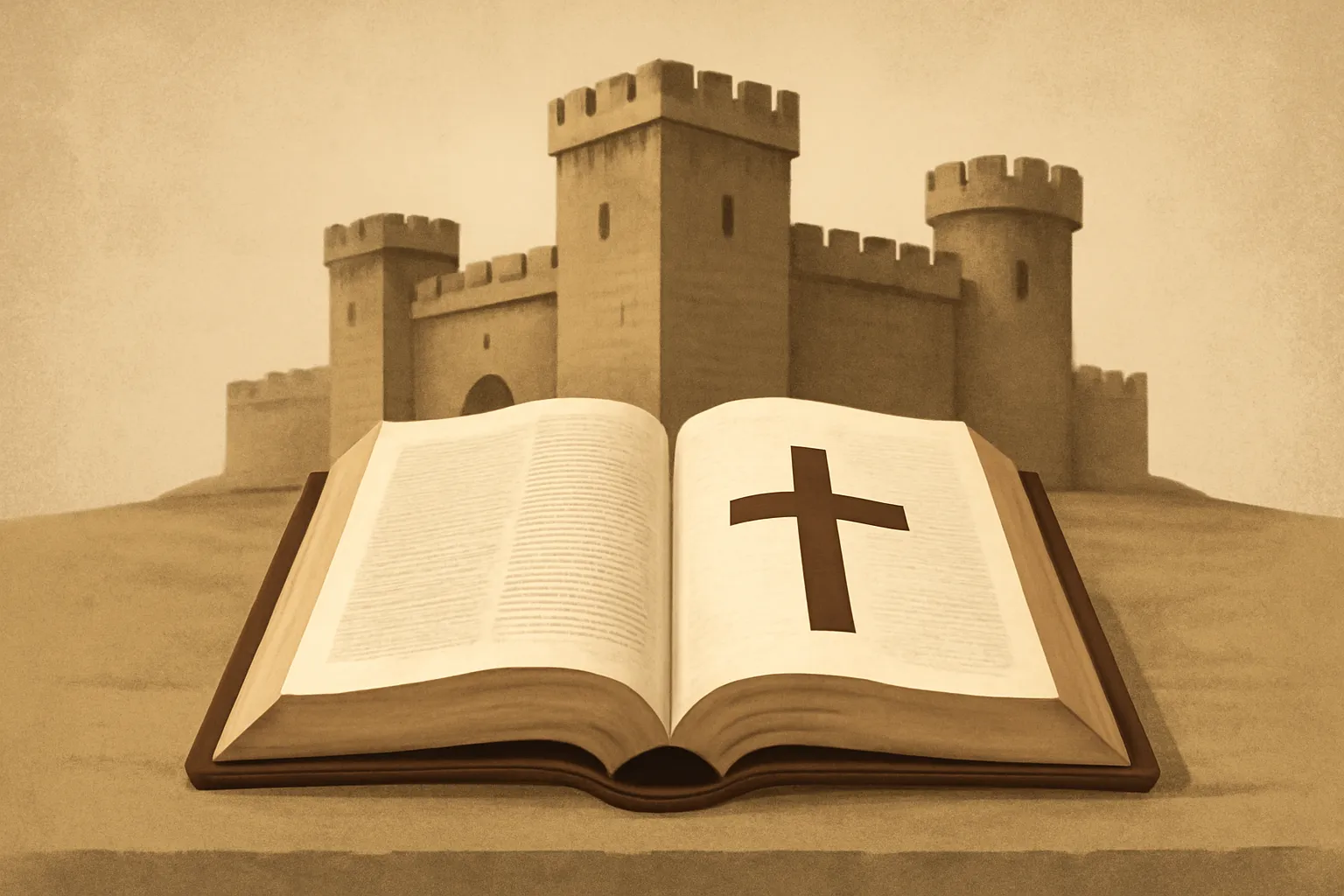
In many faith communities, the phrase stronghold scriptures conjures images of safety, defense, and unshakable confidence in times of trouble. These verses, drawn from biblical poetry, history, and letters, describe God as a refuge, a fortress, a rock, and a tower—a set of images that together form a spiritual architecture for faith. When believers say they are standing on stronghold scriptures, they are signaling a deliberate choice: to anchor their hearts in promises that uphold them through fear, doubt, hardship, and uncertainty.
The idea of a stronghold is both concrete and symbolic. Literally, a stronghold is a fortified place—a place of protection against enemies, a citadel where people can find safety. Symbolically, the scriptures invite readers to view God as the ultimate fortification for the soul. It is not merely a table of contents of comforting lines; it is a framework for understanding who God is, how He acts in crisis, and how a person is meant to respond in faith. This article explores the meaning and significance of these verses, surveys a range of key passages, and offers practical paths for using stronghold scriptures to fortify your faith in daily life.
Meaning and Significance of the Term “Stronghold”
The term “stronghold” in English translations often carries a sense of a defensive fortress, a place where inhabitants secure safety from attackers. In the biblical idiom, these terms can appear as refuge, fortress, strong tower, rock, or shelter. Each image emphasizes a slightly different facet of God’s protective presence:
Refuge highlights God as a retreat from danger—a safe harbor where the weary can rest.
Fortress emphasizes inviolability and defense against spiritual or physical threats.
Strong tower conveys a place of safety that draws people in for protection and perspective.
Rock offers stability, immovability, and a foundation for life amid shifting sands.
Shelter points to a cover that shields from storms and heat alike.
Beyond mere shelter, the stronghold imagery in scripture is about relationship: turning toward God, trusting His leadership, and yielding to His care in every season. The phrases are not just rhetoric; they invite readers to align their hearts with the truth that God’s presence is a reliable source of peace, strength, and deliverance.
Historical Context and Theological Themes
The biblical concept of a stronghold arises in contexts of conflict—both physical battles and spiritual warfare. The psalms frequently pair the language of war with the language of divine safety, reminding readers that God is not distant from danger but actively involved as protector and guide. Theological themes that recur in stronghold scriptures include:
Divine protection in times of trouble, oppression, or persecution.
Divine presence as a steadying force that preserves the faithful.
Trust as posture—the righteous running toward safety in the name of the Lord.
Spiritual warfare—recognition that battles may occur in the mind, heart, and community, not only on battlegrounds.
Reliance on revelation—the belief that God’s Word discloses how to live safely within His protection.
When readers engage these passages, they are invited to see the divine as both practical shelter and cosmic defender. This dual emphasis—immediate relief and lasting security—helps believers navigate crises with courage while remaining anchored in truth.
Key Verses: A Tour of Strongholds in Scripture
The Bible contains a rich tapestry of imagery for safety and strength. Below is a curated tour of verses that highlight different facets of God’s stronghold. Where helpful, I’ve included succinct notes on the word-pictures and how to apply them to daily life.
Stronghold as Refuge and Fortress
Psalm 46:1 — “God is our refuge and strength, a very present help in trouble.” This verse proclaims God as both refuge and strength, a combination that assures believers of presence and power in crisis.
Psalm 91:2 — “I will say of the LORD, He is my refuge and my fortress: my God; in him will I trust.” Here the imagery sharpens into a personal confession: trust in God as refuge and fortress.
Psalm 62:2 — “He only is my rock and my salvation: he is my fortress; I shall not be greatly moved.” The verse foregrounds a devotional stance: steadiness comes from dwelling in God as rock and fortress.
Psalm 61:3 — “For thou hast been a shelter for me, and a strong tower from the enemy.” The line links God’s historical care with present safety—what He has done invites trust in what He is doing now.
Nahum 1:7 — “The LORD is good, a stronghold in the day of trouble; and he knoweth them that trust in him.” This verse ties God’s goodness to His role as stronghold, and faith to God’s knowledge of our trust.
Proverbs 18:10 — “The name of the LORD is a strong tower: the righteous runneth into it, and is safe.” The focus here is the name of the LORD as a symbolic safe harbor for decisive action in danger.
Strongholds in Spiritual Warfare and Thought Life
2 Corinthians 10:4-5 — “For the weapons of our warfare are not carnal, but mighty through God to pull down strongholds, casting down imaginations, and every high thing that exalteth itself against the knowledge of God.” This dual emphasis shows that strongholds can exist in mental and spiritual realms and can be conquered by God’s power and truth.
Ephesians 6:11-13 — “Put on the whole armor of God, that ye may be able to stand against the wiles of the devil.” While not using the term “stronghold” explicitly, this passage frames the believer’s defensive and offensive posture in spiritual warfare, with God’s armor as the ultimate protection.
Psalm 19:14 — “Let the words of my mouth, and the meditation of my heart, be acceptable in thy sight, O LORD, my strength and my redeemer.” This verse connects internal thoughts with external life, suggesting that strong holds of thought can be redirected toward edifying faith.
Jesus as the Ultimate Stronghold
1 Peter 2:6 — “Behold, I lay in Zion a chief cornerstone, elect, precious: he that believeth on him shall not be confounded.” Though phrased differently, the image of Christ as the essential foundation aligns with the idea of a central stronghold for faith.
Matthew 7:24-25 — “Therefore whosoever heareth these sayings of mine, and doeth them, I will liken him unto a wise man, which built his house upon a rock: and the rain descended, and the floods came, and the winds blew, and beat upon that house; and it fell not: for it was founded upon a rock.” Jesus himself is the ultimate foundation—an unshakable stronghold for those who trust Him.
Stronghold scriptures do more than comfort; they cultivate a resilient faith. When read, memorized, and applied, these verses form a mental and spiritual architecture that can help a believer endure trials and navigate moral choices with confidence. Here are key ways they fortify faith:
Identity and security: By repeatedly hearing that God is our refuge, fortress, and rock, a believer’s sense of identity shifts from uncertainty to rootedness in divine care.
Trust under pressure: In moments of danger or doubt, these verses offer a vocabulary of trust—“I will trust in the name of the LORD”—that can be spoken aloud and internalized.
Mental and emotional discipline: The stronghold of God guards not only physical safety but also thoughts and emotions, guiding believers away from fear-driven responses toward steadfast hope.
Warfare against destructive thoughts: As 2 Corinthians 10:4-5 teaches, strongholds can be cast down by truth, helping to dismantle cognitive patterns that exalt themselves against God’s knowledge.
Prayer and worship alignment: Regular engagement with these verses tunes prayer life toward confession, petition, and praise anchored in the character of God as protector and deliverer.
Community resilience: Sharing these verses with others—family, friends, small groups—creates a communal memory that reinforces trust and mutual comfort during crises.
Practical Ways to Embrace Stronghold Scriptures in Daily Life
Reading about God as a stronghold is valuable, but living in light of that image is transformative. The following practical practices can help you embed stronghold scriptures into your daily rhythm:
Memorize one verse per week that speaks to God’s protection, and recite it aloud several times daily.
Create a “stronghold journal” where you write reflections on how a particular verse has shown up in real-world challenges.
Place reminders in visible places—on mirrors, dashboards, or desktops—emphasizing terms like refuge, fortress, or rock.
Meditate with a passage by reading a verse slowly, pausing after key phrases to invite God to apply it to your situation.
Pray through the verses, turning each line into a personal petition: “Lord, be my refuge today; be my fortress in this decision.”
Share and discuss the passages with a friend or small group to reinforce breath and depth of understanding.
Study in context—note the historical setting, the genre, and how the imagery functions within the larger biblical narrative.
Variations in Wording: Synonyms for the Stronghold
The biblical corpus employs a spectrum of images to depict protection and security. Recognizing these variations helps you access multiple facets of God’s safeguard without getting stuck on a single metaphor. Some of the most common and useful synonyms include:
Refuge — a safe place to hide and recover strength.
Fortress — a defensive stronghold against threats.
Strong tower — a lofty, accessible safeguard that invites safety.
Rock — a stable, immovable foundation for life.
Shelter — cover from storms and heat; divine protection from danger.
Deliverer — one who rescues from peril and sets free from fear.
Shield — protection that shields life and integrity in the face of danger.
Citadel or bastion — architectural metaphors for a robust, defensible place that sustains the faithful under pressure.
Hideout — a personal, intimate space of safety accessed through prayer and trust.
As with any spiritual practice, cultivating a life shaped by stronghold scriptures requires balance and discernment. A few cautions to keep in view:
Context matters: Read verses in their context—historical setting, literary genre, and the surrounding message—to avoid misapplication.
God’s sovereignty over suffering: Stronghold language does not guarantee a life free from hardship; it promises God’s presence and perspective within hardship.
Active faith, not magical thinking: These scriptures invite trust and obedience, not a superstition that treats God as a talisman.
Holistic care: In times of deep distress, combine scripture with practical steps—community support, professional help when needed, and wise decision-making.
Sometimes the answer is courage, not escape: God may provide strength to endure rather than to remove danger altogether; the goal is faithfulness in the situation you face.
Examples from Scripture: Real-Life Settings
Stronghold imagery appears in diverse contexts, from personal crises to communal upheaval. Consider these snapshots:
David’s psalms often frame God as a safe harbor in the middle of personal danger, betrayal, or national threat. In scenes of fear, he flees to God as his refuge and shield, then proclaims the steadfastness of God to others.
Jesus’ teaching in the Sermon on the Mount grounds life in the integrity of action and a foundation laid in rock. The imagery invites believers to build lives that endure storms by aligning with the truth of God’s kingship.
Pauline reflections on spiritual warfare connect inner thought life with outward action: strongholds of the mind can be dismantled through the crucible of truth, humility, and faith in Christ.
Communal resilience emerges when a faith community collectively anchors itself in God as refuge, sharing testimonies of deliverance and mutual exhortation during trials.
Conclusion: A Lifelong Practice
The idea of stronghold scriptures is not merely about collecting comforting lines; it is about constructing a spiritual fortress made of God-centered truth. When readers engage these verses with intentionality—through reading, memorization, prayer, and community—faith grows deeper, more resilient, and more oriented toward courageous trust. The strongholds described in Scripture point beyond themselves to the Person at the center of the story: God Himself, who invites you to find safety, courage, and mission under His care.
If you are just beginning this path, start with a few foundational verses like Psalm 46:1, Psalm 91:2, Proverbs 18:10, and 2 Corinthians 10:4-5. Let these anchors shape your daily rhythms and your responses to life’s pressures. Over time, you will notice that stronghold scriptures do more than comfort you in trouble—they reorient your entire life around a trustworthy, protecting, and transforming God.
Introducción: qué es la still strength fortaleza y por qué importa En un mundo en movimiento constante, la idea de still strength fortaleza representa una visión integrada de la resiliencia y la capacidad física. No se trata solo de levantar más peso o de soportar periodos cortos de tensión; se...
Scripture Stronghold: A Practical Guide to Spiritual Resilience In a world full of rapid change, personal storms, and constant noise, the idea of a Scripture Stronghold offers a practical path to steadiness. This guide presents a clear, actionable approach to cultivating spiritual resilience through the disciplined use of Scripture, prayer,...