Worm Queen: The Complete Guide to Biology, Habitat, and Significance
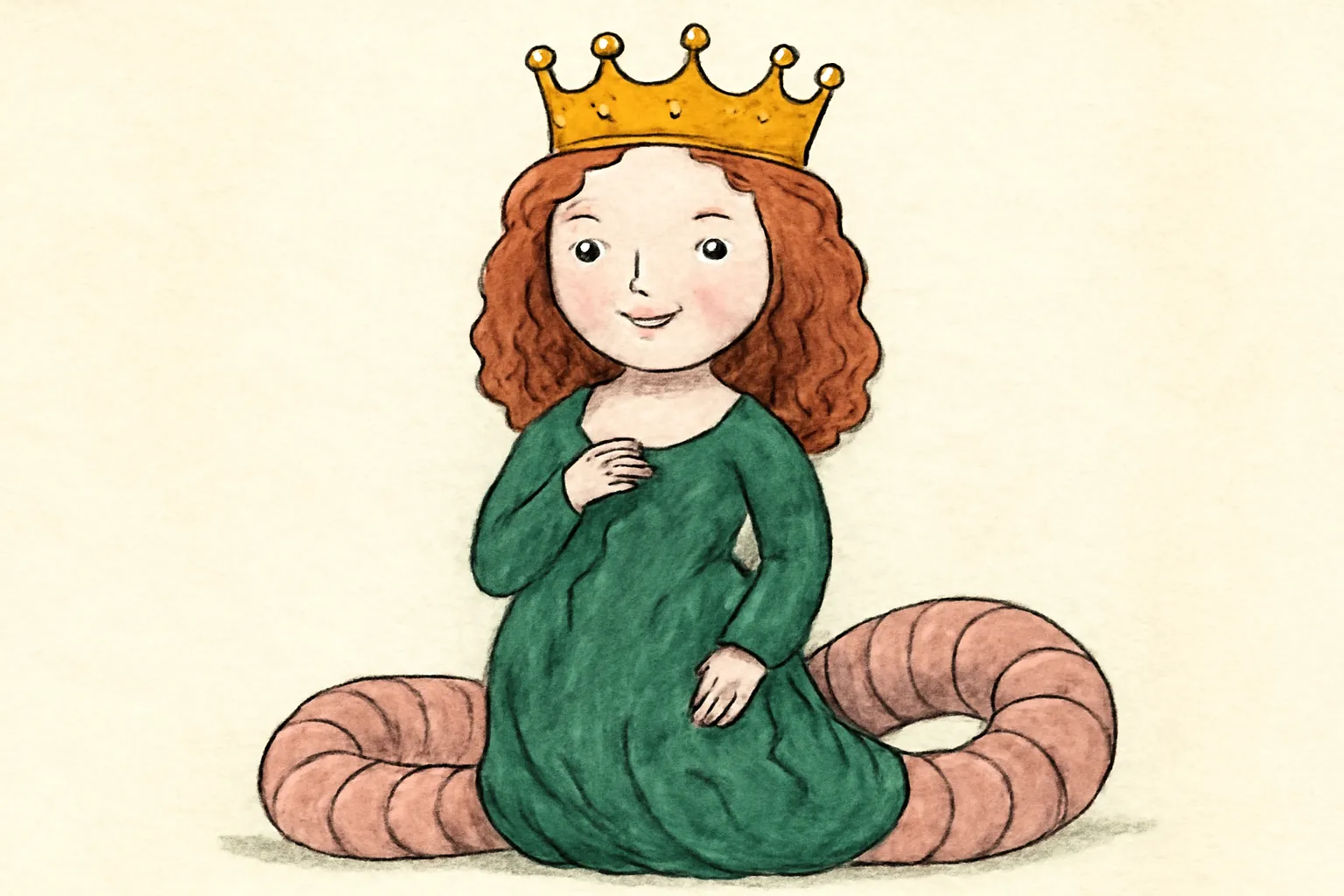
In popular imagination, a worm queen might call to mind a singular ruler presiding over a vast underground realm. In scientific reality, the term is not a universal taxon or a fixed reproductive structure found in all worms. Instead, it serves as a conceptual anchor—a way to discuss how some worm-like organisms reproduce, organize, and interact with their environment in a way that highlights central roles for the most reproductive or socially influential individuals within a group. This guide uses the phrase worm queen and its variations to explore biology, habitat, and ecological significance in a broad, accessible way, while noting where the science aligns with or diverges from popular depictions.
This article covers the core ideas you need to understand the biology of worms, the kinds of habitats where they live, and why these creatures matter to ecosystems and to human activity. Throughout, you will encounter variations on the term, such as queen worm, worm matriarch, and sovereign worm, each used to emphasize different facets of reproductive leadership, colony organization, or simply a narrative way to discuss mating and development. The aim is to build a coherent picture that is accurate, nuanced, and useful for students, educators, gardeners, and nature enthusiasts.
What Is a Worm Queen?
The phrase worm queen is best understood as a symbolic description rather than a universal anatomical category. In some fictional or educational contexts, a queen worm might be imagined as the principal reproductive female who coordinates a colony. In real biology, however, most earthworms and related annelids do not form highly organized colonies with a single, centralized queen in the same way that social insects do. Instead, reproduction often involves:
Hermaphroditic pairing in many earthworms, where individuals possess both male and female reproductive organs and exchange gametes during mating.
Sexual reproduction through cross-fertilization, resulting in cocoons that develop into juvenile worms.
Potential specialization in some colonial or polychaete species, where certain individuals may assume roles that resemble a leadership or reproductive hub—but this is far less common or uniform than the insect colonies most readers are familiar with.
In educational writing, the worm queen is often used to personify the idea of a central reproductive actor. When we speak of this queen-like role, we are describing a practical concept: the individual(s) that contribute most to the next generation, or the organism that, within a given social context, appears to coordinate aspects of reproduction and growth. It is important to recognize that “queenhood” in worms is fundamentally different from how queen status works in ants, bees, or termites.
For readers seeking concrete biology, the reality is richer when framed around reproduction modes, life cycles, and ecological roles rather than a single monarch. The following sections expand on these ideas by species group, habitat, and ecological function, while still tying back to the concept of a queen worm as a narrative device.
Biology of Worms: Anatomy, Life Cycle, and Reproduction
Anatomy and Physiology
The typical worm, especially those in the common earthworm group (often referred to as lumbricids), is a segmented animal with a straightforward yet effective body plan. Key features include a prostomium at the head, a series of repeating segments (each with setae or bristles for movement), a clitellum that forms a protective shell around cocoons, and a complete digestive tract that runs from mouth to anus. The circulatory system is closed, with a dorsal vessel functioning much like a heart, and a nervous system that includes a ventral nerve cord and several pairings of nerve ganglia in each segment.
Digestive system: mouth, pharynx, esophagus, crop, gizzard, intestine; soil and organic matter are ground up and processed.
Reproductive system: earthworms are typically hermaphroditic, carrying both male and female reproductive organs in each individual; the gonads are located in different segments and mature at different times.
Sexual structures: seminal vesicles and sperm ducts, oviducts and ovisacs, and associated reproductive glands.
It is common to encounter the idea that worms have a single “queen” managing reproduction. In most species, reproduction is a mutual affair between two individuals, with each worm contributing genetic material. The clitellum plays a crucial role in reproduction by secreting a mucus-rich band that helps form the cocoon. The cocoon then slides off the worm and eventually hatches into juvenile worms.
Life Cycle and Reproduction
The life cycle of most common worms involves several stages: mating, gamete exchange, cocoon formation, and development to juvenile forms. In temperate soils, cocoon development and hatching are strongly influenced by temperature, moisture, and food availability. A cocoon may contain multiple embryos, increasing the likelihood of survival in variable environments.
Cross-fertilization: two hermaphroditic worms exchange sperm, enabling genetic diversity.
Cocoon formation: the clitellum forms a protective sleeve around the developing embryos.
Development: cocoons are deposited into moist soil; hatchlings emerge as juvenile worms that resemble adults but are smaller.
When we use the term queen worm in the context of the biology section, we’re often highlighting the idea of a reproductive “center” or a focal point of population growth. In natural populations, this function arises from the collective actions of many individuals rather than a single dominant female. The absence of a true centralized queen is a hallmark of worm reproductive biology, which is more about pairwise exchange and distributed mortality risk than monarchic control.
Habitats and Ecological Niches
Natural Habitats
Worms occupy a remarkable range of habitats, from deep soil layers to surface litter and freshwater sediments. The soil ecosystem benefits from their activity, as burrowing aerates the soil, mixes organic matter, and accelerates decomposition. Earthworms than many other soil-dwelling organisms contribute to the formation of soil structure through their casting behavior, which produces microaggregates that improve water infiltration and root growth.
Forest soils and grasslands provide moist, richly organic environments ideal for many worm species.
Aquatic and semi-aquatic burrowers such as some tubificids thrive in sediments with consistent moisture and low oxygen tension.
Urban and agricultural soils can support vermiculture and composting worms when managed carefully with moisture and temperature control.
Microhabitats and Niches
Within their broader habitat, worms exploit microhabitats that suit their feeding and burrowing behavior. Some worm types prefer surface detritus in leaf litter, others inhabit deeper soil horizons where conditions are more stable. A worm queen—as a concept—would conceptually centralize the reproductive narrative in environments where colony-like dynamics emerge, but in practice most worms show flexible social and spatial organization driven by resource distribution and moisture gradients.
Leaf litter and compost: rapid decomposition zones with abundant organic material and microbial activity.
Deep soil pockets: stable moisture and moderated temperatures support long-lived individuals and gradual reproduction.
Wetlands and aquatic sediments: specialized species tolerate anoxic conditions and sloughing soils.
Significance in Ecosystems and for Humans
Ecological Services
Worms provide several essential ecological services that underpin healthy ecosystems. Their bioturbation and bioirrigation activities improve soil structure, enhance aeration, and facilitate the movement of water and nutrients through soil profiles. This supports plant growth, microbial processes, and nutrient cycling. In the context of our central theme, the worm queen serves as a helpful metaphor for the reproductive hub that sustains population renewal, a key driver behind these ecosystem services.
Soil aeration and improved drainage.
Decomposition of organic matter, turning waste into usable nutrients.
Nutrient cycling of nitrogen, phosphorus, potassium, and micronutrients.
Soil structure improvement through casting and burrowing actions.
Economic and Agricultural Relevance
Humans have long recognized the value of worms in vermiculture—the practice of using earthworms to compost organic waste and to produce high-quality vermicompost. This material is prized by gardeners and farmers for its fertility-enhancing properties. The queen worm terminology, when used in educational materials about vermiculture, often highlights the idea that the reproductive capacity of a worm population is what ultimately drives the sustained production of castings.
Waste management through accelerated composting of kitchen and farm waste.
Soil amendment via nutrient-rich worm castings.
Biological indicators of soil health and environmental quality.
Conservation, Ethics, and the Future of Research
Threats to Worm Populations
Many worm species face threats from habitat loss, soil pollution, and climate variability. Heavy metals, pesticides, and salinity changes can reduce populations or alter reproductive success. Urbanization can fragment habitats and reduce microhabitat availability. The idea of a worm queen in conservation discourse underscores the importance of understanding population dynamics and the factors that influence reproductive success, even when a true queen is not present in many species.
Soil contamination reduces survival and fertility.
Habitat fragmentation limits dispersal and genetic exchange.
Climate change affects moisture regimes, temperature, and food supply.
Ethical Considerations in Research and Practice
Research involving worms, including those used in vermiculture, must consider humane handling, proper housing, and minimizing suffering. Practical research methods usually emphasize humane collection, maintenance in controlled environments, and careful observation rather than invasive procedures. When discussing the worm queen as a narrative device, it is essential to separate fiction from fact and to communicate clearly about what scientists know about reproduction, population structure, and ecosystem roles.
Future Directions in Study
Advances in genomics, microbiome research, and eco-physiology are expanding our understanding of how worms interact with their environment and with microbial communities in the gut and soil. Researchers are exploring how environmental stressors influence reproductive timing and offspring viability, how castings affect soil chemistry at the micro scale, and how worm populations can be managed to maximize ecosystem services without adverse ecological consequences. In this sense, the queen concept can function as a teaching frame while the science continues to reveal the distributed and cooperative nature of worm populations.
Practical Applications and Education: Bringing the Worm Queen to Life
Hands-on Activities for Learners
Educators can engage students and hobbyists with activities that illuminate the biology, habitat, and significance of worms, including the idea of a central reproductive actor without implying a fixed monarch. Some practical options include:
Soil health experiments that compare worm activity in different soil types or moisture levels.
Compost pile observations to document decomposition rates, casting production, and worm movement.
Lifecycle demonstrations using cocoons or safe, non-invasive observations of reproduction in hermaphroditic worms.
Fostering Public Understanding
Public education materials can use the worm queen as a storytelling device to introduce concepts such as reproduction, life cycles, and ecosystem services. At the same time, these materials should emphasize key differences between worms and more overtly hierarchical organisms, so learners do not develop inaccurate expectations about insect- or termite-like social systems in worms.
Glossary of Key Terms
For quick reference, this short glossary highlights terms that recur throughout the article:
Hermaphroditic: possessing both male and female reproductive organs in the same individual.
Clitellum: a glandular, mucus-secreting band that forms the cocoon around developing embryos.
Bioturbation: the mixing and disruption of soil by organisms that move through it, improving soil structure.
Vermiculture: the practice of cultivating worms to decompose organic waste and produce castings.
Castings: nutrient-rich worm excrement that enhances soil fertility.
Conclusion: The Worm Queen in Context
The notion of a worm queen can be a helpful educational tool for understanding how worms contribute to life on Earth. While most worm species do not organize into aristocratic colonies with a single ruling female, the concept invites us to explore the complexity of reproduction, population dynamics, and ecosystem services in a vivid, memorable way. By examining anatomy, life cycles, habitat diversity, and human uses—especially composting and soil restoration—we gain a nuanced appreciation for worms as essential engineers of the soil. The queen-like role is best viewed as a metaphor that points to the central importance of reproduction and population sustainability within a larger network of ecological interactions.
As we deepen our knowledge, the practical takeaway is clear: healthy soils rely on the uninterrupted cycles of worm life, their ability to thrive across diverse habitats, and the ongoing relationship between worms, microbes, plants, and humans. Whether you encounter the terms worm queen, queen worm, or worm matriarch in a book, classroom, or garden, the underlying science remains the same: worms shape soils, sustain ecosystems, and remind us that even the smallest creatures can have outsized ecological importance.