Meaning Abba Father: What It Means in Scripture and Prayer
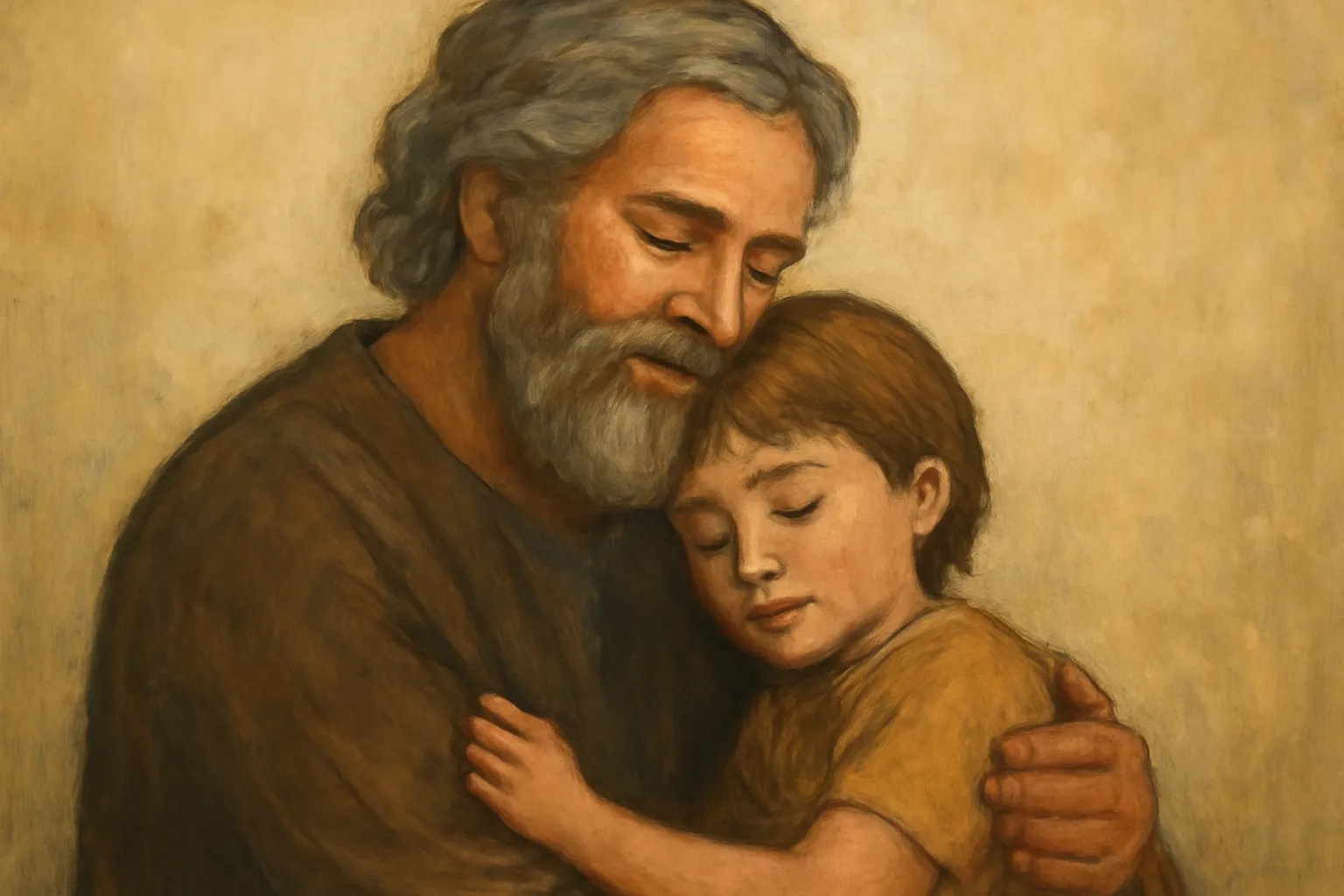
The phrase “Abba, Father” conjures an image of intimate conversation with God, a posture of trust, and a sense of belonging in God’s family. In Scripture, this combination of terms goes beyond a mere address; it signals a deep, trust-filled relationship between the believer and the divine. The expression has resonated in Christian worship, personal prayer, and theological reflection for two millennia, inviting readers to explore what it means to call God Abba and Father at once. This article surveys the meaning of Abba and Father in the biblical languages, traces how the phrase appears in key New Testament passages, considers its doctrinal implications—especially around adoption and the Spirit—and offers practical guidance for praying with this bilingual, intimate address.
What does the term Abba mean? Language, nuance, and use
The word Abba is a term of address that originates in Aramaic, a Semitic language commonly spoken in Palestine during Jesus’ time and in the broader Near East. In everyday usage among family members, Abba carried a sense akin to “dad,” “Daddy,” or “Pa.” It is not a formal title like “Master” or “Lord” but a relational, affectionate form of address that signals closeness and trust. This distinction matters because it helps explain why the combination Abba, Father carries a dual charge: it is both intimate and reverent.
In the Gospels and the Epistles, the Aramaic Abba sometimes appears alongside the Greek word for “Father” (pater in Greek), or is translated directly in English as Abba, Father. The pairing communicates a layered meaning: one’s personal relationship to God (as child to parent) and one’s allegiance to the divine authority and care of the Father. Some scholars emphasize that Abba expresses a childlike trust that accepts a Father’s wisdom, discipline, and provision, while Father conveys a sovereign, benevolent leadership within which that trust is rightly oriented.
To appreciate the breadth of the phrase, it is helpful to consider several related terms and concepts that often accompany it in biblical and devotional usage. These include:
Intimacy — A close, personal relationship that allows frank and candid conversation.
Adoption — The theological idea that believers are received into God’s family with all the rights and responsibilities of being children of God.
Trust — Confidence in God’s goodness, wisdom, and faithfulness, especially in moments of trial or uncertainty.
Prayer — A posture of speaking to God that can be private, honest, and spontaneous or structured and liturgical.
Abba Father in Scripture: where the phrase appears and what it signals
Two primary biblical strands illuminate the meaning of Abba and Father when they occur in proximity. The first strand centers on Jesus’ own prayer life and address to God during a moment of trial. The second strand centers on the believers’ experience in the Spirit, whereby Christians are invited to address God with the same intimate cry as Jesus did.
Jesus’ use of Abba in the Gospels
The most famous scriptural moment for Abba occurs in the Gospel of Mark, during Jesus’ hours of anxiety in the Garden of Gethsemane. In Mark 14:36 (KJV), Jesus prays, “Abba, Father, all things are possible unto thee; take away this cup from me: nevertheless not what I will, but what thou wilt.” This line is remarkable for several reasons. It captures the intimacy of Jesus’ relationship with the Father even in suffering, and it demonstrates a model of prayer that blends reverent surrender with genuine petition. The presence of Abba here signals that Jesus, though divine in nature as the Son, approaches the Father with a childlike trust that is unafraid to voice fear and pursue God’s will.
Beyond Mark, the broader arc of Jesus’ life in the Gospels frequently presents the Father as reliable, guiding, and good. The phrase “Abba, Father” thus becomes a paradigm for the Christian’s own posture in prayer: adoptive trust rooted in relationship, not distant reverence alone.
Pauline usage: adoption, Spirit, and the cry of the heart
In the letters of the Apostle Paul, Abba, Father appears in the form of a transformative cry that believers utter because of the Spirit’s work within them. Consider the following key passages:
Romans 8:15 (paraphrase): believers “have received the Spirit of adoption as sons, by whom we cry, Abba, Father.” This verse ties the cry to the reality of adoption—the believer’s new identity as a child of God—and to the empowering presence of the Spirit who produces a spontaneous, interior address to God as Father.
Galatians 4:6 (paraphrase): “God has sent forth the Spirit of his Son into our hearts, crying, Abba, Father.” Here the Spirit’s work is internal, shaping a language of communion that mirrors Jesus’ own relationship with the Father.
These Pauline passages show that the cry Abba, Father is not merely a formula; it is a theological statement about identity, kinship, and the inner life of prayer. The believer’s status as a child of God (adoption) is not passive; it sparks an active, ongoing dialogue with God through the Spirit.
Meaning and significance: theological implications of Abba Father
Several interlocking theological themes emerge from the biblical use of Abba and Father. They help Christians understand what it means to relate to God as Father and how the Son’s relationship with the Father informs the church’s life and prayer.
Adoption and identity
The doctrine of adoption undergirds the cry of the heart in Romans 8 and Galatians 4. Believers are not merely adherents or obedient subjects; they are adopted children within God’s family. This status carries both rights (inheritance, access to the Father) and responsibilities (pursuing holiness, growing in relational intimacy with God). The phrase Abba, Father thus anchors Christian identity: you are known, loved, and welcomed into a family designed to resemble the Father’s character.
Intimacy with the Father and the heavenly pedagogy
Calling God Abba places a premium on intimacy, whereas the term Father preserves reverence for divine sovereignty. Theologically, this suggests a balance: believers may approach God with candor and warmth, yet always within the framework of reverence for his authority and wisdom. The dynamic invites believers to bring their questions, fears, and longings before a Father who is trustworthy, patient, and good.
The Spirit’s role in enabling the cry
In Paul’s letters, the Holy Spirit is not a distant force but a present Counselor who enables the believer to relate to God as Father. The phrase “the Spirit of adoption” in Romans 8:15 connects the Spirit’s work with the adoption life of the believer, while Galatians 4:6 emphasizes the Spirit’s activity in the heart, generating the spontaneous cry. Christians often describe this as a deep internal witness or conviction that God is their Father, which reorients the entire life of prayer and worship toward dependence on and intimacy with him.
Understanding Abba, Father has practical effects on how Christians pray, approach God in worship, and cultivate their spiritual life. Here are some ways to apply this understanding in daily practice.
Private prayer: cultivating a childlike trust
Begin honestly by naming the truth of your heart to God, whether your posture is confident, anxious, grateful, or perplexed. The Abba cry welcomes candor.
Approach with trust—even when circumstances feel uncertain, trust God’s wisdom and goodness, as a child trusts a loving parent.
Combine petition with surrender—present your requests while remaining open to God’s will, mirroring Jesus’ own example in Gethsemane.
In communal settings, Christians often balance the intimate address Abba with more formal, corporate prayers such as the Lord’s Prayer, which begins with Our Father in heaven and broad petitions for God’s will, daily bread, forgiveness, and protection. This dual track—Abba in private prayer and Father in community worship—reflects the breadth of the Christian life: intimate relationship joined with shared confession and mission.
Prayer discipline and spiritual formation
Use varied forms of address in prayer to cultivate both intimacy and reverence—alternating between “Abba” and “Father,” and including direct appeals, thanksgiving, confession, and intercession.
Memorize and meditate on verses that center on adoption and Spirit-empowered relationship to deepen a sense of belonging to God’s family.
Practice in different seasons—in times of trial, the Abba cry can be a sustaining reminder of God’s fatherly care; in seasons of blessing, it can express gratitude for divine provision and guidance.
Variations and semantic breadth: expanding how we phrase the cry
To appreciate the breadth of meaning, it is helpful to consider related phrases and how they function in Scripture and devotion. While Abba and Father are the core elements, Christians and interpreters often speak of:
Abba as the intimate, parental voice heard within the soul.
Abba, Father as a bilingual cry that preserves both tenderness and reverence.
Our Father in heaven as a more formal, communal address that emphasizes God’s sovereignty and the heavenly realm.
Father as a general address in prayer that communicates authority, care, and guidance, especially in liturgical contexts.
Daddy or other affectionate renderings in contemporary devotional language, which some readers find natural in personal prayer, while others prefer traditional forms for doctrinal clarity.
Different Christian traditions and Bible translations reflect these nuances with varying shades of emphasis. For example, some English translations consistently render the phrase as “Abba, Father”, while others use parallel renderings or footnotes to explain the Aramaic origin. The key point is that the language communicates a relationship—one in which God is both a heavenly Father and a trusted personal caregiver.
Historical and cultural context: how Abba entered Christian faith
The use of Abba in Christian Scriptures reflects a cultural bridge between Jesus’ first-century Jewish milieu and the growing Gentile church. In first-century Palestine, Jewish families commonly spoke Aramaic in daily life, even as Greek was widely used in commerce and diplomacy. The Gospel writers, however, chose to preserve the Aramaic term in places where it carried a distinctive emotional charge. This choice signals an intentional invitation to readers to recognize and share in the immediacy of Jesus’ prayer to the Father.
As the New Testament text circulated in Greek-speaking communities, Abba was transliterated and sometimes translated as Abba or Abba, Father, preserving the intimate sense. The Latin and later Protestant and Catholic traditions carried this through into liturgy, hymns, and catechetical teaching. Over time, “Abba” became one of the distinctive marks of Christian prayer, a reminder that intimate communion with God is not antithetical to reverence for God’s holiness.
Several questions frequently arise when people begin to reflect on this phrase. Here are concise answers that may help clarify common points of confusion.
Is Abba a name or a title? It is not a proper name for God like a title; it is an intimate form of address—akin to saying “Daddy” or “Dad”—that conveys relationship and trust. When paired with Father, it emphasizes the parental and sovereign dimensions of God’s character.
Did Jesus introduce this cry, or did others also use it? Jesus uses the term in Mark 14:36; Paul uses it to describe believers’ experience of the Spirit’s work in Romans 8:15 and Galatians 4:6. The broader Christian pattern affirms that both Jesus and believers participate in this language of near, personal address to God as Father.
Is the cry always emotional? While it can be deeply emotional, it also carries doctrinal weight. It anchors identity, adoption, and the Spirit’s inner work, so it serves both affective and cognitive dimensions of faith.
How should I use Abba in worship or private prayer? There is no one-size-fits-all formula. Some Christians use Abba, Father when naming their needs and fears before God, while others reserve it for quiet, reflective moments of gratitude. The important element is sincerity and alignment with God’s will and character.
Practical examples and sample prayers
To help readers envision how Abba, Father might shape actual prayer, here are a few short, illustrative samples that demonstrate different moods and purposes:
Thanksgiving: “Abba, Father, thank you for your steadfast love and for the gift of another day. I praise you for your faithfulness in difficult seasons and for your unending grace that sustains me.”
Petition: “Abba, Father, I bring before you the burdens of my heart—safety for my family, provision for my needs, wisdom for decisions. If it be your will, grant healing and relief, and lead me to trust you more fully.”
Intercession: “Abba, Father, I lift up those who suffer in our world. May your justice roll down like waters, and may your mercy reach those who are most in need. May your church be a channel of your peace.”
Confession: “Abba, Father, I acknowledge my failures to trust you in moments of fear. Forgive my doubt, renew my faith, and help me rely on your steadfast love.”
Conclusion: embracing the meaning of Abba Father in life and worship
The phrase Abba, Father embodies a distinctive Christian invitation: to approach God not as a distant ruler alone but as a loving Father with whom one shares daily life, joys, fears, and hopes. The biblical witness—rooted in Jesus’ own example and reinforced by the Spirit’s work in believers’ hearts—invites Christians to cultivate a relationship marked by intimacy, trust, adoption, and active discipleship. By naming God as Abba and Father, Christians acknowledge both the warmth of a child’s closeness and the awe of a child’s reverence before the Father who loves, disciplines, provides for, and redeems. This dual posture—childlike dependence and filial honor—becomes a compass for prayer, worship, and daily living as members of God’s family.
In the journey of faith, the cry Abba, Father may evolve but it remains a powerful anchor: a reminder that you are known, welcomed, and cherished by the God who created, sustains, and redeems. Whether spoken in quiet moments of devotion, sung in worship, or whispered in the heart when trials press in, this ancient phrase continues to shape a modern life grounded in divine love and transformative relationship.
Introduction: Reading the Light–Darkness Dialogue in Scripture In the vast tapestry of the Bible, the pair Light and Darkness functions as more than a description of what we see when we blink in a cave. They are enduring symbols that mark moral choices, spiritual states, and cosmic realities. This article...
In a world that often feels chaotic and uncertain, many people instinctively reach for control—trying to shape outcomes, steer events, and manage feelings. Yet Scripture invites us into a different posture: a life marked by surrender to God’s sovereignty and a trusting reliance on His wisdom. This article gathers biblical...
Overview: What Are Bible Scripture Checks and Why Do They Matter? In an age of abundant information, verifying biblical passages is a crucial skill for students, pastors, teachers, students of theology, and curious readers alike. Bible scripture checks refer to the deliberate process of confirming the accuracy, provenance, and meaning...
Increasing bible knowledge is more than accumulating facts about a book; it is a lifelong journey toward greater understanding, wiser living, and clearer teaching. This article offers five practical ways to increase Bible knowledge and grow in Scripture understanding—through daily reading, thoughtful study, intentional memory, communal learning, and faithful application....