1 John Chapter 5: Analysis, Key Verses and Catholic Reflection
INTRODUCTION
The First Letter of John, traditionally attributed to the Apostle John, is a pastoral exhortation written to a Johannine community facing internal strife and doctrinal challenges. Chapter 5 continues the letter’s emphasis on faith, love, and ethical living, tying belief in Jesus to practical obedience and confident prayer before God. The author foregrounds the certainty of eternal life for those who remain in Christ, and he grounds this assurance in witness—of the Father, the Son, and the Spirit—expressed within the life of the Church. In the NABRE, this chapter crystallizes the inseparability of belief and conduct in Catholic Christian living.
Text and Context of 1Jn 5
This chapter is spoken by the Elder, the author of the letter, addressing the beloved community in Asia Minor. The elder reinforces the central Johannine themes: faith in Jesus as the Christ, love for God and neighbor, and adherence to God’s commandments as evidence of life in God. The setting is a didactic exhortation within the epistolary framework, moving from belief to practical assurance: those who believe have eternal life, and they may approach God in prayer with confidence. The chapter thus ties Christology, soteriology, and eschatology to daily Christian conduct within the community.
Key Verses of 1Jn 5
1Jn 5:5 — Opening words (paraphrase)
Paraphrase: The one who believes Jesus is the Son of God overcomes the world; faith is the victory that conquers the world.
Theological explanation: This verse locates victory in faith in Christ, not in worldly power. It boldly connects belief about Jesus’ identity with overcoming the challenges of the world. It invites readers to root their confidence in the Jesus they confess as the Son of God.
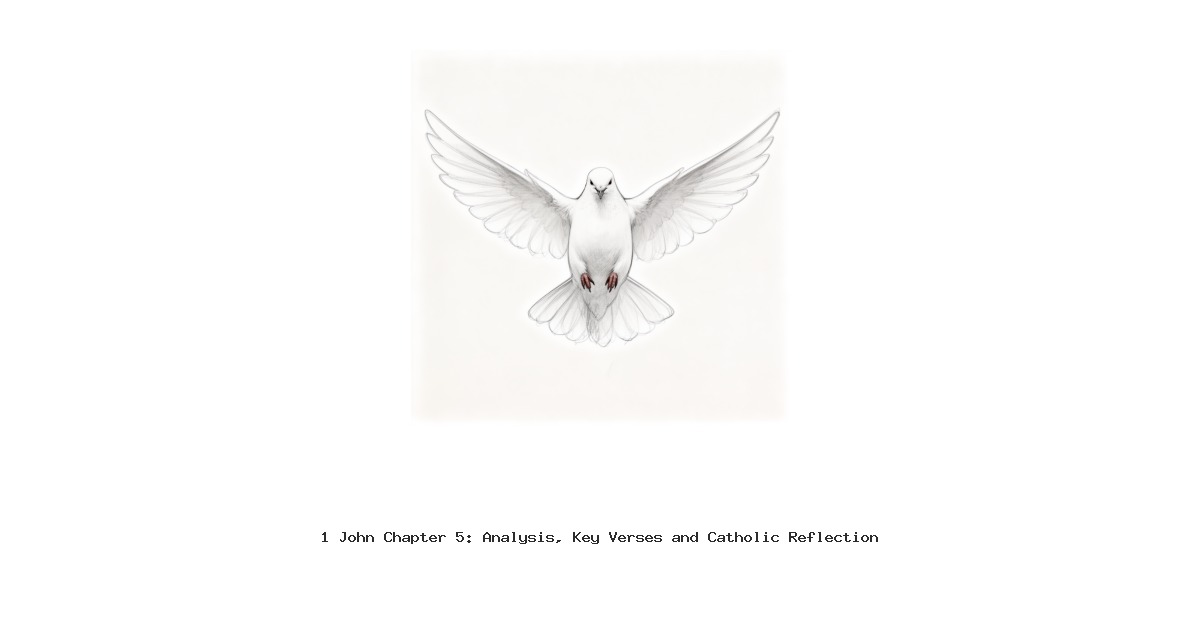
Paraphrase: The Spirit, the water, and the blood testify to Jesus, and these witnesses agree—true testimony to his messianic mission.
Theological explanation: The threefold testimony underscores a solid, apostolic witness to Jesus. The imagery of Spirit, water, and blood ties baptism, crucifixion, and the Spirit’s witness to Jesus’ identity. It affirms that Christ’s work is confirmed by multiple, converging signs in the life of the faith community.
1Jn 5:7 — Opening words (paraphrase)
Paraphrase: In heaven there is the Father, the Word, and the Holy Spirit, and these three are one.
Theological explanation: This verse is a traditional locus for the Church’s understanding of the Trinity in Catholic theology. It presents the triune witness as foundational to the Christian confession about Christ. The verse, though textually debated in some manuscripts, has long been taken in the Catholic tradition as a succinct articulation of the divine testimony about Jesus.
1Jn 5:8 — Opening words (paraphrase)
Paraphrase: On earth there is the Spirit, the water, and the blood, and these three witnesses are in agreement.
Theological explanation: This verse functions as a parallel to the heavenly testimony, reinforcing the credibility of Christian faith. It connects the Spirit’s work with Baptism and the Paschal mystery as visible signs. The unity of witness strengthens the believer’s confidence in the truth of the Gospel.
Church Teaching on This Passage
The Fathers and later Catholic magisterial teaching read 1 John 5 as a charter of faith, love, and certainty in salvation. The Fathers emphasize the centrality of belief in Jesus as the Christ and the accompanying love that manifests in obedience to God’s commandments. The Church also highlights the Spirit, water, and blood as signs of baptism, Paschal mystery, and the Spirit’s ongoing witness in the Church. In the Catechism and in patristic exegesis, this chapter undergirds the Catholic conviction that believers may know they have eternal life through faith in Christ and participation in the life of the Spirit.
1 John 5 is not tethered to a single liturgical season. As a New Testament epistle, its themes—faith in Christ, love, and the assurance of eternal life—are drawn upon in the Church’s readings when the lectionary selects a non-Gospel reading from the Letters. In practice, passages from 1 John appear intermittently in Ordinary Time, with the exact placement varying by liturgical year and local usage. The chapter’s emphasis on faith, prayer, and the witness of God makes it suitable for feasts or moments focusing on conviction, discernment, and the life in the Spirit.
Lectio Divina
Verse (paraphrase): This is the testimony: God gave us eternal life, and this life is in his Son.
Meditation question: How does your daily life bear witness to the life you have in Christ, and where do you place your confidence for eternal life?
Short prayer: Lord Jesus, deepen my faith in you today, that I may know you and live as one who possesses eternal life with you. Amen.
FAQ
Who wrote 1 John 5, and to whom was it written?
Traditionally attributed to John the Apostle as the Elder, the letter is addressed to the Christian communities in Asia Minor, sometimes referred to as the beloved or elect who are facing tests of faith and love.
What is the main message of 1 John 5?
The core message is that faith in Jesus as the Christ conquers the world, and that believers may have confidence before God through their faith, love, and obedience, with the Spirit’s witness confirming their hope of eternal life.
What do the phrases water, blood, and Spirit signify in this chapter?
Water and blood symbolize Baptism and the Paschal mystery, while the Spirit represents God’s ongoing testimony within the believer; together they form a triad of witness to Jesus’ identity and mission.
How does 1 John 5 relate to Catholic belief and practice?
It supports the Catholic emphasis on faith in Christ as the pathway to eternal life, the commandment to love, and the certainty of salvation in the Spirit’s operating within the Church; the chapter also informs catechesis on the Trinity and the signs of baptism and Eucharistic life.
Catholic NABRE study of Revelation 4: overview, paraphrased key verses, church teaching, liturgical use, Lectio Divina steps, and practical FAQs for reflection.
An in-depth Catholic study of Revelation 5 in NABRE, including text context, key verses with brief NABRE quotes, Church teaching, liturgical relevance, Lectio Divina, and practical reflections.