Ordaining Ceremony: A Practical Guide to Traditions
This article offers a comprehensive, practical guide to the many facets of ordaining ceremonies—from the etymology and history of the rite to the day‑of logistics, liturgy, and post‑ceremony light for both organizers and candidates. While the word ordination is most commonly associated with religious leadership, this guide uses the broad term ordaining ceremony to capture the spectrum of commissioning, investiture, and installation rites across traditions. Whether you are preparing for a ceremonial setting in a church, a monastery, a temple, or a secular‑civil context that uses a form of formal commissioning, the practices outlined here aim to help you plan thoughtfully, respect sacred tradition, and create a meaningful experience for all participants.
At its core, a rite of ordination or investiture ceremony is a public and often sacred act that entrusts a person with a new role, authority, or vocation. The purpose is not merely ceremonial but transformative: it marks the transition of a candidate from lay status into a new spiritual, religious, or professional office. In many traditions, an anointing, a laying on of hands, or a solemn vow serves as a visible sign that the candidate receives a grace, a responsibility, and a commitment from a transmitting lineage of leadership.
When planning or attending an ordination, it is useful to distinguish among three broad categories:
Ordination as the formal conferment of sacred authority by a recognized authority or body.
Commissioning or investiture, which may accompany ordination or occur in secular contexts to authorize a person for service or leadership within a community.
Installation, which often follows ordination to place the new officeholder into a specific post or context (for example, within a parish, diocese, or organizational unit).
Across traditions, you will frequently encounter a shared cadence: preparation and discernment; a processional entry; readings or scriptures; a sermon or exhortation; the candidate’s vows; the ritual impartation of authority (often signified by hands or gestures); blessing and prayers; the presentation of symbolic vestments or emblems; and a formal welcome into the community. In many settings, the ceremony concludes with a communal blessing, a sign of peace, and a reception or reception‑like gathering that reinforces communal support.
Historical overview of ordination rites
The history of the ordination rite is as old as organized religious life itself. Though the particular mechanics have changed with time and tradition, several constants endure: the transfer of spiritual authority, the transmission of tradition, and the community’s ratification of a leader’s new role.
Early rites often centered around anointing, laying on of hands, and the invocation of divine favor. Over centuries, many traditions codified the practice in liturgical books, catechesis, and canonical rules. In some monastic and ecclesial orders, the rite is tightly regulated by a bishop or other senior authority, while in others, a council or regional assembly may authorize the act. In modern practice, the ceremony may take place within a worship service, a dedicated liturgy, or a special service designed to emphasize the solemnity of the moment.
It is important to recognize that the historical lineage of ordination rites informs present forms without constraining innovation. A practical guide should honor the heritage and adapt to context, ensuring that the ceremony remains meaningful, accessible, and faithful to core principles such as integrity, service, and accountability.
Core elements and structure of the ceremony
While every tradition has its own flavor, many ordaining ceremonies share a recognizable structure and essential elements. The following outline highlights common components and offers notes on how to implement them in a respectful, deliberate way.
The opening and processional
A dignified processional usually introduces the person or persons to be ordained and marks the formal start of the ceremony. Key considerations include:
Processional music that suits the mood and setting.
A designated route and stage layout that accommodate mobility and accessibility.
Acknowledgments of lineage or community support, which may appear as banners, family insignia, or liturgical gestures.
Liturgy of the word or readings
Readings from sacred texts, scripture, or relevant literature establish the theological and moral frame for the rite. These readings often address themes such as service, humility, stewardship, and the call to leadership.
One or more scripture passages or quotes relevant to vocation.
A responsorial psalm or reflective hymn that invites the gathered community to participate.
A brief sermon, exhortation, or charge that clarifies expectations and responsibilities.
Vows, promises, and commitments
The heart of the ordination rite is the moment when the candidate commits to the duties of their new office. Depending on tradition, this may include:
Professed vows or formal promises made before God, the community, or a governing body.
A solemn oath of office or fidelity pledge that binds the candidate to standards of doctrine, ethics, and service.
A shared or individual declaration of intent that clarifies the calling and expectations of leadership.
Laying on of hands and blessings
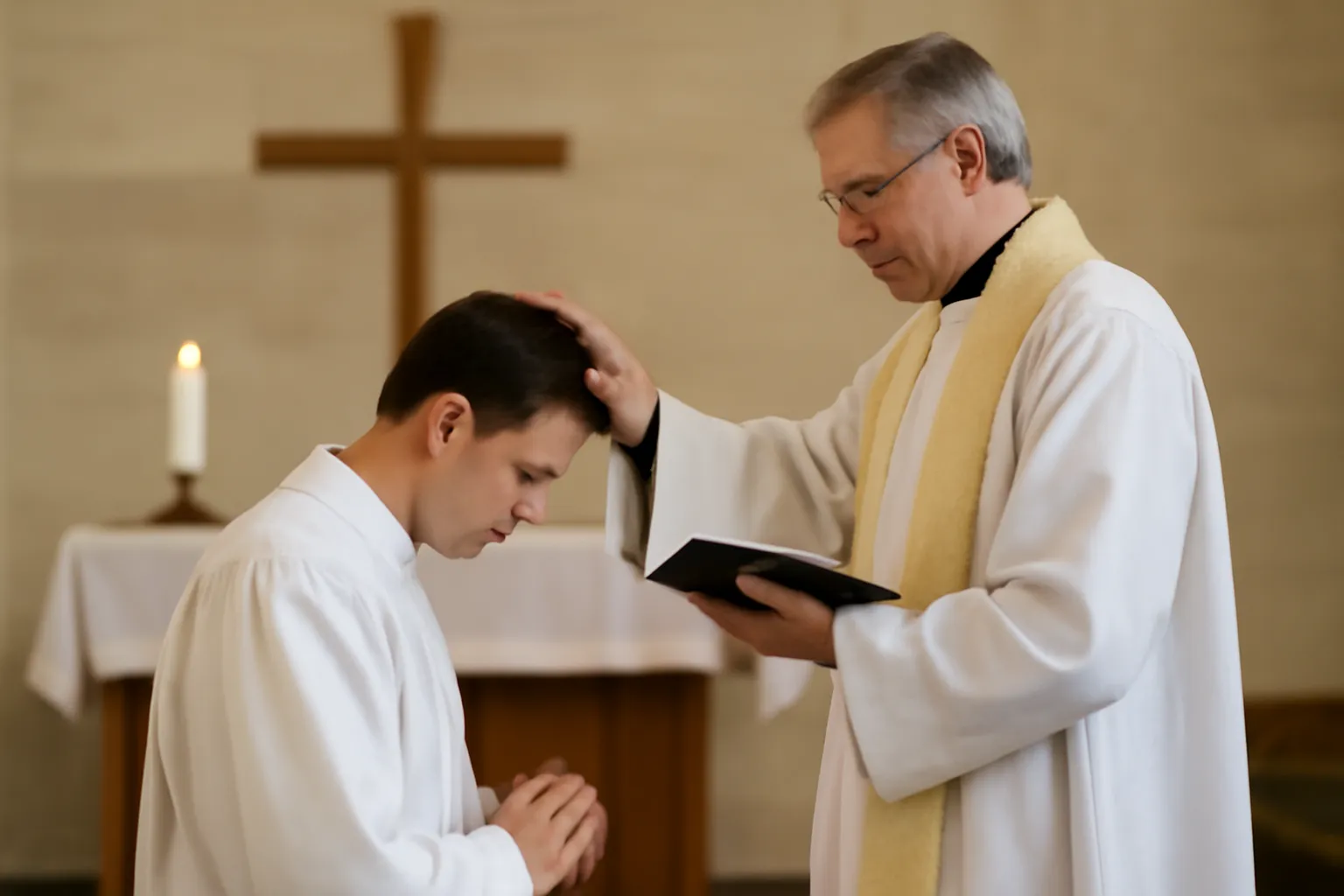
The ritual act of laying on of hands is widely recognized as a sign of blessing, impartation, and transmission of grace or authority. In many traditions, this gesture accompanies prayer and the conferral of power to act in an official capacity.
Typically conducted by bishops, elders, or senior clergy or by respected community leaders, this act is symbolic as well as communal.
Where applicable, the anointing with oil or the use of sacred symbols reinforces the sense of consecration and responsibility.
Vestments, symbols, and signifiers
A distinctive vestment or insignia helps signal the new role. Common elements include a stole, a ring or badge, a cross, a book, or other symbolic objects that align with the office.
Vestal colors, fabrics, and textures may carry liturgical or organizational meaning.
The presentation of symbols of office—such as a staff, ring, or badge—helps communicate authority and accountability to the community.
Blessing, commission, and welcome
The ceremony typically culminates in a blessing or commissioning, followed by the public welcome of the new officeholder into the community. This moment is often marked by a sign of peace, a benediction, or a communal affirmation.
Closing rites and reception
After the formal acts, a closing prayer or blessing may be offered, and attendees may be invited to a reception, meal, or fellowship gathering. The postlude often reinforces the sense of ongoing community and mutual responsibility.
Variations across traditions
The ordaining ceremony varies widely depending on religious tradition, cultural context, and organizational governance. Below are representative patterns drawn from major strands, with attention to similarities that help compare practices without flattening diversity.
Christian traditions
In Christian contexts, ordination often involves a bishop, priest, or deacon. Although the specifics differ, several core motifs recur:
Apostolic succession or transmission of authority in some traditions, typically via laying on of hands by ordained clergy.
The sacred oils or chrism as a symbol of blessing, empowerment, and anointing for ministry.
A liturgical setting that anchors the rite in scripture, doctrine, and the life of the church.
Catholic and Orthodox priestly ordination
In these traditions, the rite is often highly structured and reserved for candidates who have completed extensive formation. Typical features include:
Laying on of hands by bishops and a presiding bishop or archbishop who presides over the rite.
Anointing with chrism oil, symbolizing consecration to the priesthood and the mission of service.
Thus, the priestly ordination is considered a sacramental act with implications for sacramental participation and leadership within the parish or diocese.
Anglican and Episcopal ordination
In Anglican and Episcopal churches, ordination often mirrors Catholic patterns in form but preserves distinctive practices and governance. Core elements typically include:
A formal request and examination process prior to the rite.
Vows and the laying on of hands by one or more bishops.
The candidate’s reception into a specific order (deacon, priest, or bishop) as appropriate to the tradition.
Protestant and Reformed ordination
Protestant communities frequently emphasize the mission of the Gospel, the authority of Scripture, and the accountability of the office to the local church. Typical characteristics:
Greater emphasis on the congregation’s consent or electing authority in some denominations.
Less emphasis on sacramental oils or apostolic succession, and more on the call, training, and fit for ministry.
In many settings, a commissioning service may be used for church leaders who assume roles such as pastors, teachers, or missionaries.
Buddhist ordination and monastic entry
In Buddhist contexts, ordination can take two primary forms: the formal entry into monkhood as a bhikkhu or bhikkhuni (fully ordained monk or nun) or the novice ordination (pabbajja) that prepares a layperson for higher ordination. Common features include:
A sequence of vows and rules (the Vinaya or related codes) for ethical conduct.
A lineage‑based ordination ceremony conducted by senior monastics with passing of the lineage key or teaching authorization.
Rituals of renunciation, simplicity, and commitment to the monastic life, often accompanied by significant ritual chanting and meditation guidance.
If you are considering an ordaining ceremony as a candidate, the following practical steps help you prepare with clarity, mindfulness, and integrity. Each step can be adapted to different traditions while maintaining core principles of discernment, accountability, and service.
Discernment and self‑awareness: Engage in quiet reflection or spiritual direction to confirm the calling and to distinguish genuine vocation from social or familial pressure.
Education and formation: Complete the required education, formation programs, or apprenticeship under qualified mentors as defined by your tradition.
Application and screening: Submit the required materials, undergo interviews or assessments, and participate in any discernment teams or boards that evaluate suitability for the office.
Mentorship and practical experience: Seek opportunities for supervised ministry, service projects, or teaching assignments to develop practical skills and pastoral presence.
Liturgical literacy: Learn the specific rites, liturgies, and rubrics that will govern the ordination ceremony you will participate in.
Spiritual and emotional readiness: Prepare for the emotional and spiritual dimensions of your vocational transition, including handling public scrutiny and accountability.
Personal vow drafting: Work with mentors to craft personal vows or commitments that are authentic, clear, and sustainable over time.
Coordination with authorities: Align with the central or local authorities who supervise the rite to ensure compliance with canonical or organizational rules.
Family and community preparation: Communicate with your community about the ceremony’s meaning, timing, and accommodations for guests.
Logistics and rehearsal: Participate in rehearsals to practice the sequence of rites, the placement of participants, and the cues for music and readings.
Roles and responsibilities of participants
A successful ordaining ceremony involves a wide circle of participants who contribute to the spiritual significance and logistical success of the event. Clear roles help minimize confusion on the day itself.
Presiding authority: The bishop, senior pastor, archbishop, abbot, or designated high‑ranking official who administers the rite.
Ceremonial leaders: Readers, speakers, archers of the liturgy, or deacons who guide the structure of the service.
Mentors and sponsors: Individuals who accompany the candidate through formation and affirm the candidate’s readiness.
Musicians and liturgical artists: Singers, organists, choir directors, and visual artists who illuminate the ceremony through art and sound.
Acolytes and assistants: Members who help with processions, vesting, candles, banners, and other ceremonial tasks.
Administrative staff: Individuals who coordinate invitations, records, liturgical books, and post‑ceremony communications.
Community and family: The gathered congregation, friends, and relatives who offer support, accountability, and celebration.
Thoughtful planning helps ensure the ordaining ceremony respects tradition while remaining accessible and meaningful for participants and guests. Use the following checklist as a planning guide.
Define the scope and scope of the rite: Decide whether this is a traditional ordination, a commissioning service, an installation, or a hybrid model.
Confirm canonical or governing authority requirements: Verify age, training, and eligibility rules, and obtain necessary permissions or endorsements.
Choose the venue and date: Ensure the space accommodates accessibility needs, acoustics, seating capacity, and liturgical requirements.
Draft the liturgy: Prepare the structure, order of service, readings, prayers, and responses; align with tradition and local context.
Prepare vestments and symbols: Decide on colors, fabrics, and symbolic objects that match the rite and convey meaning.
Arrange participants: Assign roles for readers, hymn leaders, and liturgical assistants; schedule rehearsals.
Coordinate music and art: Select hymns or chants, confirm instrumentalists, and plan any visual projections or banners.
Develop logistics for accessibility: Plan for sign language interpretation, wheelchair access, hearing amplification, and quiet spaces.
Plan communications: Create invitations, program copies, and social media or website announcements that explain the rite and its significance.
Prepare for aftercare: Arrange a reception or fellowship time, take‑home materials, and follow‑up communications about ongoing formation.
Liturgy and language: crafting a meaningful rite
The language of the ordaining ceremony should be precise, hopeful, inclusive where appropriate, and faithful to the tradition’s theology. Consider the following approaches:
Inclusive language: Use gender‑neutral or inclusive terms where possible, while honoring tradition and the integrity of the office.
Clarity of vows and commitments: State the promises plainly, with sufficient repetition for the audience to hear and affirm.
Significant gestures: Use hands, oil, candles, or water intentionally to convey meaning beyond words.
Public accountability: Include a moment where the community explicitly affirms the candidate’s readiness to serve and uphold ethical standards.
Accessibility, inclusivity, and cultural sensitivity
An effective ordination ceremony is accessible and welcoming to all participants, including people with disabilities, diverse cultural backgrounds, and varying levels of religious literacy. Practical steps include:
Accessible venue design: Ramps, seating for companions, accessible restrooms, and clear signage.
Assistive tech: Real‑time captioning, sign language interpretation, and hearing loop systems when appropriate.
Plain language explanations: Brief glossaries or notes for readings and symbols to help attendees understand the rite’s significance.
Respect for tradition and diversity: Balance reverence for sacred formats with sensitivity to cultural practices within the community.
Common pitfalls and how to avoid them
Every ordaining ceremony can encounter challenges. Anticipating these allows you to respond gracefully and maintain the integrity of the rite.
Overcrowding or logistical confusion: Create a clear schedule, assign point persons, and rehearse transitions.
Rushed vows or ambiguous commitments: Rehearse the text aloud, provide copies for participants, and confirm comprehension.
Disregard for tradition: Maintain core elements of the rite while allowing respectful adaptations for contemporary contexts.
Inadequate pastoral care: Ensure post‑ceremony support for the candidate and family, including debrief opportunities.
Lack of accessibility: Audit accessibility features early; involve people with disabilities in planning feedback.
After the ceremony: ongoing formation and responsibilities
Acceptance into a role marked by ordination is not a one‑time event but the beginning of a path of ongoing formation, accountability, and service. Consider these post‑ceremony practices:
Documenting the rite: Record the date, participants, and canonical references for archival purposes and future reference.
Mentorship and formation plan: Establish a structured plan for continued education, supervision, and pastoral development.
Public recognition and duties: Implement a phased introduction to the community, including expectations and responsibilities.
Ethical accountability: Ensure clear guidelines for ethical conduct, reporting channels, and a process for addressing concerns.
Community integration: Facilitate opportunities for the newly ordained to engage with different ministries and communities.
Case studies: practical snapshots of ordination in action
Real‑world examples illustrate how diverse communities carry out the ordaining ceremony while preserving core meanings.
Case study A: A traditional Catholic priestly ordination
In a Catholic setting, the ceremony typically unfolds within a liturgical Mass or a dedicated liturgy. The candidate is presented to the bishop, undergoes a period of examination, and then receives the laying on of hands and chrism oil. The rite concludes with the bishop’s blessing and the priest’s reception into parochial ministry, followed by the community’s welcome.
Case study B: An Episcopal commissioning for church leadership
An Episcopal or Anglican service may emphasize equipping for service and holy orders through a commission that affirms the lay ministry within the church body. The service often includes deacon’s readings, the candidate’s vows, and a multi‑stage blessing that culminates in a formal installation.
Case study C: A Buddhist monastic ordination
In a Buddhist context, the novice ordination may precede the full monastic vows. The ceremony focuses on the candidate’s adherence to the Vinaya, meditation instruction, and the passing on of lineage from senior monks or nuns. The atmosphere is contemplative, with chanting, silence, and a generous emphasis on renunciation and service.
Resource guide: further reading and tools
Whether you are a participant, organizer, or observer, the following resources can deepen understanding of ordaining ceremonies and provide practical tools for planning and reflection.
Liturgy books and rubrics that outline authorized rites, rubrics, and permissible adaptations for your tradition.
Canonical manuals or governance documents that specify eligibility, training, and oversight requirements.
Pastoral guides on vocational discernment, leadership formation, and ethical practice.
Ethics and accountability resources addressing the responsibilities that accompany ordained or commissioned roles.
Accessibility and inclusion guides that help ensure ceremonies are welcoming and accessible to all guests.
In researching and planning, you may encounter many terms for the ceremony that share a common aim: to recognize a person’s call to service and to invite the community to witness and support that call. Regardless of tradition, the most enduring success of any ordination lies in integrity of character, clarity of purpose, and the quality of the ongoing formation that follows the rite.
Final reflections: why this matters
An ordaining ceremony is more than a ritual marking a transition. It is an act of trust—a moment when a community affirms its shared values, its expectations for leadership, and its responsibility to nurture the vocation of those who serve. When well planned and thoughtfully executed, the rite becomes a living memory that sustains both the leader and the community through the challenges and opportunities of the years ahead.
Introduction: Why a Quick Verification Guide Matters When someone claims to be legally ordained to perform ceremonies, especially weddings, it is prudent to verify that claim before relying on them for a legally binding event. An ordination can come from many sources—religious organizations with centuries of tradition, new online platforms,...
Illinois Ordained Minister Requirements: A Complete Guide If you are considering a path in ministry within the state of Illinois, you may hear the term ordained minister used in a variety of contexts. The reality is that Illinois ordained minister requirements are not a single, statewide license or credential issued...