Exodus Chapter 19: Analysis, Key Verses and Catholic Reflection
Exodus 19 sits at a pivotal moment in the Pentateuch: after God has delivered Israel from slavery in Egypt, the nation encamps at Sinai to receive a covenant and the framework of divine law. The chapter marks the transition from salvation history as liberation to salvation in covenant, with God’s own voice shaping a holy people. In NABRE, the text emphasizes telegraphic acts of command, revelation, and invitation: a people called to obedience, holiness, and priestly service. This chapter thus foreshadows the giving of the Ten Commandments and the opening sections of the Book of the Covenant. It invites Catholic readers to contemplate how God invites us into a living relationship.
In Exodus 19 the Israelites arrive at the wilderness of Sinai in the third month after leaving Egypt. Moses ascends the mountain to meet God, and the Lord speaks from Sinai, outlining the terms of the covenant. The people are to sanctify themselves and prepare to encounter the divine—the mountain must be approached with reverence, not intrusion. God promises to come down in majesty, while Moses acts as mediator, delivering the divine message to Israel and guiding the response she should offer in faith and obedience. The chapter sets the stage for the formal giving of the covenant and the injunctions that follow in the Book of the Covenant and the Decalogue.
Key Verses of Ex 19
Ex 19:1 — In the third month, after the Israelites had left Egypt
In the third month after the Israelites had left the land of Egypt, on that very day they came to the wilderness of Sinai.
The verse anchors the narrative in a concrete moment of history, highlighting God’s faithfulness in leading his people to a sacred meeting place. It marks the transition from liberation to covenant formation and signals the drama of theophany that follows. It also situates the people within the wider salvation-history arc that culminates in the covenant community.
Moses went up to God, and the LORD called to him from the mountain, saying, \”Thus you shall say to the house of Jacob and tell the children of Israel: you have seen what I did to the Egyptians, and how I bore you on eagles’ wings and brought you to myself.\”
The verse presents Moses as mediator and the divine initiative in revelation. It frames obedience as the response to God’s saving action, not merely a formula of ritual. It invites reflection on how God invites humanity into a relationship sustained by fidelity and memory of deliverance.
Ex 19:5 — Now therefore, if you will obey my voice
Now therefore, if you obey my voice indeed and keep my covenant, you shall be my own possession among all peoples, for all the earth is mine.
This verse crystallizes the conditional aspect of the Sinai covenant: obedience to God’s voice and fidelity to the covenant will confer a special status on Israel. It affirms the universality of God’s ownership of all creation while calling Israel to holiness and priestly mission. The verse invites Catholic readers to ponder how love and obligation intertwine in God’s plan for a holy people.
Ex 19:9 — The LORD said to Moses
The LORD said to Moses, \”Be ready, for on the third day the LORD will come down in the sight of all the people on Mount Sinai.\”
This announcement frames the approaching theophany as a communal event requiring purification and reverence. It underscores the essential dynamic of revelation: God speaks to his people, and they are called to listen with faith. The responsiveness of Israel becomes a model for the Church’s own reception of divine truth.
Ex 19:16 — On the morning of the third day
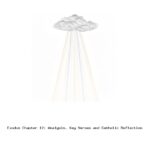
On the morning of the third day there were thunders and lightnings, and a thick cloud on the mountains, and a very loud trumpet sound, so that all the people in the camp trembled.
The eruption of natural signs accompanies the decree of divine revelation. Thunder, lightning, and the trumpet signal awe, fear, and reverent attention before God. This moment invites believers to consider how God’s presence transforms fear into devoted worship and fidelity.
Mount Sinai was all in smoke because the LORD descended upon it in fire; the smoke went up like the smoke of a kiln, while the whole mountain trembled violently.
The theophany on Sinai is a dramatic pedagogy of revelation: fire, smoke, and trembling reveal God’s holiness and power. The imagery points to God’s intention to sanctify a people and to establish a relationship rooted in reverence and obedience. For Catholics, Sinai’s smoke and flame prefigure the transformative presence of the Spirit in the Church.
Ex 19:20 — The LORD descended upon Mount Sinai
The LORD descended upon Mount Sinai, at the top of the mountain; and the LORD summoned Moses to the top of the mountain.
This verse confirms the moment of divine invitation and Moses’ ascent as the conduit of revelation. It demonstrates that God’s proximity demands humility and careful observance of sacred boundaries. The event anchors the covenant arrangement that will structure Israel’s worship, governance, and sanctification.
Church Teaching on This Passage
Patristic writers and the Magisterium interpret Exodus 19 as the foundational revelation of the Sinai covenant, where God initiates relationship, defines holiness, and commissions Israel for priestly service. The Fathers, including Chrysostom and Augustine, highlight the theophany’s awe and the people’s need for reverence before God. Augustine emphasizes the pedagogy of the law as guiding toward a more perfect worship in Christ, while Chrysostom speaks of the moral and liturgical implications of hearing God’s voice. In the Magisterium, Sinai is understood as the stage upon which the old covenant reveals the necessity of grace; the moral law expressed in this chapter foreshadows the eternal law fulfilled in Christ and enacted in the Church through baptism and the sacraments.
This Chapter in the Liturgy
This chapter is not a fixed Sunday or feast-day reading in the universal Roman Rite, but its themes—revelation, covenant, holiness, and the giving of the law—resonate throughout the liturgical year. Catechetical and homiletic contexts frequently invoke Sinai to illuminate how God reveals himself, calls for faith and obedience, and sanctifies a people. The imagery of fire, cloud, and voice informs liturgical prayer, especially in celebrations that emphasize God’s sanctifying presence and the priesthood of the faithful.
Now therefore, if you obey my voice indeed and keep my covenant, you shall be my own possession among all peoples, for all the earth is mine.
Meditation question: How does being God’s treasured possession shape my daily choices and how I treat others?
Prayer: Lord, help me to hear your voice, to keep your covenant, and to live as your sanctified people, witness to your love in the world. Amen.
FAQ
Why is Sinai described with such awe and fear?
The theophany shows God’s holiness and authority; the people respond with reverence, acknowledging that God reveals himself in a way that calls for disciplined obedience and trust.
What does it mean that Israel is to be a “kingdom of priests”?
It signifies a special vocation: all Israel participates in a priestly role by worship, offering, and living according to God’s law, pointing toward the universal priesthood fulfilled in Christ and shared with the Church.
How does this chapter anticipate the giving of the Ten Commandments?
The covenant language and call to obedience prepare the way for the explicit moral law declared in the subsequent chapters, forming the foundation of Israel’s covenant life.
How does Exodus 19 relate to the New Covenant in Christ?
Christ fulfills the law and inaugurates the New Covenant; Sinai’s revelation foreshadows grace-made law in the Church, where God’s presence dwells through the Spirit and the sacraments.
Genesis 33 in NABRE: analysis of Jacob and Esau’s reconciliation, key verses with Catholic reflections, patristic insights, liturgical context, and a Lectio Divina.
A Catholic study of Genesis 34 (NABRE): text, context, key verses, church interpretation, liturgical use, and a short Lectio Divina reflection for prayer.