Psalms Chapter 23: Analysis, Key Verses and Catholic Reflection
Psalm 23 stands at the heart of the Psalter’s pastoral collection and remains a staple of Catholic devotion for its serene trust in God’s providence. In the NABRE edition, this brief lyric is traditionally attributed to David and presents God as a shepherd who guides, sustains, and protects His flock through all seasons. From the imagery of green pastures and quiet waters to the valley of the shadow of death and the promise of eternal dwelling, the psalm invites a personal encounter with divine care. Read in the wider context of the Psalms and the Gospel, Psalm 23 shapes prayer, liturgy, and everyday trust in God’s faithfulness.
Text and Context of Ps 23
Psalm 23 belongs to the collection of prayers and songs that comprise the Book of Psalms, used in ancient Israelite worship and, in Catholic practice, continually drawn upon in liturgy and devotion. The psalm presents a first‑person speaker who proclaims God as shepherd and caretaker. It moves from the nourishment of green pastures and the guidance beside still waters to protection amid danger, pastoral fidelity, and a confident hope: the believer’s life united with the house of the Lord. This sequence embodies a theology of intimate relationship with God, lived out in trust and worship.
Key Verses of Ps 23
Ps 23:1 — The Lord is my shepherd
The Lord is my shepherd; there is nothing I shall want.
The opening verse establishes a personal, intimate trust: God’s shepherding provides for all needs and sets the tone for a life oriented toward God’s care, not human anxiety.
He makes me lie down in green pastures; he leads me beside still waters.
This verse depicts nourishment and rest as the fruit of divine guidance. It portrays peace and renewal as a consequence of living under God’s care.
Ps 23:3 — He restores my soul
He restores my soul; he guides me along paths of righteousness for his name’s sake.
The restoration of the soul signals inner renewal through God’s presence and guidance. The verse links ethical living with trust in God’s faithful leadership for the sake of God’s name.
Ps 23:4 — Even though I walk in the valley of the shadow of death
Even though I walk in the valley of the shadow of death, I fear no evil.
In moments of danger or fear, God’s nearness dispels fear. The shepherd’s presence—symbolized by the rod and staff—names protection, fidelity, and companionship in darkness toward renewed confidence and life.
Ps 23:5 — You spread the table before me in the sight of my foes
You spread the table before me in the sight of my foes.
God’s generosity remains evident amid hostility. This image of banquet-like blessing communicates hospitality, honor, and divine provision even when enemies threaten, with the anointing symbolizing blessing and welcome, and the cup signaling abundant grace.
Ps 23:6 — Surely goodness and mercy shall follow me all the days of my life
Surely goodness and mercy shall follow me all the days of my life.
The psalm’s culmination offers unwavering trust in God’s ongoing mercy and steadfast love, culminating in dwelling with the Lord forever—an anticipatory note of eternal life.
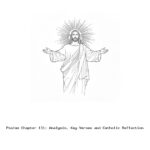
Patristic writers consistently read Psalm 23 as a profound portrait of God’s shepherding care. The image of the Good Shepherd prefigures Christ, who leads, nourishes, and lays down his life for the flock. Fathers such as Augustine, Jerome, and Bernard of Clairvaux emphasize the soul’s journey toward intimate union with God through trust, prayer, and grace. In the Magisterium, Psalm 23 stands as a vivid expression of God’s faithful providence and a model for confidence in divine care within liturgical prayer, catechesis, and pastoral ministry.
This Chapter in the Liturgy
Psalm 23 is among the most frequently used passages in Catholic worship. It provides consolation at funerals and memorial rites, is common in the Divine Office, and is invoked in times of illness or struggle. Its imagery of the Good Shepherd resonates with the Church’s teaching on Christ’s priestly shepherding of the people and invites the faithful to trust God’s loving presence in life, death, and eternal life.
Lectio Divina
One verse: The Lord is my shepherd; I lack nothing.
Meditation question: How can I more fully entrust my daily needs, fears, and grief to the shepherd’s care today?
Prayer: Lord, you shepherd me through every season; grant me the grace to trust your path and to dwell in your house forever. Amen.
FAQ about Ps 23
Q1: What is the main image of Psalm 23?
A: The central image is God as shepherd who tends, guides, and protects his flock, ensuring nourishment, rest, and safety.
Q2: How does Psalm 23 point to Jesus as the Good Shepherd?
A: The shepherd motif finds its fulfillment in Christ, who lays down his life for the sheep and leads them to eternal life.
Q3: In which Catholic liturgical contexts is Psalm 23 used?
A: It is frequently used in funeral rites, the Divine Office, and personal prayer as a source of comfort and trust in God’s care.
Q4: How can Psalm 23 help in times of grief or danger?
A: It invites trust in God’s presence, reassures that God protects and provides, and points toward hope in eternal life.
Psalms Forgiveness: Finding Mercy in Scripture The book of Psalms, a collection of prayers, songs, and poems spanning many generations, offers some of the most vivid and intimate expressions of forgiveness and mercy found anywhere in Scripture. Within these sacred songs, individuals and communities cry out for cleansing, confess their...
Catholic study of Psalm 9 (NABRE): context, key verses, patristic and magisterial insights, liturgical use, and Lectio Divina for prayer and study in daily life.