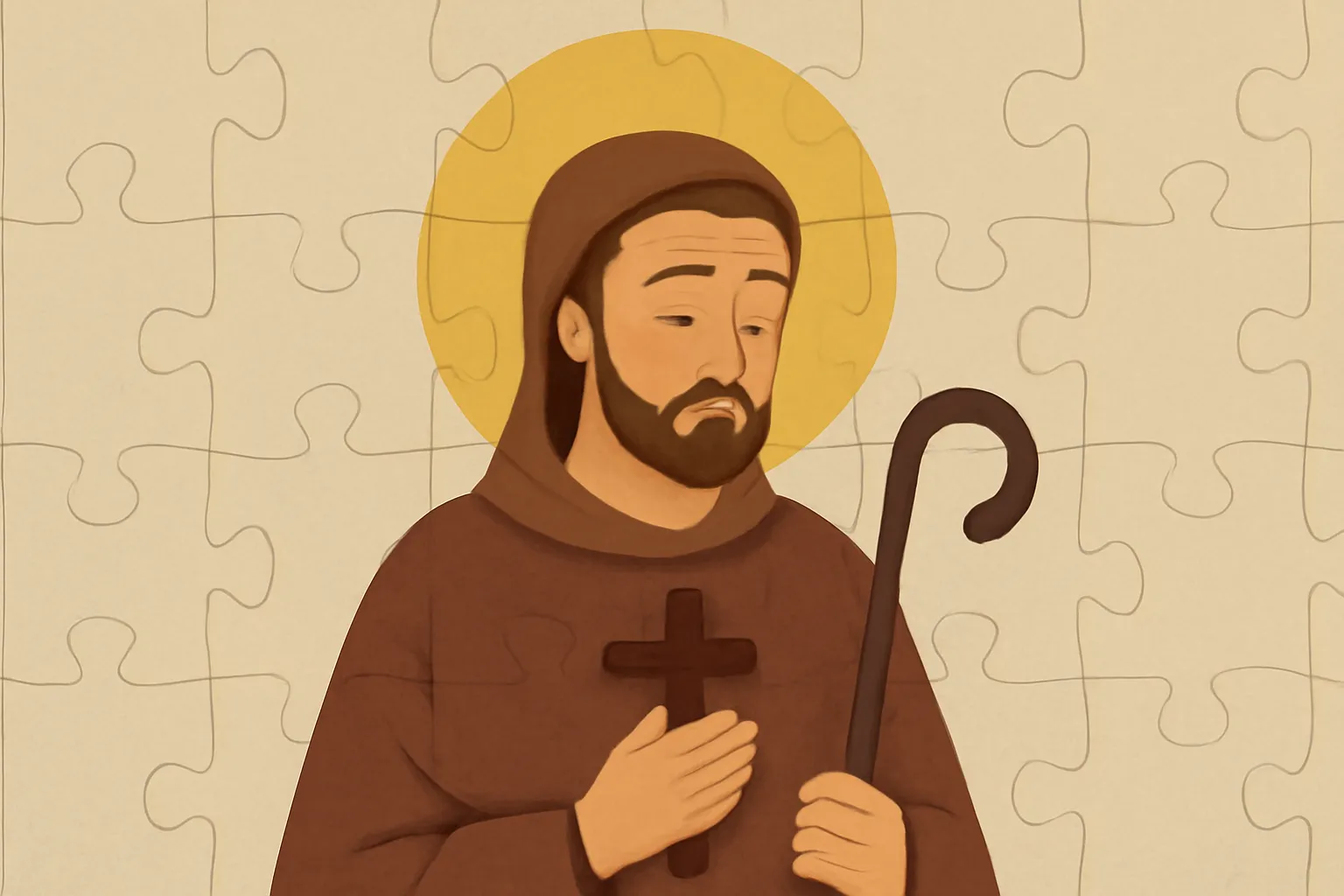
Saint Puzzles: The Ultimate Guide to Saint-Themed Puzzles
Saint puzzles sit at the intersection of faith, history, and brain-teasers. They invite learners of all ages to engage with the lives, symbols, and feast days of saints through playful challenges that sharpen memory, encourage research, and deepen devotion. This guide offers a comprehensive tour of saint-themed puzzles, from practical ideas you can use in classrooms and households to design principles, resources, and ready-to-run templates. Whether you are a catechist, a homeschooling parent, a librarian, or a church volunteer seeking meaningful activities, you’ll find strategies to build engaging, respectful, and educational puzzle-based activities around the saints.
What Are Saint Puzzles?
By saint puzzles we mean any puzzle or game whose questions, clues, or tasks are built around saints—their names, symbols, stories, feast days, miracles, patronages, or iconography. These puzzles come in many forms, including word searches, crosswords, acrostics, trivia quizzes, jigsaw-style visual puzzles, and scavenger-hunt adventures. The core aim is not merely to entertain but to teach: to help learners recall facts about saints, understand their historical contexts, and connect those stories to contemporary life and virtue.
Across cultures, saint puzzles have a long history as an instrument of catechesis and devotion. Word games and trivia can accompany lessons on liturgical seasons, hagiographies, and the moral lessons embodied by saintly lives. In modern settings, digital tools expand the reach of these puzzles, while printed materials remain invaluable for parish activities, classrooms, and family table-time. The breadth of saint-themed puzzles makes them suitable for diverse audiences—from young children beginning to recognize saint names to adults exploring the deeper symbolism of iconography.
Why Use Saint-Themed Puzzles?
Incorporating saint puzzles into learning environments offers a mix of cognitive, spiritual, and social benefits. Here are some key reasons to include these puzzles in your repertoire:
Memory and retention: Repetition in a puzzle format helps students remember saint names, dates, and symbols more effectively than passive reading.
Contextual understanding: Puzzles that connect a saint’s life to a symbol or patronage deepen comprehension beyond memorization.
Engagement: Gamified learning can boost motivation and participation, especially for kinesthetic or visual learners.
Curricular alignment: Saint puzzles can align with catechetical goals, liturgical seasons, or feast-day celebrations.
Accessibility: Puzzles can be scaled for different ages and abilities, including multilingual classrooms and inclusive settings.
Community and family learning: Puzzle activities invite collaboration, discussion, and shared reflection during family gatherings or parish events.
Historical and cultural literacy: Engaging with saints exposes learners to historical contexts, art, and regional traditions tied to Christian devotion.
History and Context of Saint-Based Puzzles
Educational puzzles have long accompanied religious instruction. In medieval and early modern catechesis, mnemonic devices, rhymes, and symbolic games helped learners remember saints and church doctrine. Today, saint-based puzzles draw on a broad palette of formats—from classic crosswords to digital escape-room styles—while sustaining a respect for the sacred context. The contemporary approach emphasizes accuracy, sensitivity, and inclusivity: it is possible to design puzzles that celebrate a broad spectrum of saints from different traditions, eras, and cultural backgrounds, without reducing their stories to trivia.
When designing or selecting puzzles, it is helpful to consider the following:
Audience expectations and faith tradition
Accuracy of names, titles, and feast days
Appropriate complexity for age and background
Respectful portrayal of sacred figures and symbols
Opportunities for discussion, reflection, and prayer
Types of Saint-Themed Puzzles
Saint-themed puzzles come in a rich variety. Below are several prominent categories, each with ideas for implementation and examples of how to structure them. You can mix and match formats within a single lesson or event to maintain engagement and cover diverse learning styles.
Word Searches with Saints
Word searches are timeless tools for introducing or reinforcing knowledge about saints. They offer a relaxed pace that is well-suited for classroom warm-ups, bulletin-board activities, or family puzzle time. A well-crafted saint name word search can feature:
Saint names drawn from a specific region, order, or patronage
Key symbols and attributes tucked into the grid as thematic word lists
Hidden words that prompt learners to recall a short fact about each saint when found
Implementation tips:
Choose a theme, such as “Patron Saints of the New Year” or “Marie and the Marian Devotionals.”
Provide a short glossary or clue sheet so learners can connect terms to saints.
Pair with a follow-up activity, such as writing a one-line fact about each saint found in the grid.
Sample focus phrases for a saint name word search might include patronage keywords (patron of travelers, protectors of households, patrons of scholars) and iconography clues (symbols like keys, boats, lilies, or a bell) that help learners associate an image with a name.
Crossword Puzzles Centered on Hagiography
Crosswords built around hagiography and saintly virtue offer a deeper challenge. Clues can be both straightforward and riddle-like, requiring learners to recall facts from readings or lectures. A well-constructed saint-themed crossword often includes:
Across clues referencing a saint’s emblem, title, or patronage
Down clues tied to a saint’s key event or miracle
Short biographical hints that lead to the final answer
Tips for crafting crosswords:
Start with a list of 8–12 saints appropriate for your group and select 6–10 for a compact puzzle.
Vary clue difficulty: mix simple recognitions (e.g., “Patron saint of animals” for FRANCIS) with a few more challenging prompts (e.g., “A papal name meaning ‘free man’” for LEO or PIUS).
Include a glossary or an answer key that briefly explains each saint’s story for post-puzzle learning.
Examples of clue ideas include: “Key symbol, first pope” for PETER, “Patron saint of lost items” for ANTHONY, and “Silent witness, martyr of Syracuse” for LUCIA. For teachers and catechists, crosswords serve as both assessment and reinforcement, ensuring engagement without excessive pressure.
Acrostics and Saint-Themed Poetry Puzzles
Acrostics and other wordplay poems offer a contemplative twist on saint stories. In an acrostic, students decipher a saint’s name from the first letters of each line or stanza. These puzzles pair literary activity with devotional focus, inviting learners to reflect on virtues such as perseverance, charity, humility, and courage. A devotional acrostic might encode a short biographical sketch or a virtue-laden verse, encouraging participants to interpret the meaning of the saint’s life.
For younger learners, use simple names and single-syllable virtues.
For older students, incorporate a brief line about the saint’s patronage or a famous quote attributed to the saint.
Jigsaw and Visual Puzzles Featuring Saint Iconography
Jigsaw puzzles and other visual puzzle formats present saints through art, symbols, and iconic imagery. These puzzles can be especially effective in art-integrated lessons or as parish displays. Options include:
Assembling a jigsaw of a stained-glass window or an icon of a saint
Matching activity: pair a saint’s name with their symbol (e.g., keys for Peter, lily for Saint María Magdalena’s iconography, a boat for Saint Brendan)
Color-by-number or silhouette puzzles that reveal a saint’s figure or scene after solving a riddle
Puzzle Hunts and Scavenger Hunts
Puzzle hunts—also known as scavenger hunts or treasure hunts—offer dynamic, movement-based learning. They are ideal for parish events, school fairs, or family retreats. How to structure a saint-themed hunt:
Hide clues around a church, classroom, or outdoor space, each leading to the next saint-related clue
Clues can involve mirroring a saint’s life story (e.g., “Search where we keep the bread and fish, recalling a story of multiplication” for a saint associated with provisions or feeding)
Finish with a reflective moment, such as a brief prayer or a character-quality activity tied to the final saint
Trivia Quizzes and Interactive Digital Puzzles
In the digital age, saint puzzles can be delivered as online quizzes, interactive apps, or social-media micro-games. Trivia quizzes can test factual knowledge (names, feast days, patronages) and also invite interpretation (the meaning of a saint’s actions, the relevance of a symbol). When using digital formats, consider accessibility, device compatibility, and the inclusion of hints or multi-sensory prompts to support diverse learners.
Symbol-Themed and Conceptual Puzzles
Many saints are associated with particular symbols, stories, or miracles. Puzzles built around these motifs foster symbolic literacy and imagination. For example:
Symbol-match activities: pair a pawn with a corresponding emblem (e.g., a boat with Saint Brendan, a bishop’s mitre with Saint Augustine)
Miracle-story sequencing: arrange events from a saint’s life in chronological order
Virtue-centered challenges: connect a saint’s life to a modern-day virtue (courage, compassion, humility) in short prompts
Design Principles for Creating Saint Puzzles
If you’re designing saint-focused puzzles, a thoughtful approach ensures that the activities are accurate, engaging, and respectful. Consider the following design principles:
Accuracy and sources: Rely on reputable, age-appropriate sources for saint biographies, symbols, and feast days. For older content, public-domain resources such as classic hagiographies and early Church histories can be valuable; always verify modern interpretations when necessary.
Clear objectives: Define what learners should know or feel after completing the puzzle (facts, virtues, or connections to prayer). State outcomes clearly on the activity sheet.
Adaptive difficulty: Provide tiered versions of puzzles to accommodate different ages and abilities. Include easier versions with more hints and more difficult variants with fewer prompts.
Accessible language: Use concise, respectful wording and avoid ambiguous terms. Provide glossaries for unfamiliar terms or regional saints whose names may be less common.
Engagement through imagery: Where possible, incorporate art, icons, or photographs (with permissions) to enrich the puzzle experience.
Reflection and prayer: End puzzles with a brief reflection, a prayer prompt, or a takeaway that connects the puzzle to daily life or worship.
Inclusivity and diversity: Include saints from a variety of cultures and traditions to reflect a broad Christian landscape and to honor regional devotions.
Adequate answer keys: Provide answer keys and short explanations so facilitators can discuss the saints’ stories afterward.
Using Saint Puzzles in Different Settings
Saint-themed puzzles adapt well to a range of environments. Here are practical ideas for various settings:
In classrooms and Sunday schools: Use a weekly puzzle as a warm-up, a review activity after a lesson, or a take-home family assignment. Pair with brief readings from the lives of saints and a discussion prompt.
In parish groups and youth ministry: Organize puzzle nights centered on feast days or liturgical seasons. Use team-based formats to foster collaboration and conversation about virtues and service.
At home and family activities: Create a family puzzle box with printable puzzles, art supplies, and a small devotional reflection. Rotate roles so each member designs a mini-puzzle for the others.
During liturgical seasons: Tailor puzzles to Advent, Christmas, Lent, or Pentecost—e.g., “Saints of Advent” word search, or a Lenten acrostic focused on the virtues of penance and hope.
In libraries and community centers: Host an intergenerational puzzle fair featuring saint-themed activities, scavenger hunts, and storytelling sessions about the saints’ real-life journeys.
Sample Puzzle Outlines and Templates
To help you get started, here are ready-to-use templates and example prompts. These outlines are designed to be flexible: you can adapt them to your local saint roster, feast days, or particular educational goals. Each outline includes the intended audience, materials, and a short set of example clues or prompts.
Template A: Saint Name Word Search (Beginner)
Audience: Elementary to early middle school
Materials: Paper grid (15×15 or 12×12), pen/pencil, optional answer key
Theme: Names of saints from a specific region or time period
What to do: Find all saint names; after finishing, write one fact about each saint found.
Example prompts to place alongside the grid (for teacher or parent):
Saint whose symbol is a boat and who preached to crowds near the sea
Saint celebrated on a winter feast named for a child Jesus
Saint known as the patron of teachers
Template B: Saint-Themed Crossword (Intermediate)
Audience: Upper elementary to middle school
Materials: Printable crossword grid, list of clues, answer key
Theme: Core virtues exemplified by selected saints
What to do: Fill in occupied squares using clues that reference the saints’ names, symbols, and lifetimes
Sample clue ideas to use or adapt:
Across 1: “Patron of travellers; symbol: a pilgrim’s staff” — PETER
Across 4: “Doctor of the Church and patron of lost things” — ANTHONY
Down 2: “Virgin martyr; patron of eyes” — LUCIA
Down 5: “Apostle who wrote epistles; name means ‘small’” — PAUL
Note: When crafting your own crossword, consider including a glossary with short descriptions of each saint’s life and patronages to support learning and discussion after puzzle completion.
Template C: Saint Acrostic and Reflection
Audience: Middle school to adults
Materials: Paper or digital document, lines for acrostic, a brief saint biography
Theme: An acrostic where the initial letters spell a selected saint’s name; followed by a one-paragraph reflection on a virtue from that saint’s life
Implementation steps:
Choose a saint and determine a short biography or virtue focus.
Write lines whose first letters spell the saint’s name, with each line connected to an aspect of the saint’s life or virtue.
After solving, discuss how the saint’s virtue can be lived today in family or community life.
Template D: Saint Icon Scavenger Hunt
Audience: Families, catechists, or youth groups
Materials: Clues written on cards, a space with symbolic items or icons
Theme: Link symbols to saints; each clue leads to the next icon and its associated saint
What to do: Teams solve clues that reference a saint’s symbol, and at the end, gather for a short reflection on how the saint’s virtue can be practiced
Template E: Digital Saint Trivia Quiz
Audience: Any age with digital access
Materials: Online quiz platform or slides, an answer key
Theme: Saints by feast days or patronages
What to do: Play as individuals or teams; discuss answers with short explanations after each question
Practical Tips for Implementation
To maximize impact, consider these practical pointers when introducing saint puzzles in real-world settings:
Start with a warm-up: Begin with a simple puzzle to activate prior knowledge, then build toward more complex formats as learners gain confidence.
Provide context: Pair every puzzle with a brief bio or reflection about the saint to ground the activity in meaningful context.
Incorporate collaboration: Encourage group work so learners discuss clues and share insights, deepening understanding through dialogue.
Offer gentle scaffolding: For younger participants or beginners, provide clue sheets with hints or a word bank.
Balance content and devotion: Let puzzle time end with a short prayer, a blessing, or a moment of quiet reflection on virtue.
Curate a saints’ roster: Build a rotating roster of saints to avoid over-reliance on a small subset and to celebrate regional devotions.
Evaluate and adapt: Collect feedback on puzzle difficulty and learning outcomes to refine future activities.
Ethical and Educational Considerations
When designing and using saint puzzles, mindful practices ensure that activities respect diverse faith perspectives and remain educationally purposeful. Consider the following:
Ensure accuracy in titles, patronages, and feast-day references to prevent misinformation.
Acknowledge cultural and regional variations in devotion to certain saints, avoiding a one-size-fits-all approach.
Provide inclusive materials that reflect saints from different cultures, genders, and historical periods.
Respect sacred spaces and symbols when planning physical activities in churches or religious centers.
Balance entertainment with reverence by framing puzzles as opportunities for learning, reflection, and prayer rather than mere competition.
Measuring Success and Learning Outcomes
Assessing the impact of saint puzzles can be straightforward or nuanced, depending on goals. Consider these indicators:
Knowledge gains: ability to recall saint names, symbols, feast days, and patronages.
Engagement: level of participation, collaboration, and sustained attention during puzzle activities.
Vocabulary growth: improved comprehension of religious terms, iconography, and hagiographic language.
Character reflection: demonstrated understanding of virtues associated with saints and the ability to relate them to daily life.
Faith formation: increased interest in saints as models of faith, virtue, and service.
Closing Thoughts: The Rich Potential of Saint Puzzles
Saint puzzles offer a versatile and engaging way to bring saint-themed learning to life. They bridge memory work, critical thinking, symbolic literacy, and devotional reflection, promoting a holistic approach to catechesis and religious education. By varying formats—from word searches and crosswords to scavenger hunts and acrostics—you can tailor experiences to different ages, cultural backgrounds, and educational settings. The ultimate goal is not merely to memorize a list of saints but to encounter their stories, understand their symbols, and allow their lives to inform virtue and service in the present day.
As you begin to design or curate your own saint puzzles, remember that the best activities invite curiosity, encourage discussion, and leave space for reflection. A well-crafted puzzle can be a doorway into a saint’s life, a reminder of Christian virtues, and a gentle invitation to live more thoughtfully in the world. Whether used in the classroom, at home, or in the parish, these puzzles can transform study into a shared journey of faith, learning, and fellowship.