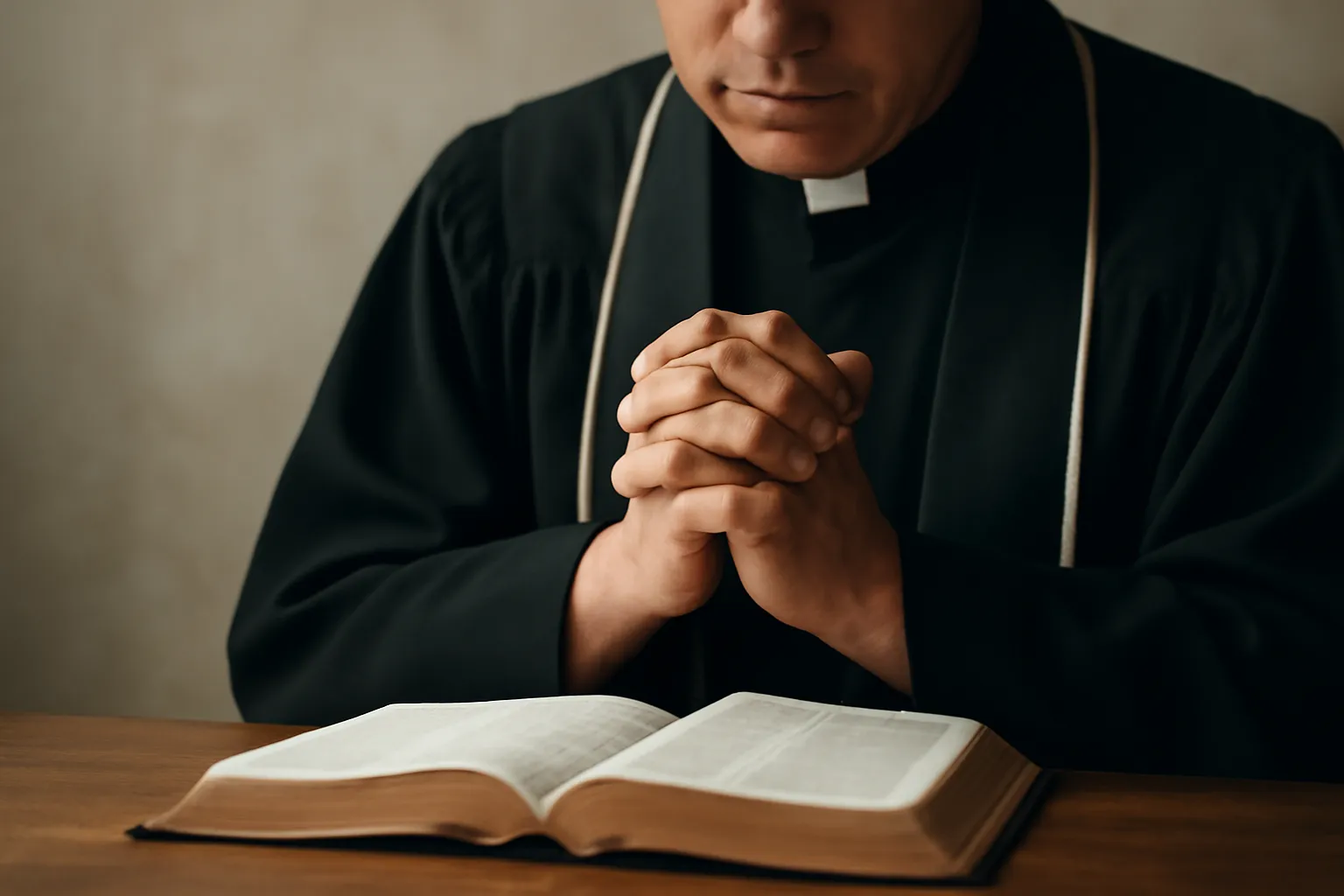
Sermon prayers are a vital link between the preached message and the lived faith of a congregation. They are not mere formalities at the end of a service; they are a
deliberate theological and pastoral response that helps translate the sermon’s insights into prayerful action. A well-crafted sermon prayer can center the worshiping community, invite the Spirit to guide interpretation, and encourage concrete, compassionate impact in the world.
In practice, sermon prayers serve several intertwined purposes. They help the church orient toward God, reflect the sermon’s themes, and discern God’s guidance for daily living. They also model a posture of humility before Scripture, invite personal confession and communal intercession, and create space for gratitude, petition, and blessing. A strong sermon prayer is not a substitute for personal devotion or for the preaching itself; rather, it is a complement that raises proclamation into prayer and turns sermon into invitation for divine action.
When crafting sermon prayers, ministers, worship leaders, or lay preachers should consider the context, the congregation’s language, and the theological commitments of the community. The most effective prayers are rooted in Scripture, shaped by the sermon’s central imagery and key questions, and voiced in a way that is accessible to all ages and backgrounds. In short, a sermon prayer is a bridge between preached truth and lived faith, a collective response that invites singing, reflection, and mission.
The following sections offer inspiring examples, practical templates, and concrete tips to help you develop sermon prayers that are both theologically robust and pastorally sensitive. Whether you serve in a traditional liturgical setting, a contemporary church, or a multi-denominational assembly, these resources are designed to be adaptable and faithful to the gospel.
Core Components of a Sermon Prayer
Although every sermon prayer is unique, most effective examples include a consistent set of elements that help worshipers connect the sermon to God. Here are the fundamental components you will often find in well-crafted sermon prayers:
Invocation or calling upon God: recognizing God’s presence and inviting the Holy Spirit to guide the gathering.
Confession and acknowledgement of need: admitting personal and communal shortcomings in light of the sermon’s message.
Intercession for others: lifting up communities, leaders, the vulnerable, and the world in need.
Thanksgiving and praise: giving thanks for blessings, mercy, and grace demonstrated through Christ and creation.
Pleading or petition for grace, wisdom, and strength: asking God to enable repentance, action, and transformation in ordinary life.
Benediction or closing blessing: sending the congregation out with confidence in God’s presence and guidance.
In addition to these, you may include:
Scriptural grounding by naming or paraphrasing a relevant verse that anchors the prayer in Scripture.
Apostolic or liturgical cadence when appropriate, which links your prayer to a long lineage of corporate worship.
Congregational assent cues, such as invitations to respond with “Amen” or to reflect in silence.
Clear transitions from sermon content to prayer, showing how the message becomes prayerful action.
Inspiring Examples of Sermon Prayers
Example A: A Traditional Invocation
Opening to God’s presence: O God, the Source of every blessing, we gather in Your name seeking Your Spirit to be with us. As Your Word has been proclaimed today, grant us ears to hear what the Spirit is saying to the church. May our worship be not merely with our lips, but with our hearts, and may Your truth shape our minds and lives.
Invocation with focus on the sermon: We come confessing that we have sometimes doubted, neglected, or resisted the message You have placed before us. Forgive our hesitations, open our minds, and help us to respond with faithful obedience. Bind our community together in love and grant us courage to live according to the gospel we have heard.
Intercession: For our neighbors near and far, for leaders who navigate complex decisions, for those who grieve, for the isolated, and for the caregivers who bear heavy burdens—we lift them to You, O God. May Your mercy be visible through our actions, and may our prayers become deeds that reflect Your kingdom.
Thanksgiving and petition: We thank You for the gift of this day, for Your sustaining grace, and for the example of Christ who gave Himself for others. Strengthen us to be instruments of reconciliation, wisdom, and peace. Help us to discern the right steps toward justice, mercy, and humility.
Closing blessing: Send us from this place with Your blessing and a renewed sense of purpose. May Your Holy Spirit guide our conversations, our choices, and our witness, until Christ comes in glory. Amen.
Example B: A Conversational, Dialogue-Style Prayer
Opening to God with warmth and accessibility: Lord, we come to You today with honest hearts and open ears. You know our names, our questions, and our hopes. Speak to us through Your Word and through one another.
Confession and reflection: We confess that we have allowed fear to silence our courage, and we have postponed justice in the name of convenience. Help us to repent where we have fallen short and to pursue what is right with zeal rooted in love.
Intercession and concern: We lift up the poor, the marginalized, the sick, and the weary. We ask for Your mercy to break through systems that devalue human dignity. Inspire courageous acts of mercy and bold voices for peace.
Thanksgiving and supplication: Thank You for Your faithfulness in times of trouble and in moments of joy. We ask for wisdom to respond well to the sermon’s call, clarity to discern Your will, and courage to act in faith.
Closing blessing: Go with us, God, into our week. Let Your Spirit rest on our decisions, our families, and our workplaces. Let us be healed, hopeful, and ready to serve. Amen.
Example C: A Prayer for Intercession and Mission
Invocation with mission focus: God of compassion, we ask for Your presence to empower the church for mission and mercy. May the message we have heard today become the heartbeat of our outreach, not merely words to be spoken, but actions to be lived.
Intercession for communities and leaders: We pray for our cities, schools, and workplaces; for families facing hardship; for communities divided by fear or prejudice; and for leaders seeking wisdom. Pour out Your Spirit that unity, courage, and justice might abound.
Thanksgiving and petition: We praise You for the opportunities to serve and to learn; grant us endurance for the long road and discernment to choose the right next steps. May our service reflect Your love, not our own glory.
Closing blessing: May the blessing of God, the Father, the Son, and the Holy Spirit empower us to carry Your good news into the world. Amen.
Templates: Ready-to-use Sermon Prayer Formats
Below are practical, ready-to-use formats you can adapt. Each template includes the typical sequence of elements and suggested language you can customize to fit your sermon topic, denomination, and cultural context. You can copy these templates verbatim or use them as scaffolds to craft original prayers.
Invocation: Creator God, in whom we live and move, bless this moment and those who enter Your covenant.
Scriptural reflection: Reflect on the chosen passage that informs the ceremony.
Intercession: Pray for the candidate(s), families, and the church’s nurture and witness.
Thanksgiving: Gratitude for God’s faithfulness across generations.
Dedication: Commit the community to support, teach, and love the new members as they grow in grace.
Benediction: May the blessing of God go with them as they begin this new chapter. Amen.
Template 3: Prayer for Communion or Eucharist
Structure: Invocation → Scriptural grounding → Confession and repentance → Thanksgiving → Prayer for unity and mission → Amen
Invocation: God of Christ’s feast, be present with us as we gather around these elements.
Scriptural grounding: Mention a few lines from the Gospel accounts or Paul’s teaching on the Lord’s Supper.
Confession: We confess that we often take Your grace for granted; forgive and renew us.
Thanksgiving: Thank You for Christ’s body and blood, for your faithfulness across time.
Unity and mission: Unite us as one body in love, that we may serve others in Your name.
Amen: Amen to Your will be done in us and through us.
Template 4: Prayer for Healing and Hope
Structure: Invocation → Confession and trust in God’s sovereignty → Intercession for the afflicted → Petition for healing and comfort → Thanksgiving → Courage for endurance → Benediction
Invocation: Lord of mercy, we seek Your healing and Your peace.
Confession: We admit how fear and worry have sometimes overshadowed faith; renew our trust.
Intercession: Lift up those who are ill, grieving, or burdened by pain; bring relief and presence.
Petition: Grant doctors wisdom, families strength, and patients hope; may Your grace sustain in hardship.
Thanksgiving: We give thanks for signs of recovery, support from friends, and Your steadfast love.
Courage for endurance: Help us persevere with faith and compassion, even when healing is slow.
Benediction: Go in peace, trusting that Your power brings restoration. Amen.
Practical Tips for Crafting Sermon Prayers
Crafting sermon prayers that resonate requires attention to language, structure, and the needs of the congregation. Here are practical guidelines to help you write sermons that lead to meaningful prayer.
Center the prayer in the sermon theme: Start by naming the main idea of the sermon and explicitly connect the prayer to that theme. If the sermon is about reconciliation, let the prayer reflect repentance, forgiveness, and reconciliation as the core movement.
Ground in Scripture: Include a brief scriptural touchstone—whether a verse explicitly referenced in the sermon or a related passage—to anchor the prayer biblically.
Keep language accessible: Use clear, concrete words that people of different ages and backgrounds can understand. Avoid overly specialized theological jargon without explanation.
Use inclusive language: Embrace gender-neutral terms and emphasize communal rather than individual-centric pronouns when appropriate, so as to invite all to participate.
Balance form and spontaneity: A prayer can be written for clarity, but it should still feel genuine and not robotic. Leave room for a few spontaneous moments or reflections if your tradition allows.
Be mindful of length: A sermon prayer should be substantive but not drag on. Aim for roughly 60–120 seconds in most contexts; adjust for liturgical seasons and service flow.
Modulate tone to match the moment: A funeral sermon will require solemn gravity; a celebratory baptism may benefit from a lighter, hopeful cadence; a midweek prayer service might be more concise and direct.
Plan transitions deliberately: Use bridging phrases that connect the sermon’s imagery to the prayer’s actions, so the prayer does not feel tacked on but is a natural extension of the message.
Highlight petitions and actions: Move from contemplation to concrete requests—ask for courage to respond, opportunities to serve, or policies rooted in justice and compassion.
Practice and time the delivery: Rehearse aloud, check pacing, and consider the natural pauses for confession, reflection, and response. Practice helps you maintain clarity and avoid rushed endings.
Respect ecumenical and cultural diversity: If you serve in a multi-denominational or cross-cultural setting, adapt language to be welcoming and sensitive to different traditions while remaining faithful to your own beliefs.
Include a clear closing moment: Conclude with a succinct benediction or blessing that sends the congregation into life with a sense of purpose and divine presence.
In addition to these practical steps, consider building a small repertoire of short-form prayers for moments when the sermon winds up with a call to action. Short prayers can be effective at reinforcing the message and prompting immediate response. Having at least two or three ready-to-use options for different themes ensures you can adapt to changing liturgical rhythms without sacrificing quality.
Contextual Considerations: Different Settings and Cultures
Sermon prayers are not one-size-fits-all. Denominational traditions, cultural contexts, and congregational expectations shape how a prayer is written and delivered. A high-church Anglican congregation may favor a more formal, liturgical cadence and scripted phrases, while a Pentecostal assembly might prefer an energetic, spoken-audience prayer that invites responsive participation. A rural church might emphasize pastoral warmth and practical petitions for harvest, while an urban church may foreground social justice and systemic advocacy.
When writing for varied settings, consider the following adaptations:
Forma and cadence: Some communities favor a tightly structured, chant-like form; others respond to free-flow prose with occasional refrains.
Voice and person: Decide whether the prayer is spoken in the first person plural (“we”) or as a direct address to God in the second person (“you”). A mix can be appropriate if the tradition supports it.
Lectionary alignment: If your church follows a lectionary, weave the sermon’s scriptures into the prayer to reinforce the weekly rhythm.
Cultural sensitivity: Be mindful of language and references that may not be universal within a diverse congregation. Use analogies and images that resonate broadly while remaining theologically faithful.
Seasonal emphasis: Leverage liturgical seasons or national holidays to shape the emphasis of the prayer—thanksgiving at harvest time, penitence during Lent, joyful blessing at Easter, or reflection at Remembering Sunday.
Liturgical resources: In some traditions, it is helpful to draw on existing prayers, psalms, or known liturgical phrases while adapting them to your sermon’s theme and the current moment.
A sermon prayer is most meaningful when it invites the congregation into a response—whether through quiet reflection, a unison aloud response, or a public declaration of intent. Consider these closing practices to increase engagement:
Conclude with a unifying line, such as a collective blessing or invitation to pray together in silence, that binds the community around a shared purpose.
Offer a concrete call to action, e.g., “May we embody this message in our neighborhoods this week by…” to translate sermon into daily practice.
Encourage responsive participation, such as “Amen together” or a gentle nod to continue in prayer during personal reflection.
Provide follow-up resources, like a brief guide to personal devotion linked to the sermon’s theme or information about community service opportunities inspired by the message.
Model humility and openness, showing that the prayer is not a performance but a sincere conversation with God on behalf of the gathered church.
In sum, Sermon Prayers are a disciplined form of worship that connects the sermon’s truth to lived faith. They require thoughtful preparation, sensitivity to context, and a reverent posture toward Scripture. By blending theology, pastoral care, and practical language, a pastor or worship leader can craft prayers that empower the congregation to respond to the gospel with hope, courage, and love.