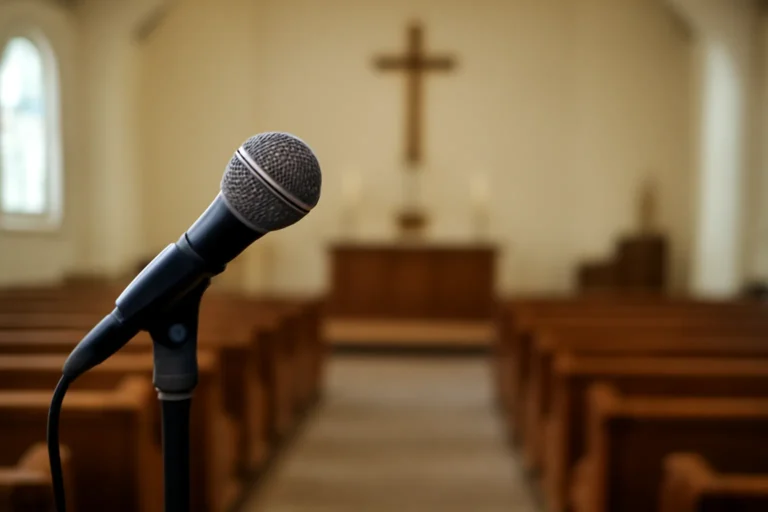
Church Mic: How to Choose the Right Microphone for Sermons
Choosing the right church microphone is more than buying a piece of gear. It is about ensuring that every sermon, prayer, and reading is heard with clarity, warmth, and minimal effort from the sound team. For many congregations, the mic is the invisible bridge between the spoken word and the listening hearts in the pews. A poor choice can lead to feedback, muffled speech, or a sound that strains the ears of volunteers running the sound system. This article guides you through the factors, options, and practical steps to select the best microphone setup for sermons, sermons at the pulpit, and ministry broadcasts.
Understanding the fundamentals of a church mic setup
Before we dive into product suggestions, it helps to define some core concepts that influence every ministry microphone decision.
Dynamic vs. condenser: Dynamic microphones are rugged, less sensitive to troublesome room noise, and excel in loud environments typical of preaching in sanctuaries. Condenser microphones capture more detail and a wider frequency range, but they are more susceptible to feedback and require proper power and care. For most sermon applications, a dynam ic or dynamic-related solution is the safer baseline; condensers are offered when a choir or podium needs extra nuance.
Handheld, lavalier, or headset: A handheld mic is versatile and familiar for pulpit use, but it can encourage vocal strain if the speaker holds it too close or too far away. A lavalier (clip-on) microphone frees the speaker from holding a mic, improving consistency but requiring careful placement. A headset mic provides consistent distance and is ideal when the speaker moves around or uses hands for emphasis. Labelled plainly, these are often described as pulpit mics, clip-on mics, and wireless headset mics in church gear lists.
Wired vs wireless: Wired mics are simple, reliable, and require fewer failure points (no RF interference). Wireless mics offer mobility and cleaner sightlines but bring considerations like battery life, RF interference, and potential dropouts. For a traditional sanctuary with a dedicated stage crew, a wired setup is a solid starting point; for multi-purpose rooms or venues with ministers moving among aisles, a robust wireless system can be transformative.
Polar patterns shape how a mic collects sound. The most common for sermons are cardioid and supercardioid (and sometimes hypercardioid). Omnidirectional mics pick up sound from all directions and can be useful in very specific broadcast contexts, but they are rarely ideal for a loud sanctuary due to feedback risk.
The goal is not to chase the most expensive microphone but to align the microphone with the room, the sermon style, and the technical team’s workflow. A good system is one that stays dependable under pressure and can be adjusted by the pastor or worship leader without a steep learning curve.
Key microphone types for sermons
Below are the most common microphone types you’ll encounter in churches, with notes on how they behave in typical sanctuary environments.
Dynamic handheld mics for pulpit sermons
Dynamic handheld mics are the workhorse of many church stages. They are built to withstand heavy use, stand up to loud voices, and resist feedback when used with proper gain staging and room treatment. They often feature a cardioid or supercardioid pattern, which helps reject sound from the rear and sides, focusing on the speaker’s voice. Shure SM58 and Sennheiser e835 are classic examples widely used in churches for pulpit readings, altar calls, and charismatic preaching.
Pros: rugged build, predictable feedback behavior, forgiving of technique, compatible with most stage mic stands and windscreen options.
Cons: requires the speaker to maintain appropriate distance and angle, may pick up chair creaks or floor noise if not managed.
Lavalier (clip-on) mics for steady sermon delivery
Lavalier mics are small and discreet, and they attach to a tie, lapel, or collar. They are ideal when the sermon requires the pastor to move freely or use their hands for emphasis. Lavalier mics are usually condenser or electret dynamic elements with a cardioid or sub-cardioid pattern designed to reject room noise while following the speaker closely. They pair well with wired or wireless transmitters and are commonly used for televised sermons or live streams where visual presence matters as much as audio.
Pros: consistent proximity, clean on-camera audio, reduces handling noise, good for rooms with multiple readers or a choir.
Cons: placement is critical; if the mic moves away from the mouth, level drops; clip-on friction can cause micro-movements that affect sound.
Headset and wireless bodypack systems for dynamic sermons
Headset mics sit near the mouth and maintain a fixed distance, which is highly beneficial for clergy who move around the stage or interact with the congregation. Combined with a reliable wireless system, headset mics deliver consistent intelligibility even in complex stage setups. They are often used in churches where the clergy deliver sermons while walking the stage, greeting attendees, or leading processions. Look for low-profile wireless packs that integrate with existing PA systems and in-ear monitor (IEM) setups if your church uses them.
Pros: consistent level, hands-free operation, great for dynamic presentation styles.
Cons: higher cost, potential for feedback if the main mic and headset share a stage, more pieces to manage in the RF environment.
Boundary mics and podium mics for lecterns and stages
Boundary microphones sit on a flat surface, such as a pulpit, podium, or large lectern. They can pick up the speaker from a relatively wide angle with less proximity effect than handheld mics. They are particularly useful when multiple readers or a teaching team uses the same podium or when a choir or congregational response is part of the service. Boundary mics are typically omnidirectional or cardioid and should be paired with proper acoustic treatment and gentle EQ to avoid excessive room buildup.
Pros: clean stage look, easy placement, good for multi-person readings at the same podium.
Cons: more prone to picking up room reflections; must be placed and cabling planned to avoid feedback.
Specialty mics for choirs and ensembles
When a church features a choir or a small ensemble on stage, you may deploy a combination of mics: cardioid condensers for each choir section, boundary mics for the adjacent area, and a suitable room overall. Condenser mics capture the ensemble’s blend and articulation well, but require careful handling to avoid feedback in reverberant spaces. A well-designed system uses a mix of mic types to achieve both presence and coverage without overpowering the pulpit mic.
Pros: natural blend, better articulation of syllables and consonants; ideal for live streaming and recorded sermons.
Cons: more complex setup, higher cost, more management for feedback control.
Polar patterns and why they matter for sermons
The choice of polar pattern is central to how a microphone behaves in a sanctuary. The common forms used in church audio are cardioid, supercardioid, hypercardioid, and occasionally omnidirectional.
Cardioid: heart-shaped pickup pattern that minimizes sound from the rear. This helps reduce feedback from loudspeakers placed behind the microphone and makes it easier to control stage noise. It is the default starting point for most pulpit mics and handheld mics used for sermons.
Supercardioid / Hypercardioid: tighter front pickup with a small rear lobe. These are more sensitive to off-axis noise and can improve feedback margins in larger rooms, but they require careful aiming and technique. They are useful in larger sanctuaries where speakers move a bit or the mic needs to tolerate a wider listening area.
Omnidirectional: picks up evenly in all directions. Useful for choir mics or certain broadcast scenarios but generally risky in live sound because it captures more room noise and has less feedback resistance. Use only when room acoustics are well-controlled and the mic is placed away from loudspeakers.
When evaluating a church mic for sermons, start with cardioid or supercardioid patterns. The goal is to maximize the voice signal while minimizing reflections, coughs, chair creaks, and other ambient noise. If you are designing a system for a very reflective room, a controlled approach using loudspeakers placement, acoustic treatment, and appropriate equalization will do more for intelligibility than chasing a pattern alone.
Acoustic considerations in a church
Churches present a unique acoustic challenge. The combination of high ceilings, hard wall surfaces, wooden pews, and often a large crowd can create a lively space where sound travels and lingers. The following considerations help ensure your microphone choice serves the room rather than fighting it.
Room shape and size: Large sanctuaries with long reverberation times benefit from cardioid mics that reject sound from the back and sides. Smaller chapels may tolerate omnidirectional pickups if placed carefully and used with proper monitors.
Acoustic treatment: Curtains, soft seating, acoustic panels, and stage rugs dampen reflections and make the signal easier to manage. Treating the space can reduce feedback and produce clearer sermons with less reliance on aggressive EQ.
Stage layout and monitoring: The location of monitors, speakers, and the mic affects feedback risk. A microphone placed too close to a loudspeaker or path can cause immediate feedback, particularly in a room with a strong overall sound system. Use monitor isolation or employ monitoring strategy that protects the microphone’s headroom.
Proximity effect and technique: Some mics increase bass when held closer to the mouth (proximity effect). Your presenters might naturally tilt their distance during a sermon; plan for a mic type and a technique that remains consistent regardless of distance.
Placement and coverage strategies for sermons
The way you position a church mic dramatically affects coverage and intelligibility. Below are practical guidelines to optimize coverage during sermons and readings.
Pulpit and lectern mic placement
Place the pulpit mic at about the speaker’s mouth height when wearing a clip-on, or slightly below if using a handheld mic. The goal is to minimize plosive bursts (p, b, t) while keeping the microphone in a predictable zone for the sound system. For boundary mics, position them on the edge of the podium near the edge of the speaker’s mouth range so that they capture the voice without picking up excessive room sound.
Mobility considerations for pastors and ministers
If the sermon requires movement, a headset mic or a well-tuned lavalier can maintain constant gain. Wireless models are common for mobile preaching, but they require careful RF planning to avoid dropouts during peak service times. Always test in the actual venue and consider a backup system if you expect heavy usage or streaming.
In services with multiple readers, consider a combination: a pulpit mic for the lead speaker and one or two condenser or dynamic mics for choir or ensemble sections. Use an optional boundary mic at the podium to capture the group in unison without muddying the pulpit voice. The strategic use of multipoint pickup can preserve clarity across the sermon and the choir sections without competing in the same frequency bands.
Live stream and recording considerations
Streaming requires a consistent signal accessed by cameras and online audiences. Lavalier mics with clean wireless connections or a dedicated podcasting/streaming mic at the lectern can deliver strong, intelligible voice tracks. Ensure your streaming path receives clean audio, ideally with a separate feed that does not rely solely on the main stage mix. In many churches, the camera mic or a secondary recording mic is used to capture a close, intelligible voice for video production.
Wired vs wireless: reliability and practicality
Both wired and wireless approaches have their merits, and the choice often depends on the church’s size, budget, and how the space is used during the week.
Wired solutions are historically reliable, require less maintenance, and have fewer interference issues. They are ideal for fixed podium setups where the presenter remains in a defined space.
Wireless systems offer freedom of movement for pastors who roam the stage or engage with the congregation. They require careful RF planning, particularly in buildings with a lot of wireless activity (wi-fi, security cameras, or other wireless devices). Budget for spare batteries, spares for transmitters, and a reliable receiver setup with proper shielding.
Hybrid approaches—a wired main mic with a wireless backup or a small wireless lavalier for certain leader segments—are common in mid-sized churches to ensure coverage and reliability.
When choosing between wired and wireless, consider:
Physical space and stage design
Frequency of service changes or tours of venues
The church’s ability to manage RF interference (neighbors, wireless devices, and building materials)
Setup, gain structure, equalization, and feedback management
Even the best microphone in the world cannot rescue a poor signal chain. A thoughtful setup strategy ensures your sermon mic delivers maximum intelligibility with minimal problems.
Gain staging: Start with the master level at a conservative setting and bring the mic up until you hear a clean, strong signal without distortion. You want a healthy signal at conversational levels without hitting the preamp’s clipping ceiling.
High-pass filtering: A gentle low-cut filter (typically at 80–120 Hz) helps reduce pops, low-end rumble, and handling noise. This is especially useful for handheld mics used by speakers who may move around the stage.
Equalization for speech: A gentle boost around 2–4 kHz can improve intelligibility, while a mild cut around 200–500 Hz can reduce muddiness. Avoid drastic boosts that can introduce feedback or pick up resonance from the room.
Feedback control: In a live setting with speakers in front of the mic, use a combination of cardioid patterns, distance management, and, if available, notch filters to suppress specific feedback frequencies. A properly tuned equalizer, notched at the problem frequencies, makes a huge difference.
Compression and limiting: Use gentle compression to even out level differences between a soft spoken prayer and a loud reading. Avoid over-compression, which can cause nasality or pumping artifacts during quiet moments.
Monitoring: If there is a stage monitor, keep the mic away from the monitor path or use in-ear monitoring to reduce stage noise that can be picked up by the mic. For a pastor who tilts toward a choir or audience, ensure that the monitor mix won’t compete with the main vocal signal.
In practice, you may start with a basic setup: a cardioid handheld mic for the pulpit, a lavalier for mobility, and a boundary mic at a podium. Add a wireless headset if the sermon requires extended movement. Test the system under rehearsal conditions to catch issues before a live service.
Budgeting for a reliable church mic system
Budgeting for a church microphone system involves more than the upfront cost. Consider total cost of ownership, including cables, stands, windscreen, batteries (for wireless), maintenance, and occasional replacements. Here are some budgeting guidelines.
Entry-level setups can cover a single handheld or lavalier mic with a basic receiver and a simple mixer. Expect a few hundred to around a thousand dollars for dependable, entry-level gear with a reputable warranty.
Mid-range systems may include better handheld mics, a few receivers, wireless bodypack systems for key presenters, and a modest mixer. These setups often range from a few thousand dollars to around ten thousand dollars, depending on brand and features.
High-end churches with multiple zones, streaming requirements, and large sanctuaries may invest in a dedicated digital mixer, multiple wireless channels, stage-optimized boundary microphones, and advanced RF management hardware. Budget ranges in the tens of thousands may be realistic, but the payoff is smoother operation, easier training, and greater reliability.
When budgeting, think beyond the mic itself. Plan for:
Reliable cabling infrastructure (XLRs, mic cables, snakes, and stage boxes)
Quality windscreens, pop filters, and mic clips to reduce plosives and handling noise
Appropriate monitoring and DI gear for streaming or recording
Regular maintenance and calibration schedules to keep the system performing well
To maximize the lifespan and performance of your church microphone system, adopt consistent maintenance and care routines. Some practical guidelines:
Inspect cables and connectors for wear and replace damaged cords promptly to prevent noise and failures during services.
Protect mics and transmitters from impacts and moisture; store equipment in protective cases when not in use.
Replace batteries regularly in wireless transmitters and receivers; keep a few spare batteries and chargers accessible in the audio room.
Keep windscreen and foam covers clean to avoid buildup of oils and dust which can affect microphone performance.
Document presets and setups for different services (e.g., Sunday morning, wedding, streaming event). A well-documented setup saves time and reduces errors during live services.
Case studies: choosing the right mic configurations for different church environments
Real-world scenarios help crystallize the decisions behind selecting the right microphones for sermons. Here are three representative cases.
Case study A — A small urban church with a single pulpit mic and occasional streaming
This church serves about 100-150 attendees, with a simple stage layout and an emphasis on spoken word. Recommendation: start with a dynamic handheld mic at the pulpit, complemented by a lavalier for the pastor’s mobility during special services or when streaming. A single cardioid boundary mic at the lectern can be used for readings by a secondary reader. This configuration offers straightforward operation, minimal RF complexity, and reliable performance for both in-house and streaming listeners.
Case study B — A medium-sized sanctuary with choir and live streaming
Here, there is a steady choir on stage and a need for robust live streaming. Recommendation: combine a few key elements—
A dynamic handheld mic at the pulpit for the main pastor.
One or two condenser boundary mics or podium mics to capture choir sections and provide a lush ambient blend.
One or two lavalier mics or a headset mic for the most active presenter or choir director who moves around during performances.
A reliable wireless system with spare channels and proper RF planning to minimize dropouts.
In this scenario, attention to room treatment and proper EQ is essential to prevent the choir mic from overpowering the pastor’s voice in the mix.
Case study C — A large sanctuary with multiple service formats and live broadcasting
In a large church with multiple service formats, you’ll likely need a scalable, flexible system. Recommendation: design a modular setup that includes a main pulpit mic (dynamic handheld), wireless lavalier or headset for the pastor or guest speakers, boundary mics for podiums, and a small fleet of microphones dedicated to the choir. The sound system should integrate with a digital mixer and a dedicated broadcast path for streaming and recording. Invest in a robust RF management framework and consider a backup wired option for key speakers to ensure continuity in case of wireless interference.
Choosing the right setup for your church: a practical decision guide
To help churches decide which mic setup best fits their goals and resources, here is a practical decision guide based on venue size, service style, and streaming needs.
Small church (up to 100 seats) with straightforward sermons: start with a single dynamic handheld mic at the pulpit and a backup lavalier for the pastor’s mobility. If you stream, add a dedicated streaming mic or use the lavalier’s feed into your broadcast chain.
Medium church (100-400 seats) with occasional choir or readers: a pulpit mic plus one or two lavaliers or a headset for the lead preacher. Consider a
Large church (400+ seats) with choir and live streaming: embrace a multi-mic strategy with dedicated mics for the choir, a pulpit mic, a headset for essential speakers, and a stable wireless system with RF planning, as well as a boundary mic at the podium for ensemble readings.
In all cases, plan for maintenance, training, and an easy-to-use workflow for volunteers. A straightforward system that your team can learn quickly reduces the risk of service disruptions and ensures sermon content is heard clearly by the entire congregation.
Quick reference checklist for church mic selection
Define the primary use: pulpit speech, mobility, choir pickup, streaming, or a combination.
Choose a primary mic type: dynamic handheld for pulpit use, lavalier or headset for mobility, boundary or podium mic for lectern work.
Assess room acoustics: reverberation, background noise, and speaker distance influence cardioid vs omnidirectional choices.
Decide wired vs wireless: weigh reliability versus mobility and room factors.
Plan for coverage: number of mics needed, stage layout, and the flow of service that minimizes mic swapping and handling.
Account for streaming/recording: ensure the mic setup translates cleanly to the live stream and recording path.
Budget for accessories: windscreens, mic clips, stands, interface to the mixing console, and spare batteries and cables.
Document and train: keep a service-ready setup, define who handles changes, and schedule periodic checks.
Conclusion: empower your sermons with the right microphone strategy
In the end, the right church mic strategy is less about chasing the most expensive device and more about aligning the microphone’s capabilities with your room, your presenters, and your streaming goals. A thoughtful combination of mic types, careful placement, and a workflow that your volunteers can sustain will yield clearer sermons, more inclusive worship experiences, and reliable broadcast quality. Remember to tailor your approach to your sanctuary’s unique acoustics, audience size, and service style. With the right choices and ongoing care, your church can ensure every word spoken from the pulpit reaches every listener with the warmth, precision, and impact it deserves.
Introduction: Why Church Microphones Matter The microphone is more than a piece of equipment in a church. It is a critical link between the spoken word, the emotional core of a choir, and the energy of a live worship band. In spaces ranging from intimate chapels to vast sanctuaries, the...