Difference Between Jesus and God: A Clear Guide to Christian Theology
In Christian theology, one encounters a set of profound questions about the relationship between Jesus and God. The phrase “difference between Jesus and God” can signal a historical, doctrinal, and devotional inquiry into how Christians understand the person of Christ in relation to the divine Father and the Holy Spirit. This guide explains the core distinctions, the underlying theological framework, and the variations that exist across traditions. It aims to illuminate the topic in a way that is accessible to readers who are new to Christian theology as well as those seeking a more nuanced understanding.
What is at stake in asking about the difference between Jesus and God?
Several questions drive this discussion:
What do Christians mean by God in contrast to Jesus?
How do the two relate within the doctrine of the Trinity?
What are the distinct roles assigned to Jesus and to God in salvation, creation, revelation, and judgment?
How do different Christian traditions articulate the nature of Christ (Christology) and the nature of God (theology of God the Father and the Holy Spirit)?
This guide covers the essential distinctions while acknowledging the shared belief that Christians worship one God who reveals himself in diverse, yet unified, ways.
The basic framework: Father, Son, and Spirit
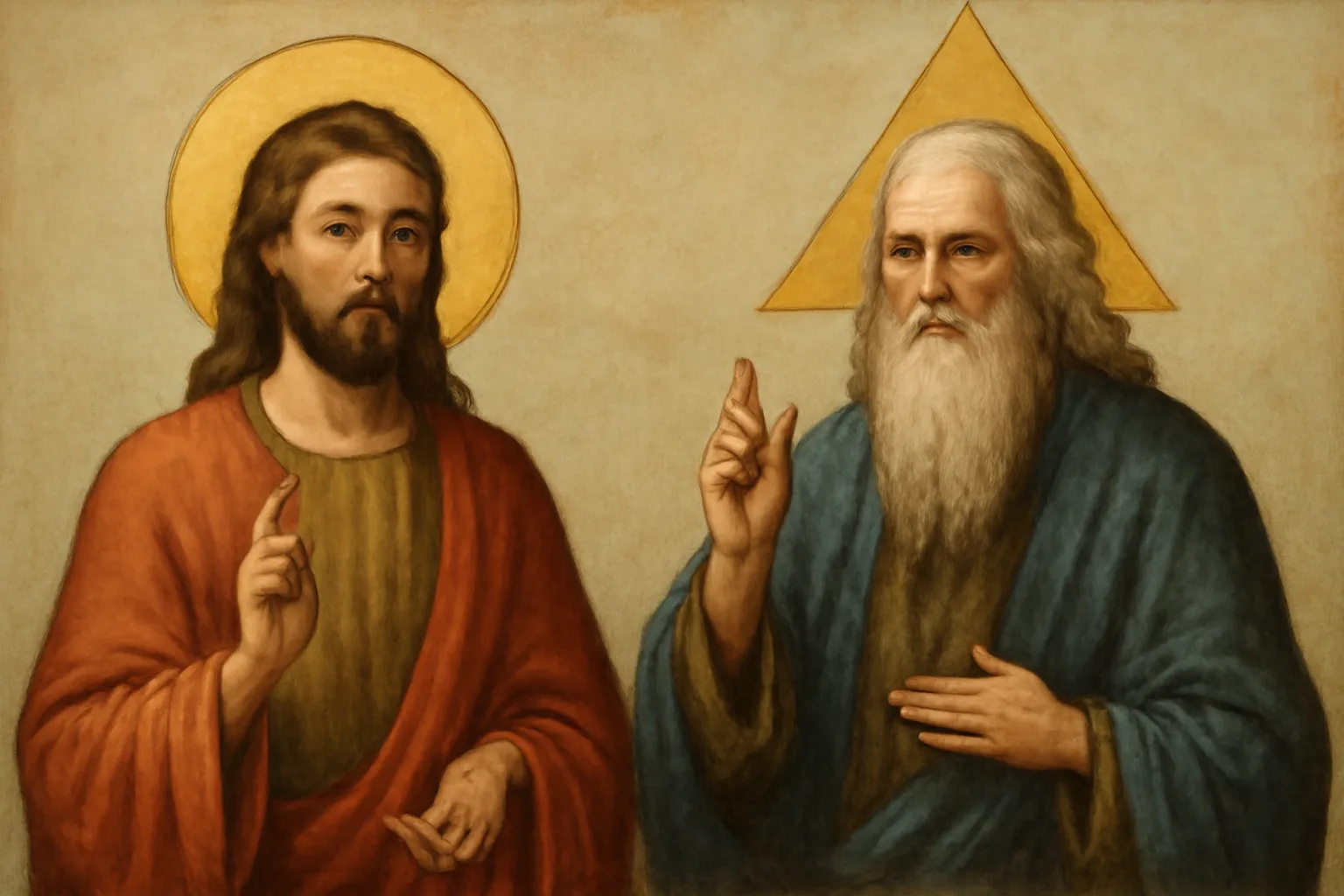
Most mainstream Christian traditions hold to a framework often called the Doctrine of the Trinity, which describes one God existing eternally as three distinct persons: the Father, the Son (Jesus), and the Holy Spirit, sharing the same divine nature. This is not a triad of separate gods, but one God in three persons. In this sense, the difference between Jesus and God is characterized by a distinction of personhood within the unity of the Godhead.
The Father
In Trinitarian theology, God the Father is often portrayed as the source or origin within the Godhead. He is the one who sends the Son and who communicates grace through the Spirit. The Father is not merely an Old Testament notion of God; in Christian faith, he is the personal, relational counterpart to the Son and Spirit within the one divine essence. For many readers, the relationship between Father and Son is central to understanding the difference between Jesus and God.
The Son (Jesus)
Jesus of Nazareth is the Word made flesh, the Son who becomes incarnate in human history. The concept of Jesus in Christian theology is twofold: he is fully divine and fully human. This is sometimes expressed as the doctrine of the hypostatic union, indicating that the divine and human natures are united in the one person of Jesus without confusion or separation. Therefore, when Christians speak of Jesus, they are speaking about a single person with two distinct natures—divine and human—within the Godhead’s economy of salvation.
Important distinctions include:
Jesus as the one through whom creation and redemption are accomplished.
Jesus as the one who reveals the Father and makes God known in a tangible, historical way.
Jesus as the subject of worship, prayer, and obedience, while the Father is the ultimate source of divine authority.
The Holy Spirit
The Holy Spirit is the who animates and sanctifies the church, empowering believers, guiding truth, and applying the work of Christ to the world. In this framework, the Spirit is not Jesus but a distinct person within the one Godhead who executes God’s will in creation, redemption, and ongoing life in the church. The Spirit’s role helps believers understand how the difference between Jesus and God manifests in the ongoing work of salvation and sanctification.
Jesus’ nature: divine and human in one person
A central axis of Christian theology is the claim that Jesus is both fully God and fully man. This claim has profound implications for how Christians interpret difference and unity between Jesus and God.
Divine nature: Jesus possesses all the attributes of the divine nature, such as eternality, omniscience in the empowered sense, perfect holiness, and the capacity to forgive sins. This grounds the Christian claim that Jesus has an essential alignment with God’s eternal nature.
Human nature: Jesus experienced the limitations of human life, including hunger, fatigue, temptation, sorrow, and death. The human nature makes him accessible to humanity and capable of representing humanity before God.
Incarnation as the pivotal event that reveals the depth of the divine love for humanity; through the incarnation, God enters time and space in the most intimate way imaginable.
The combination of these two natures in one person raises questions about how Jesus relates to God the Father. In most Christian traditions, Jesus speaks and acts as the eternal Son who is in perfect communion with the Father, yet the two are distinct persons within the triune reality. This distinction clarifies why believers can speak of God as Father while also speaking of Jesus as the Son with a unique role in salvation history.
Key implications of Jesus’ dual nature include:
The possibility of a true, trustworthy relation with God as a representative and mediator.
The capacity to act vicariously for humanity through the atonement.
The provision of a perfect example of obedience and faith for believers to imitate.
The nature of God the Father and the role of the Trinity
To understand the difference between Jesus and God, it helps to outline how Christians conceive of God in the Trinity. The Father is not a lesser or greater manifestation of divinity; rather, he is the source and origin of the divine economy of salvation, while Jesus is the one who executes that plan in history as the incarnate Son.
Coequal and coeternal: The Father, Son, and Spirit are understood as equal in essence and eternity, though they have distinct personal properties and roles inside the Godhead.
Perichoresis (mutual indwelling): The Father, Son, and Spirit live in a unique, perfect relationship where their actions are united in one divine will.
Non-competitive unity: The Trinity does not present a hierarchy of divinity in terms of essence but a relational, purposeful unity in which each person reveals God’s self to creation.
Different Christian traditions emphasize various aspects of the Trinity. For example, some denominations stress the economic Trinity (how God reveals himself in salvation history and in world events), while others emphasize the immanent Trinity (the internal life of God). Both approaches seek to preserve the unity of God while acknowledging the distinct roles of the Father, Son, and Spirit. The result is a nuanced answer to the difference between Jesus and God that respects both unity and distinction within the Godhead.
Jesus’ mission: creation, redemption, and revelation
From a theological standpoint, the life and work of Jesus are central to understanding how difference between Jesus and God is experienced in the world. The Gospel accounts, along with the doctrinal formulations of church councils, situate Jesus as the agent through whom God speaks, acts, saves, and reveals his will.
Incarnation and identity
The claim of the incarnation—God becoming human in Jesus—serves as a decisive point of connection between God and Jesus. In the incarnation, the invisible and transcendent God assumes a finite, mortal human nature. This event answers the question of how the divine can draw near to the human experience and how humanity can approach God without compromising God’s holiness.
Atonement and reconciliation
Another cornerstone is the atonement—the work by which humanity is reconciled to God. Christians describe this as Jesus bearing the consequences of sin, making vicarious atonement, and offering a path of forgiveness and restoration. Theologically, this is a key demonstration of the difference between Jesus and God in terms of role: Jesus is the mediator through whom God’s redemptive plan is accomplished on behalf of humanity.
Resurrection and triumph over death
The resurrection of Jesus is seen as verification of his divine authority and the guarantee of future resurrection for believers. It is also a demonstration that Jesus embodies both divinity and humanity in a way that confirms his unique status within the Trinity while maintaining the integrity of God’s saving plan.
After the resurrection, Jesus ascends to the Father, continuing his earthly mission through intercession, proclamation, and the sending of the Spirit. The ascension marks the transition from Jesus’ earthly life to his ongoing, exalted role. This fosters a sense in which Jesus and God relate across time: Jesus remains the exalted Lord who reveals the Father’s will and brings salvation to the world.
Variations across Christian traditions
While the Trinity remains a dominant framework, there are significant variations in how Christians articulate the difference between Jesus and God across traditions.
In classic Trinitarian traditions—such as the Roman Catholic, Eastern Orthodox, and most Protestant churches—the distinction between Jesus and God is preserved while affirming one divine essence. These traditions maintain that:
Jesus is the incarnate Son who is consubstantial with the Father (of the same essence).
The Holy Spirit proceeds from the Father (and, in Western theology, from the Father and Son together in the filioque formulation).
Worship is directed to the triune God, with Jesus uniquely worshiped as Lord and Savior, and the Father as the source of all divine authority.
Some Christian groups reject the traditional doctrine of the Trinity or interpret the relationship between Jesus and God differently. These include:
Nontrinitarian positions, which may deny the coequal, coeternal status of the Son or the Spirit or propose a modal view of God (one God appearing in different modes).
Oneness Pentecostal or Modalistic views, which emphasize the oneness of God and view Jesus as the primary manifestation of the one God rather than as a distinct person within God’s inner life.
In these frameworks, the difference between Jesus and God is framed differently—often emphasizing Jesus’ unique role and authority while not maintaining a traditional three-person ontology. Christian scholars and communities engaging with these differences frequently explore Scripture, tradition, and practice as sources for understanding the nature of God and the person of Christ.
Scriptural anchors: key verses and interpretive points
Scripture provides the primary basis for the discussion of Jesus and God. Diverse readings exist, but several passages are frequently cited as central to the conversation about the difference between Jesus and God within the framework of the Trinity and Christology.
New Testament foundations
John 1:1-14 describes the Word (Logos) as being with God in the beginning and as God, who became flesh in Jesus. This passage is often used to articulate both the divine nature of Jesus and his distinct personhood from the Father.
Colossians 1:15-20 portrays Jesus as the image of the invisible God and the one through whom creation is sustained, highlighting the unity of the Godhead and Jesus’ role in creation and reconciliation.
Philippians 2:5-11 presents the kenosis (self-emptying) of Christ, emphasizing Jesus’ humility and exaltation while maintaining his divine status.
Hebrews 1:1-4 portrays God speaking through the Son, who is the radiance of God’s glory and the exact representation of his being, reinforcing the distinctiveness of the Son within God’s economy.
2 Corinthians 5:19-21 speaks of God reconciling the world to himself through Christ, underscoring the relational and salvific work shared by Father and Son.
Key Christological and trinitarian statements
Matthew 28:19 (“baptizing them in the name of the Father and of the Son and of the Holy Spirit”) is often cited as a textual cornerstone for the triune understanding of God and for clarifying the distinct persons within the Godhead.
John 14-16 contains Jesus’ teaching about his relationship with the Father and the coming of the Spirit, illustrating the functional distinctions while maintaining unity within the Godhead.
Romans 8:9-11 contrasts the Spirit’s presence in believers with a state of life apart from God, highlighting the Spirit’s role in applying redemptive work and life in the community.
Practical implications: worship, prayer, and daily faith
Understanding the difference between Jesus and God has practical consequences for how Christians worship, pray, and live out their faith in daily life. Here are several areas where the distinctions matter.
Worship and adoration
Christians distinguish between worship due to God in the triune sense and the veneration of Jesus as Lord and Savior. Jesus is worshiped as the incarnate Word and as the exalted Son who intercedes for believers, while the Father is worshiped as the source of all divine authority. The Holy Spirit is worshiped as the presence of God within believers and the church.
Prayer often centers on addressing the Father through the Son and by the Spirit. The son’s mediation is often highlighted: believers come to the Father through Jesus and are empowered by the Spirit. This pattern reflects the relationship between Jesus and God and the way in which God’s grace is administered to humanity.
Understanding salvation in daily life
Believers are invited to trust that Jesus efficiently accomplishes salvation (through incarnation, death, resurrection) while God the Father sovereignly ordains and sustains the process, with the Spirit applying its effects in believers’ lives. This triadic cooperation shapes prayer, ethics, and church life in meaningful ways.
Common questions and common misunderstandings
As with any deep theological topic, several questions commonly arise. Here are a few and concise clarifications.
In orthodox Christian theology, Jesus is consubstantial with the Father, meaning they share the same divine essence. They are coequal in divinity, though distinct as persons within the Trinity. The relationship is complex and not reducible to simple hierarchy.
How can Jesus be both God and human?
The doctrine of the hypostatic union maintains that Jesus has two complete natures—divine and human—in one person. This asserts that he can reveal God to humans while also participating fully in human life, including temptation, suffering, and death, without sin.
Do all Christians interpret the Trinity the same way?
There is diversity among Christians. While most traditions affirm the Trinity, there are nontrinitarian or other reinterpretations that emphasize different aspects of God’s oneness or personhood. These variations reflect differences in biblical interpretation, tradition, and ecclesial authority.
How to study this topic responsibly: a reading plan
For readers who want to engage more deeply, here is a practical plan to study the difference between Jesus and God across sources and traditions.
Start with primary texts: read selected passages from the four Gospels, John 1, Colossians 1, Philippians 2, and Hebrews 1 to see how the New Testament presents Jesus and God.
Consult historic confessions and creeds: the Nicene Creed, the Apostles’ Creed, and other early statements illuminate how church leaders articulated the relationship within the Godhead.
Explore catechetical resources: glossaries and catechisms that explain terms like hypostasis, ousia, hypostatic union, and perichoresis in accessible language.
Compare traditions: read summaries from Trinitarian and nontrinitarian perspectives to understand where agreement and disagreement lie.
Engage with commentary: scholarly and pastoral commentaries can clarify how language about the Trinity has developed historically and the theological stakes involved.
Summary: clear takeaways about the difference between Jesus and God
In a nutshell, the difference between Jesus and God in mainstream Christian theology can be summarized as follows:
One God in three persons (the Trinity): Father, Son, and Spirit share the same divine nature but are distinct persons.
Jesus the Son is the incarnate Word who embodies both divinity and humanity, acting as mediator, redeemer, and revelator of God’s will.
God the Father is the source and origin of the Godhead’s work, often depicted as the one who sends the Son and who dwells with the Spirit in the life of creation and redemption.
The Holy Spirit applies Christ’s saving work, unites believers to Christ, and sustains the church as the presence of God in the world.
Across traditions, Christians navigate the relationship between Jesus and God through terms like incarnation, atonement, and exaltation, always seeking to preserve both the unity of God and the distinct personal realities within the Godhead.
Ultimately, the goal of studying the difference between Jesus and God is not merely theoretical clarity but a richer, more meaningful faith in which believers can see how God has chosen to reveal himself in history, to redeem humanity, and to guide the church through the Holy Spirit. By appreciating both the unity and the distinction within the Godhead, Christians can approach worship, prayer, and daily life with a mature sense of reverence and understanding.
Introduction: Reading the Light–Darkness Dialogue in Scripture In the vast tapestry of the Bible, the pair Light and Darkness functions as more than a description of what we see when we blink in a cave. They are enduring symbols that mark moral choices, spiritual states, and cosmic realities. This article...
In a world that often feels chaotic and uncertain, many people instinctively reach for control—trying to shape outcomes, steer events, and manage feelings. Yet Scripture invites us into a different posture: a life marked by surrender to God’s sovereignty and a trusting reliance on His wisdom. This article gathers biblical...
Overview: What Are Bible Scripture Checks and Why Do They Matter? In an age of abundant information, verifying biblical passages is a crucial skill for students, pastors, teachers, students of theology, and curious readers alike. Bible scripture checks refer to the deliberate process of confirming the accuracy, provenance, and meaning...
Increasing bible knowledge is more than accumulating facts about a book; it is a lifelong journey toward greater understanding, wiser living, and clearer teaching. This article offers five practical ways to increase Bible knowledge and grow in Scripture understanding—through daily reading, thoughtful study, intentional memory, communal learning, and faithful application....