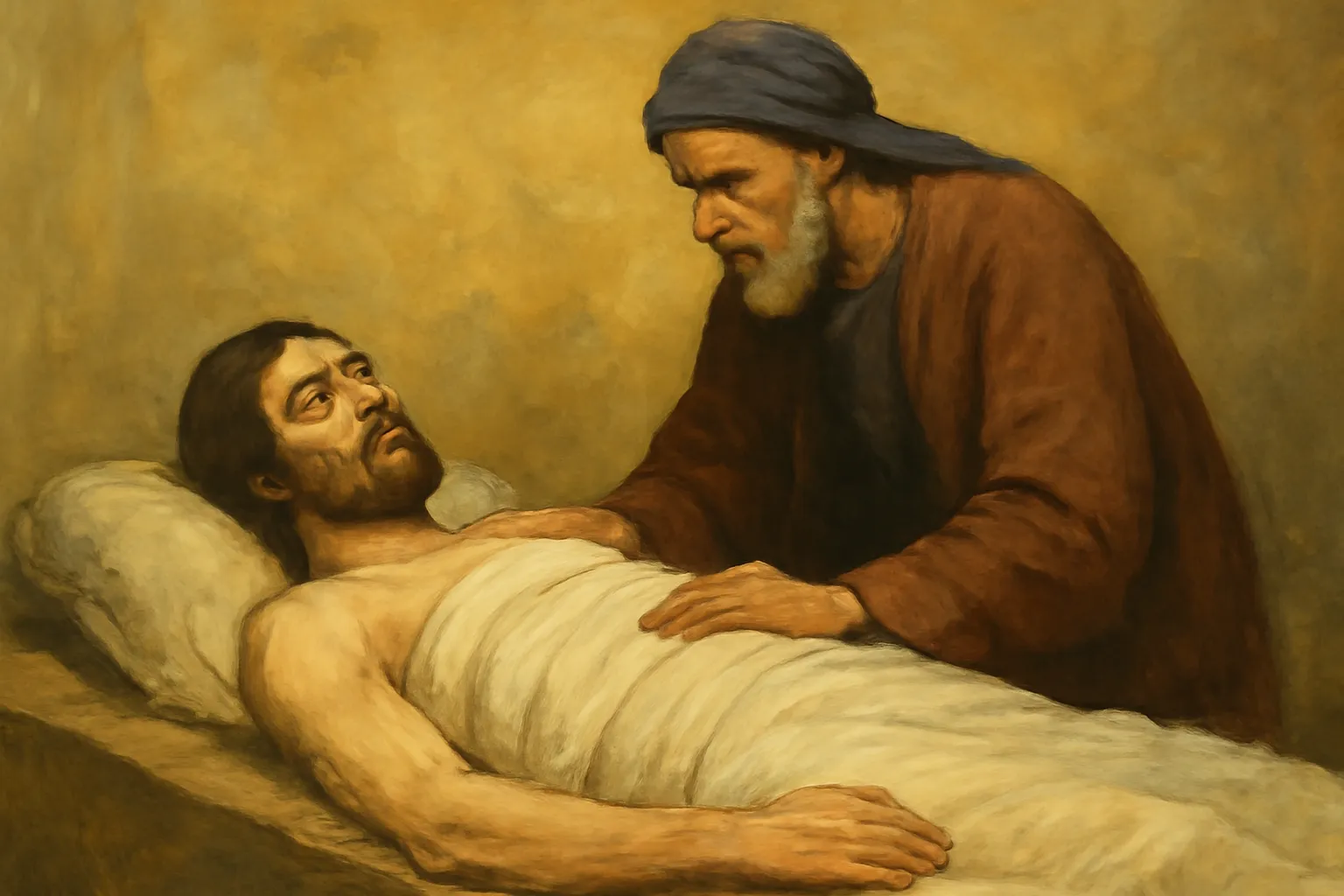
How Does Lazarus Die? A Clear Explanation of Lazarus’ Death and Resurrection
How Does Lazarus Die? A Clear Explanation of Lazarus’ Death and Resurrection explores the biblical account of a remarkable event in John 11 and the broader Christian teaching on death, life, and faith. This article provides a thorough, balanced overview suitable for readers new to the story as well as those seeking deeper theological context. We will use clear terms, describe the sequence of events, and highlight the key ideas that make Lazarus’ death and subsequent resurrection a defining moment in the Gospel of John.
Who is Lazarus? A brief introduction to the man at the center of the story
Lazarus of Bethany is introduced in the Gospel of John as a beloved friend of Jesus. He lived in the village of Bethany, near Jerusalem, with his sisters Martha and Mary. The family’s relationship with Jesus is portrayed as intimate and trusting, a setting in which Jesus’ public ministry and his deeper sayings about faith and eternal life intersect with very personal, human moments. Lazarus’ life and death become a stage on which Jesus reveals that he is the one who holds power over life and death.
The illness, the death, and the immediate context
The text tells us that Lazarus became ill, and his sisters sent word to Jesus to come quickly. The exact nature of Lazarus’ illness is not specified in the gospel text, but the outcome is clear: Lazarus died before Jesus arrived. The point the narrative emphasizes is not only the loss itself but also the way God’s timing and Jesus’ actions will disclose a greater truth about who Jesus is and what he offers to those who believe in him.
How does Lazarus die? The death scene in the biblical account
In the biblical account, Lazarus’ death is presented as a natural consequence of illness in the ancient world rather than an immediate public miracle. The narrative uses the event of Lazarus’ death to set up a climactic moment later: the appearance of Jesus, the encounter with Martha and Mary, and the dramatic restoration of life at the tomb. The key elements to understand about Lazarus’ death include:
Illness leading to death: The text describes a fatal illness rather than a sudden accident, which was common in antiquity where illnesses could be severe and life-ending with limited medical interventions.
Emotional response: Martha and Mary demonstrate both grief and faith, illustrating that faith in Jesus does not erase sorrow but guides it toward trust in God’s purposes.
Separation from Jesus: Crucially, Jesus delays his journey for a time after hearing of Lazarus’ illness, which shapes the theological message of the event.
Death as a signal: The death itself sets the stage for Jesus to demonstrate power over life and foreshadow his own resurrection.
The delay, the decision, and the deeper meaning
One of the striking features of the narrative is Jesus’ delay before traveling to Bethany. He receives news of Lazarus’ illness, but he does not rush to the village. Instead, he stays where he is for two days, then tells his disciples that Lazarus is asleep and that he must go to awaken him. His use of the word “sleep” is symbolic here, signaling a state beyond ordinary sleep—an entry into death, which he intends to overcome.
The journey to Bethany: a public response to private grief
When Jesus finally arrives in Bethany, the mood is one of grief and recognition that something extraordinary is about to unfold. The sisters’ conversations with Jesus reveal differing expressions of faith and disappointment: Martha voices a confident statement about resurrection on the last day, while Mary expresses a more immediate and intimate sorrow. Jesus responds with words that shift the focus from ritual expectation to personal encounter:
Jesus weeps: The shortest verse in some translations—“Jesus wept”—is often highlighted as a testament to Jesus’ humanity and solidarity with human suffering.
Declaration of faith: Jesus reassures Martha that he is the path to life and that those who believe in him will never truly die in a ultimate sense.
Revelation of purpose: The events at Bethany reveal Jesus’ mission to bring life to those who believe, even in the face of death.
The dramatic moment: the tomb scene and the cry of life
John 11 focuses attention on the moment at the tomb where Jesus commands the stone to be removed and speaks aloud for Lazarus to come out. This is the turning point of the narrative and a decisive demonstration of Jesus’ authority over death. Several elements stand out in this pivotal scene:
Reluctance and faith mixed in the crowd: Some observers fear the consequences of releasing the stench from a tomb that has been sealed for four days, while others express renewed faith.
The command: Jesus calls Lazarus by name, a personal summons that only his voice could bring forth a dead man from the tomb.
The response: Lazarus emerges from the tomb, bound in burial cloths, still alive, a clear sign that death has been conquered in that moment.
The phrase that ushers in life
In the moment of resurrection, Jesus’ call—“Lazarus, come out”—highlights several theological themes: the personal nature of salvation, the power of Jesus’ word, and the hope of new life offered to all who believe. The miracle is not merely a demonstration of a rare power, but a concrete sign that the Life that Jesus embodies is stronger than death itself.
Theological significance: what does Lazarus’ death and resurrection teach?
Within Christian theology, the raising of Lazarus is more than a stand-alone miracle; it functions as a theological symbol with multiple layers of meaning. Here are several key lines of interpretation often discussed by scholars and pastors:
Jesus as the source of life: The event underscores the claim that Jesus has authority over life and death, a claim he makes explicit in other parts of the gospel.
The hope of resurrection for believers: Lazarus’ restored life is a tangible foreshadowing of the future resurrection that Christians anticipate, though the ultimate resurrection is connected to Jesus’ own victory over death.
Faith and belief: The responses of Martha and Mary illustrate different forms of faith—one confident in a general hope about the last days, the other seeking an immediate, personal intervention—and both are invited to trust Jesus.
Jesus’ compassion: The moment in which Jesus weeps alongside mourners emphasizes that divine action does not lack compassion; God’s intervention comes with deep empathy for human pain.
Why four days? The timeline and its symbolic significance
In John 11, Lazarus is described as having been in the tomb for four days. The number four carries symbolic weight in biblical literature, often associated with completeness or the natural world (the four corners of the earth, the four winds, etc.). In this narrative, the four-day interval helps readers understand that Lazarus was truly dead and not merely in a suspended condition. It also serves to demonstrate the decisive power of Jesus’ command to life, since a body that has begun to decompose is in a stage where restoration would seem vastly improbable by ordinary means. The four-day detail thus strengthens the miracle’s credibility for the original audience and deepens the sign’s theological impact for readers today.
What the story means for faith practice
Beyond its theological layers, the Lazarus narrative has practical implications for faith communities and individual believers. Several themes recur in sermons and study guides as people reflect on what it means to encounter Jesus in times of crisis and grief:
Trust in divine timing: The delay that accompanies Jesus’ action invites believers to trust that God’s timing can carry meaning beyond human perception.
Jesus meets us where we are: The conversations with Martha and Mary show that Jesus meets people in their moments of need, speaking to their questions and shifting their understanding toward a larger purpose.
Hope in the face of death: The narrative invites Christians to view death not as the final word but as part of a larger story in which life is renewed through Christ.
Public witness: The miracle becomes a public sign that points others toward faith, encouraging communities to reflect on how life and faith intersect in their own contexts.
How the resurrection of Lazarus relates to Jesus’ own death and resurrection
The Lazarus event is closely connected to the broader arc of the Gospel of John, which centers on Jesus’ identity as the resurrection and the life. The miracle prefigures Jesus’ own death and resurrection, serving as a powerful sign that:
Life precedes death: Jesus demonstrates that ultimate life is available through him, even when physical death seems certain.
Belief connects to life: Faith in Jesus is presented as the pathway to participate in the life that conquers death, anticipating the full eschatological hope of Christian faith.
Public signs reveal private truths: The visible miracle of raising Lazarus is a sign that reveals Jesus’ hidden nature and mission to those who would believe.
Contrasting perspectives: how different traditions read Lazarus’ death and resurrection
Across Christian traditions, the Lazarus narrative is interpreted in slightly different ways, reflecting distinct theological emphases. Here are a few common perspectives:
Catholic interpretation: Emphasizes the incarnation of divine life in Jesus, the sanctity of life, and the connection between this miracle and the broader mystery of the Paschal events.
Protestant interpretation: Often focuses on faith, the authority of Christ’s word, and the promise of eternal life granted through belief in Jesus as the Son of God.
Orthodox interpretation: May highlight the mystery of death and the way Christ’s victory opens a window into the full realization of the kingdom of God, including the hope of resurrection for all believers.
Scholarly redactional perspectives: Biblical scholars examine the text’s literary structure, the symbolism of light and darkness, and how the Johannine community used this miracle to articulate Jesus’ identity and mission.
The story of Lazarus has inspired a wide range of cultural expressions beyond biblical exegesis. Artists, theologians, and poets have drawn on the scene to explore themes of life, death, and renewal. Some notable threads include:
Artistic representations: Paintings and sculptures capturing the moment of emergence from the tomb or the emotional scene at the tomb’s entrance.
Literary allusions: Writers often use the Lazarus motif as a symbol of revival, forgiveness, or a dramatic turn in a character’s life.
Pastoral applications: Sermons and devotional writings use Lazarus to illustrate the mercy of God, the power of prayer, and the hope available through Christ.
Common questions about Lazarus’ death and resurrection
Readers frequently ask certain questions about this biblical event. Here are some concise answers that reflect the text and its interpretation:
Did Lazarus die again after being raised? The biblical account does not specify the long-term fate of Lazarus after the resurrection. Traditional readings assume he later died again, as all humans experience physical death, but the narrative’s focus is on the sign and its meaning rather than biographical details about Lazarus’ later life.
Was Lazarus resurrected or revived? The distinction is often debated. In common usage, “resurrection” refers to rising to life with a transformed, eternal nature, while “revival” can imply restoration to ordinary life. The gospel presents Lazarus as being restored to earthly life with a future expectation of resurrection for all believers through Christ.
What does this miracle teach about prayer? The account emphasizes Jesus’ authority over life and death more than the mechanics of prayer. It shows that prayer and faith are connected to God’s salvific plan, and that Jesus’ responses reveal God’s glory and mercy.
Practical takeaways for readers today
For modern readers, the Lazarus story offers several practical takeaway points that can inform faith, worship, and community life:
Hope amid grief: The narrative invites people in grief to bring their sorrow to Jesus, who understands and acts for life, not merely to comfort but to transform the situation.
Authority of Jesus’ word: The miracle underscores the power of Jesus’ words—“Lazarus, come forth”—as a archetype of divine speech that creates and orders reality.
Faith that seeks signs and deeper truth: Martha’s and Mary’s conversations illustrate how faith can be both practical and seeking, inviting believers to grow in understanding of who Jesus is.
Community response to miracles: The event demonstrates how communities witness, react, and come to belief when confronted with extraordinary acts of God.
Conclusion: Lazarus’ death and resurrection as a defining moment
The story of Lazarus is not merely a tale of a man who died and was brought back to life. It is a carefully crafted narrative designed to reveal the identity of Jesus, to address the human realities of suffering and loss, and to point toward the central Christian claim that life in its fullest sense is found in Christ. By examining the sequence—from illness to death, from delay to arrival, from tomb to life—readers gain a deeper understanding of how death is not the final word, and how faith can gaze beyond the grave toward the promise of ultimate life. The account of Lazarus thus serves as a powerful reminder that the Christian story is one of hope, transformation, and the ongoing presence of the God who calls the dead to life.
Key takeaways:
– Lazarus dies in the ordinary sense of death due to illness, but his death becomes the setting for a spectacular demonstration of Jesus’ authority over life and death.
– Jesus’ delay, his emotional response, and his direct command to Lazarus are all meaningful choices that convey theological truths about faith, trust, and divine mercy.
– The resurrection of Lazarus foreshadows Jesus’ own death-and-resurrection and invites readers to place their trust in the One who has power to conquer death.
Introduction: Reading the Light–Darkness Dialogue in Scripture In the vast tapestry of the Bible, the pair Light and Darkness functions as more than a description of what we see when we blink in a cave. They are enduring symbols that mark moral choices, spiritual states, and cosmic realities. This article...
In a world that often feels chaotic and uncertain, many people instinctively reach for control—trying to shape outcomes, steer events, and manage feelings. Yet Scripture invites us into a different posture: a life marked by surrender to God’s sovereignty and a trusting reliance on His wisdom. This article gathers biblical...
Overview: What Are Bible Scripture Checks and Why Do They Matter? In an age of abundant information, verifying biblical passages is a crucial skill for students, pastors, teachers, students of theology, and curious readers alike. Bible scripture checks refer to the deliberate process of confirming the accuracy, provenance, and meaning...
Increasing bible knowledge is more than accumulating facts about a book; it is a lifelong journey toward greater understanding, wiser living, and clearer teaching. This article offers five practical ways to increase Bible knowledge and grow in Scripture understanding—through daily reading, thoughtful study, intentional memory, communal learning, and faithful application....