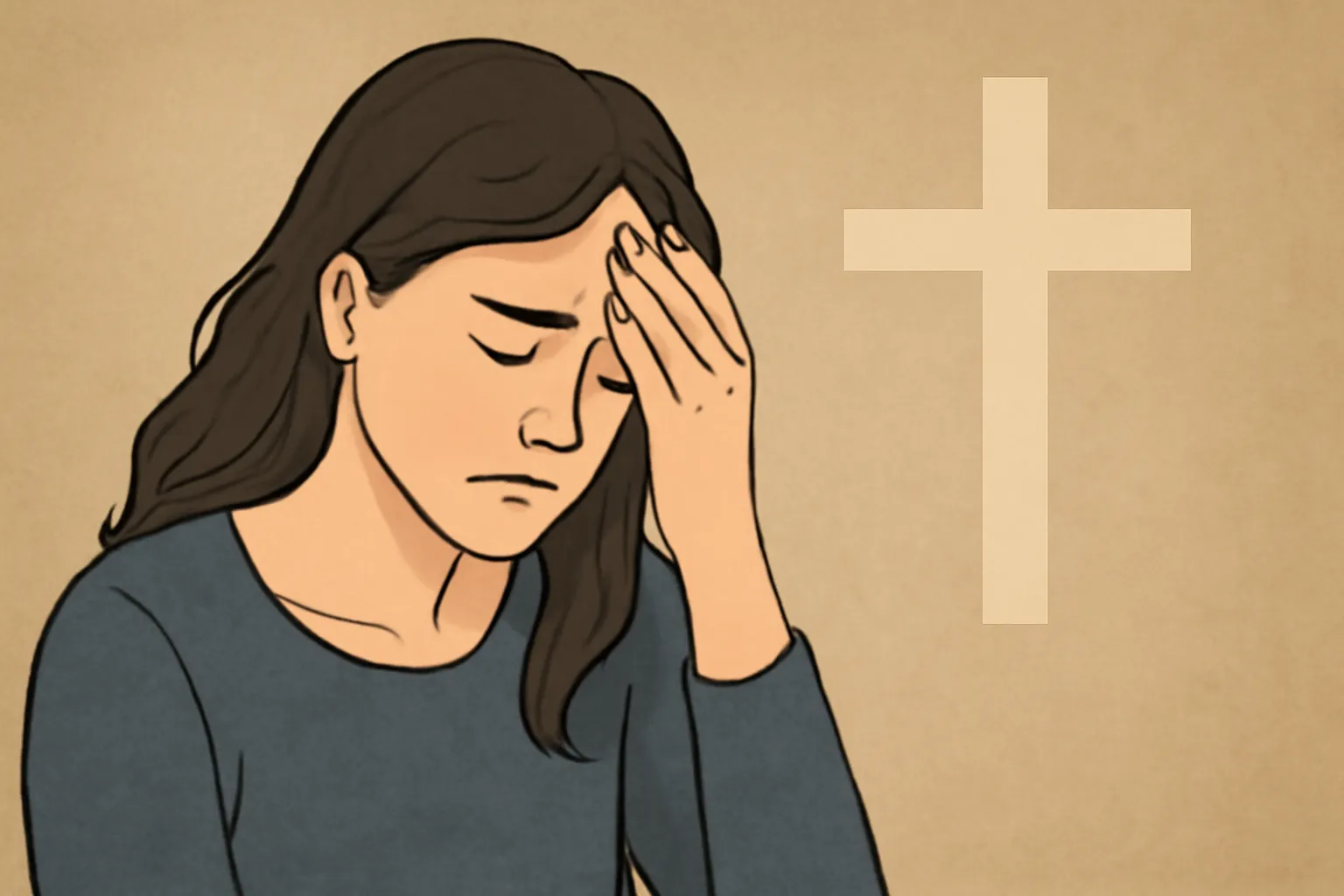
Anxiety is real, painful, and often overwhelming—but it is not bigger than God. This guide offers faith-based, psychologically wise strategies to help you face anxiety with Scripture, prayer, and practical steps.
1. Understanding Anxiety from a Christian Perspective
Anxiety is not simply “lack of faith.” It can involve:
- Emotional factors (fear, trauma, rejection)
- Physical factors (brain chemistry, hormones, fatigue)
- Spiritual factors (lies we believe, lack of grounding in God’s truth)
Key truths:
- Many heroes of faith wrestled with fear (David, Elijah, Jeremiah).
- God never shames the anxious; He invites, “Do not fear, for I am with you.”
- Seeking help (pastoral, psychological, medical) is not unspiritual; it is wise stewardship.
2. Core Scriptures for Anxiety
These verses are not “magic formulas,” but anchors.
- Philippians 4:6–7
“Do not be anxious about anything, but in every situation, by prayer and petition, with thanksgiving, present your requests to God… the peace of God… will guard your hearts and your minds in Christ Jesus.” - 1 Peter 5:7
“Cast all your anxiety on him because he cares for you.” - Isaiah 41:10
“Do not fear, for I am with you… I will strengthen you and help you.” - Psalm 34:4
“I sought the Lord, and he answered me; he delivered me from all my fears.”
How to use them:
- Read slowly, out loud.
- Turn each verse into a personal prayer.
- Write one verse on a card or phone lock screen and repeat it whenever anxiety spikes.
3. Faith-Based Strategies to Overcome Anxiety
A. Pray Honestly, Not “Perfectly”
God is not impressed by perfect phrases; He wants your real heart.
Try this simple pattern:
- Name it: “Lord, I feel anxious about ______.”
- Share it: “It feels like ______ in my body and mind.”
- Surrender it: “I give this situation to You. I can’t carry it.”
- Ask specifically: “Please give me wisdom for ______ and peace in ______.”
- Thank Him: “Thank You that You are with me, even if I still feel anxious.”
You can also pray short, repeated prayers when panic rises:
- “Jesus, have mercy.”
- “Lord, be my peace right now.”
- “You are with me; I am not alone.”
B. Renew Your Mind with Truth
Anxiety often rides on lies and catastrophizing (“This will ruin everything,” “I can’t handle it,” “God has abandoned me”).
Use a simple 3-step “truth replacement” practice:
- Notice the anxious thought
“I’m going to fail; God won’t help me.” - Challenge it
- Is this 100% true?
- What is more likely?
- What does God say?
- Replace it with Scripture-based truth
- “I might struggle, but God is with me.”
- “Even if I fail, my identity is secure in Christ.”
- “God works all things together for good for those who love Him.”
Do this on paper if you can—seeing it written helps break the cycle.
C. Use Breath & Body as Tools, Not Enemies
God created your body; calming it is not “less spiritual”—it actually supports prayer and clarity.
Try “breath prayer”:
- Inhale slowly for 4–5 seconds:
Think or whisper: “When I am afraid…” - Exhale slowly for 6–7 seconds:
“…I put my trust in You.” (Psalm 56:3)
Repeat for 2–5 minutes. This helps:
- Lower physical arousal (heart rate, muscle tension)
- Make it easier to pray and think clearly
Also helpful:
- Grounding: Notice 5 things you see, 4 you feel, 3 you hear, 2 you smell, 1 you can taste.
- Gentle movement: walk, stretch, or pace while praying.
D. Build Rhythms of Rest and Presence
Chronic anxiety grows in constant noise and overload.
Consider adding:
- Daily quiet time (even 10–15 minutes): Bible, silence, honest prayer.
- Tech boundaries: One “no phone” window each day; no doom-scrolling before bed.
- Weekly Sabbath rhythm: A day (or half day) where you stop striving, rest, and intentionally enjoy God.
Think in simple questions:
- What drains my soul?
- What helps me sense God’s presence?
- How can I shift my week 5–10% toward the second?
4. Community, Confession, and Support
Anxiety thrives in isolation and secrecy.
Faith-based steps:
- Tell at least one mature believer you trust: “I’m struggling with anxiety. Can I share and ask for prayer?”
- Join a small group or Bible study where vulnerability is welcome.
- Ask your church if there are support groups for anxiety, grief, or mental health.
Remember James 5:16:
“Confess your sins to each other and pray for each other so that you may be healed.”
This does not mean your anxiety is always sin; it means healing often flows through shared burdens and prayer.
5. When to Seek Professional Help (and Why It’s Biblical)
Sometimes anxiety is:
- Persistent (most days, for weeks/months)
- Disabling (you can’t work, sleep, or function normally)
- Paired with panic attacks, obsessive thoughts, or depression
In such cases, seeing a Christian-informed counselor, therapist, or doctor is wise, not faithless.
Biblical principles:
- God uses means (Luke, the physician; wise counselors; medicine).
- “Plans fail for lack of counsel, but with many advisers they succeed.” (Proverbs 15:22)
- Asking for help is an act of humility and trust, not failure.
If you ever experience thoughts like “I’d be better off dead” or “I want to hurt myself,” treat that as an emergency:
- Tell someone immediately.
- Contact local emergency services or a crisis line in your country.
- Do not face that alone.
6. Prayers for Anxiety (You Can Use or Adapt)
Short Prayer in a Moment of Panic
“Lord Jesus, I feel overwhelmed.
My thoughts are racing and my body is tense.
You are my refuge and my shepherd.
Slow my breathing, quiet my mind, and help me feel Your presence.
I give You this fear. Stay with me in it. Amen.”
Morning Prayer for an Anxious Day
“Father, You already see this day.
You know every meeting, every conversation, every trigger.
I choose to trust You with what I cannot control.
Guard my heart and mind in Christ Jesus.
Help me to respond, not just react.
Fill me with Your Spirit—love, power, and a sound mind.
In Jesus’ name, amen.”
Night Prayer When You Can’t Sleep
“God, I release this day into Your hands.
What I did well, I give You thanks.
Where I failed, I receive Your forgiveness.
I cannot solve everything tonight—
but You never sleep.
Watch over me as I rest.
Let Your peace be the last word in my heart.
Amen.”
7. A Simple 7-Day Faith Plan for Anxiety
You can repeat or extend this:
- Day 1 – Read Philippians 4:4–9. Write down 3 worries. Pray them out and thank God for 3 blessings.
- Day 2 – Memorize 1 Peter 5:7. Use it as a breath prayer all day.
- Day 3 – 10 minutes of silent “being” before God—no phone, no agenda.
- Day 4 – Share honestly with one trusted person and ask for prayer.
- Day 5 – Take a 20-minute walk, talking with God as if with a close friend.
- Day 6 – List the main lies anxiety tells you; next to each, write a verse that contradicts it.
- Day 7 – Attend church or watch a solid service; let worship and the Word wash over you.
8. What Anxiety Cannot Change About You
No matter how strong anxiety feels, it cannot:
- Cancel God’s love for you (Romans 8:38–39)
- Remove you from God’s hand (John 10:28–29)
- Erase your identity in Christ (2 Corinthians 5:17)
- Block God’s ability to use you (2 Corinthians 12:9–10)
- Write the final chapter of your story (Philippians 1:6)
You may feel weak—but that is exactly where grace often works most deeply.