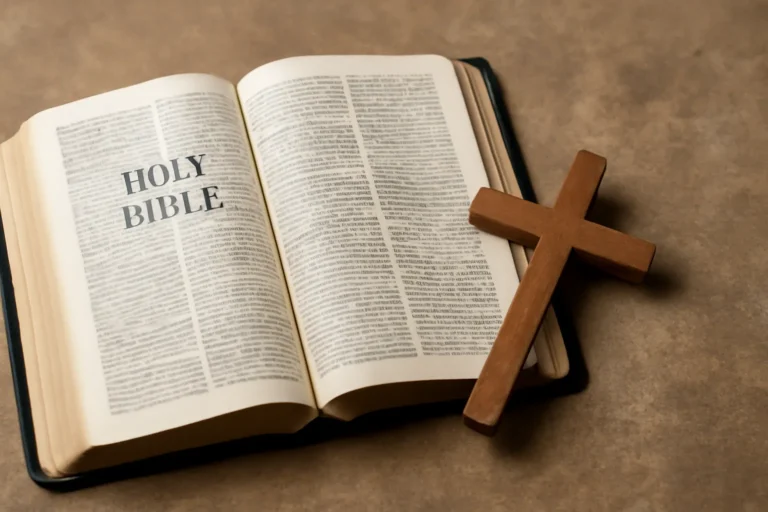
In a world flooded with digital imagery, Bible verses with pictures free download have become a popular way to share encouragement, faith, and reflection. These graphics pair carefully chosen scripture with beautiful backgrounds, making it easier to meditate on a verse or to bless others through social media, slides, or printed materials. This article offers a comprehensive guide to understanding, finding, using, and creating verse images that are truly free to download and use, while respecting licenses and design best practices.
A Bible verses with pictures—also known as scripture graphics, verse images, or Bible verse art—is a composite design that combines a short passage from the Bible with a visually appealing background. These graphics are crafted so that the words remain legible while the imagery reinforces the message. They are widely used for devotional journals, church bulletins, slides for worship services, social media posts, and printed cards or posters. The appeal lies in the way a background scene, color palette, and typography work together to magnify a spiritual truth. When you seek free download options, you are usually looking for two things: images that are legally reusable without paying license fees, and a typography treatment that makes the verse easy to read at a glance.
There are many variations of bible verses with pictures free download you can encounter. Some graphics present the verse as overlay text on a photo; others place the text in an ornamental frame or on an abstract background. Some are fully illustrated with decorative calligraphy, while others use clean, modern typography on photographic or gradient backdrops. The common thread is to deliver a concise message in a format that is instantly shareable and memorable.
Where to find free download images with Bible verses
Finding free download images with Bible verses requires a careful eye for licensing as well as quality. Below are the main categories and examples of sources you can explore. Always verify the license on each image and give attribution if the license requires it.
Public domain and Creative Commons sources – These are ideal for free download because they often permit broad reuse. Look for images labeled as Public Domain, CC0 (Creative Commons Zero), or CC BY (attribution required). Wikimedia Commons is a well-known hub for public-domain or CC-licensed images that you can legally use for verse graphics after verifying the exact license.
Free stock photo sites – Platforms like Unsplash, Pixabay, and Pexels provide high-quality images you can download at no cost. While these sites are not always specific to Bible verses, they offer backgrounds (nature scenes, textures, cityscapes, gradients) you can overlay with your own text. For free Bible verse graphics, you can download a suitable background and pair it with a verse you’ve created or copied from a public-domain source.
Dedicated verse graphics collections – Some sites curate Bible verses with pictures or scripture graphics and offer them under permissive licenses or as free downloads. Terms vary, so check whether attribution is required or whether the images are free for commercial use.
Creative Commons search tools – Use CC-search or license filters on photo sites to find images that explicitly allow reuse. This helps you assemble a library of backgrounds and textures that you can legally combine with verses.
DIY and design templates – Some platforms offer free templates you can customize. You may download the template and replace the text with your chosen verse while keeping the original licensing terms.
When you’re assessing a potential image, look for two things: license clarity and visual compatibility. A good background should provide enough contrast for legible text, not overwhelm the verse, and be appropriate for the tone of the message.
Licensing and permissions: What “Free Download” really means
“Free download” can be misleading if licensing is not understood. There are several common licensing models, and they determine how you may use an image and whether attribution is required.
Public Domain – No copyright restrictions. You can copy, modify, distribute, and use for any purpose, including commercial use, without seeking permission.
CC0 (Creative Commons Zero) – No rights reserved. You may use the image for any purpose, with no attribution required.
CC BY (Attribution) – You may use the image freely but must attribute the creator. This is common on many CC-licensed images.
CC BY-ND or CC BY-SA – These require attribution and additional conditions (no derivatives or share alike, depending on the license).
All rights reserved – If an image is marked this way or lacks clear licensing, you cannot reuse it freely, even if someone shared it publicly. You should avoid such images for free-download purposes unless you obtain explicit permission.
Tips for ethical usage:
Always check the license on the download page and the image file’s metadata.
Provide attribution when required, including photographer name, title, and source, following the specified format.
Avoid using images with restricted commercial use if you intend to sell products featuring the verse image, unless the license explicitly allows it.
Be mindful of the content’s sensitivity, especially when pairing verses with imagery in ways that could be misinterpreted or inappropriate.
Downloading and saving images: A practical guide
To maximize the usability of Bible verses with pictures free download in your projects, follow these steps:
Define your usage—Are you using the image for a church presentation slide, a social post, a printable card, or a devotional blog? The usage will influence the image resolution and licensing considerations.
Find sources – Use the categories above and search with phrases like “Bible verse image free download”, “scripture graphic CC0”, or “public domain Bible verse art”.
Check the license – Verify whether attribution is required and whether commercial use is allowed.
Choose an appropriate resolution – For social media, 1080×1080 pixels is common; for slides, 1920×1080 or higher is better; for print, 300 dpi if you’re printing at actual size.
Download and organize – Create folders by source and usage (e.g., background images, verse overlays, fonts). Save metadata about license and source to avoid confusion later.
Save with meaningful filenames – Example: psalm-23-1-sunset-1080×1080.jpg or john-3-16-cc0-background.png.
Back up – Keep a local copy and, if possible, a cloud backup so you don’t lose the resources you’ve gathered.
Design tips for effective verse images
Creating compelling biblical verse graphics is about balance. You want the verse to be readable, the background to support the message, and the overall tone to match the intended audience. Here are practical guidelines to improve readability and aesthetic appeal.
Typography: readability and mood
Contrast is essential. Light text on dark backgrounds or dark text on light backgrounds improves legibility. If you must place white text on a photo, consider a subtle dark overlay behind the text to boost contrast.
Font pairing matters. Use a bold sans-serif for the verse and a lighter serif or sans-serif for the attribution or reference. Limit to two or three font families to maintain cohesiveness.
Legibility at small sizes. If the image will be viewed on mobile, ensure the font size remains readable when scaled down.
Consistent branding – If you’re producing graphics for a church or ministry, use a consistent font family and color palette across all verse images.
Color and background
Choose backgrounds that enhance legibility rather than compete with the text. Subtle textures, soft gradients, or blurred landscapes can work well.
Use a harmonious color palette. If you’re overlaying text, pick a color family that evokes the verse’s mood—calm blues for comfort, warm golds for encouragement, or greens for growth.
Be mindful of color-blind accessibility. Ensure color choices don’t rely solely on color to convey contrast or meaning.
Layout and composition
Place the verse in a clear central area, with margins generous enough to avoid crowding the edges of the image.
Consider adding a subtle border or frame to separate the text from the background if the image is busy.
Use consistent alignment (left, right, or centered) across multiple designs for a cohesive set.
If you want to tailor verse images to your exact need, creating your own graphics is a powerful option. The following approaches are accessible to beginners and effective for advanced users alike.
Tools you can use
Canva – A user-friendly online tool with free templates for social media graphics, posters, and more. You can upload backgrounds or use Canva’s free photos and fonts to produce verse images quickly.
GIMP or Krita – Free, open-source alternatives to Photoshop for more detailed editing and typography control.
Adobe Photoshop or Illustrator – Industry-standard tools for advanced design, photo editing, and vector overlays.
Inkscape – A free vector tool ideal for creating decorative frames or typographic embellishments that can be exported as PNG or SVG.
Step-by-step process
Choose a verse and determine the intended use (print, web, or social media).
Select a suitable background that complements the verse and offers enough contrast for the text.
Overlay the verse text with careful typography. Use hierarchy to emphasize the key phrase or the verse reference.
Incorporate subtle design elements like textures, light flares, or decorative frames, but avoid clutter.
Export in appropriate formats: JPEG for photos and social media, PNG for images with transparent elements, and SVG for scalable vector elements.
Write alt text for accessibility, describing both the image and the verse content.
Technical considerations: formats, resolution, and accessibility
Choosing the right technical settings ensures your Bible verse graphics look great in every context. Consider these practical points when preparing verse images for download.
Image formats – JPEG is ideal for photographic backgrounds; PNG is better for images with fewer colors or transparency; SVG is perfect for scalable vector elements like frames or typography.
Resolution – Digital screens typically require 72–150 PPI, while print projects demand 300 DPI or higher. If you’re unsure, design for 1920×1080 or 1080×1080 as a safe social media size and scale up if needed for print.
Alt text – Add descriptive alt text that conveys both the image and the verse. This improves accessibility for screen readers and boosts SEO.
File naming – Use descriptive, lower-case file names with hyphens, e.g., bible-verse-psalm-23-1-shepherd-1920×1080.jpg.
Storage and attribution – Record the license type and attribution requirements, if any, in a simple metadata file or a readme so your team can reuse assets correctly.
Ethical and cultural considerations
When sharing or distributing bible verses with pictures, it’s important to respect the cultural and religious significance of the verses. A few best practices can help:
Use verses accurately and avoid altering the meaning through paraphrase that could be misleading.
Avoid pairing verses with imagery or contexts that could be seen as mocking or disrespectful to believers.
When using copyrighted translations, ensure you have permission or stick to public-domain translations like the King James Version (KJV) or other freely available texts.
Provide attribution when licenses require it, and link back to the source if you are distributing these images online.
To inspire your own creations, here are sample verse ideas with suggested imagery and design directions. These examples illustrate how verses with pictures can be paired to evoke a mood or reinforce a message.
John 3:16 (KJV partial): “For God so loved the world, that he gave his only begotten Son.” Background idea: a sunrise or field of wildflowers to symbolize love and surrender. Typography: bold serif for the verse, clean sans for the attribution.
Psalm 23:1: “The Lord is my shepherd; I shall not want.” Background idea: a calm pastoral scene with soft light, gentle hills, or a tranquil path.
Philippians 4:13: “I can do all things through Christ which strengtheneth me.” Background idea: a mountain summit or open road to convey strength and confidence.
Joshua 1:9: “Be strong and of a good courage; be not afraid.” Background idea: a rugged cliff or a wide-open sky, implying courage and trust.
Proverbs 3:5: “Trust in the Lord with all thine heart.” Background idea: a winding forest path or a tranquil lake to suggest trust and pilgrimage.
Psalm 27:1: “The Lord is my light and my salvation.” Background idea: a dawn glow or candle flame with soft gradient lighting.
1 Corinthians 13:8: “Love never fails.” Background idea: a heart-inspired design or an abstract, peaceful gradient—text-centric but warm.
Psalm 51:10: “Create in me a clean heart, O God.” Background idea: a clean, airy space with light textures or marble tones to symbolize renewal.
1 Peter 5:7: “Casting all your care upon him; for he careth for you.” Background idea: gentle waves or a calming sky—inviting trust and surrender.
These examples can be realized in many styles—from modern minimalism to classic floral frames. The key is to keep the text legible, ensure the verse’s tone matches the imagery, and use a layout that works across platforms.
Best practices for sharing and distributing verse-image graphics
Once you have a set of Bible verses with pictures free download assets, follow these practices to share them effectively and respectfully.
Provide context when sharing online. A caption that includes the verse reference and a short reflection can deepen engagement.
Maintain accessibility by using alt text and high-contrast text overlays so everyone can read the verse clearly.
Respect licensing and attribution requirements. If attribution is required, place it in the image caption or a visible credit line.
Optimize file sizes for fast loading on websites and social media without compromising readability.
Organize resources in a library or asset manager with clear tags like “verse-psalm,” “verse-2-timothy,” “background-nature,” etc., so teammates can find what they need quickly.
Additionally, consider creating a small style guide for your team. A guide could specify the preferred fonts, color palette, image categories, and licensing expectations. This consistency helps your digital ministry or brand remain cohesive as you publish more verse graphics over time.
Common questions about Bible verses with pictures free download
Here are quick answers to common concerns readers have when exploring free verse-image resources.
Are Bible verse images free to use for commercial projects? It depends on the license. CC0 and public-domain assets are typically safe for commercial use. Always check the license and, if required, provide attribution.
Can I edit or modify the images? In many cases, yes—especially if the license allows derivatives (like CC0 or CC BY). If the license prohibits derivatives, you should not alter the asset.
What about translations? If you quote verses from translations with copyright, ensure you have permission or use translations that are in the public domain (e.g., KJV). Short quotes used for commentary or teaching are often acceptable, but licensing rules still apply.
Should I credit the photographer or source? If the license requires attribution, yes. Even when not required, providing a credit line is a best practice to honor creators.
What makes a verse image successful? Clarity of text, relevance of imagery, strong contrast, and a tone that matches the verse’s message. A successful image invites contemplation and sharing without distracting from the verse.
Putting it all together: sample page structure for a site
If you’re publishing a page about Bible verses with pictures free download on a website, consider this practical structure. It keeps content organized, accessible, and SEO-friendly.
Intro paragraph with a warm, welcoming tone describing the value of verse images.
Multiple H2 sections that cover licensing, finding resources, design tips, and DIY creation.
Several H3 subsections within design tips for typography, color, and layout.
A dedicated section with example image blocks annotated to show how the verse and background interact (you can use placeholder image URLs for demonstration).
AFAQ area with answers to common copyright and usage questions.
Below is a simple demonstration of how an image block might appear in your article. Replace the sample URLs with actual resources you have permission to use.
John 3:16 on a sunrise background — example verse image (free-to-use background).Psalm 23:1 on a tranquil pasture—example verse image (public domain background).
Conclusion: embracing the practice of thoughtful, free verse graphics
Creating and using bible verses with pictures free download resources combines the power of sacred text with the impact of compelling imagery. By understanding licensing, selecting appropriate backgrounds, and applying sound design principles, you can produce graphics that uplift, educate, and inspire without legal or ethical concerns. Whether you are a pastor, teacher, blogger, designer, or layperson sharing encouragement with friends and family, verse images offer a versatile and meaningful way to communicate the message of scripture. Remember to prioritize clarity, responsible use, and respect for the text as you curate or create your own library of Bible verse graphics for free download and sharing.
Introduction: Reading the Light–Darkness Dialogue in Scripture In the vast tapestry of the Bible, the pair Light and Darkness functions as more than a description of what we see when we blink in a cave. They are enduring symbols that mark moral choices, spiritual states, and cosmic realities. This article...
In a world that often feels chaotic and uncertain, many people instinctively reach for control—trying to shape outcomes, steer events, and manage feelings. Yet Scripture invites us into a different posture: a life marked by surrender to God’s sovereignty and a trusting reliance on His wisdom. This article gathers biblical...
Overview: What Are Bible Scripture Checks and Why Do They Matter? In an age of abundant information, verifying biblical passages is a crucial skill for students, pastors, teachers, students of theology, and curious readers alike. Bible scripture checks refer to the deliberate process of confirming the accuracy, provenance, and meaning...
Increasing bible knowledge is more than accumulating facts about a book; it is a lifelong journey toward greater understanding, wiser living, and clearer teaching. This article offers five practical ways to increase Bible knowledge and grow in Scripture understanding—through daily reading, thoughtful study, intentional memory, communal learning, and faithful application....