Funeral Mass Programs: Templates, Examples, and Planning Tips
Planning a funeral requires care and sensitivity, and a well‑prepared funeral mass program can be a quiet anchor for mourners. A thoughtfully designed program does more than list events; it communicates the tone of the service, honors the deceased, and provides guidance to attendees. In this article, you’ll find practical templates, concrete examples, and practical planning tips to help you create effective and heartfelt mass programs for a Catholic funeral Mass, memorial Mass, or ecumenical alternative. Whether you are producing a traditional program with a full liturgy or a simpler handout for a non‑clerical gathering, the goal remains the same: clarity, reverence, and care for those who are grieving.
Understanding the purpose of funeral mass programs
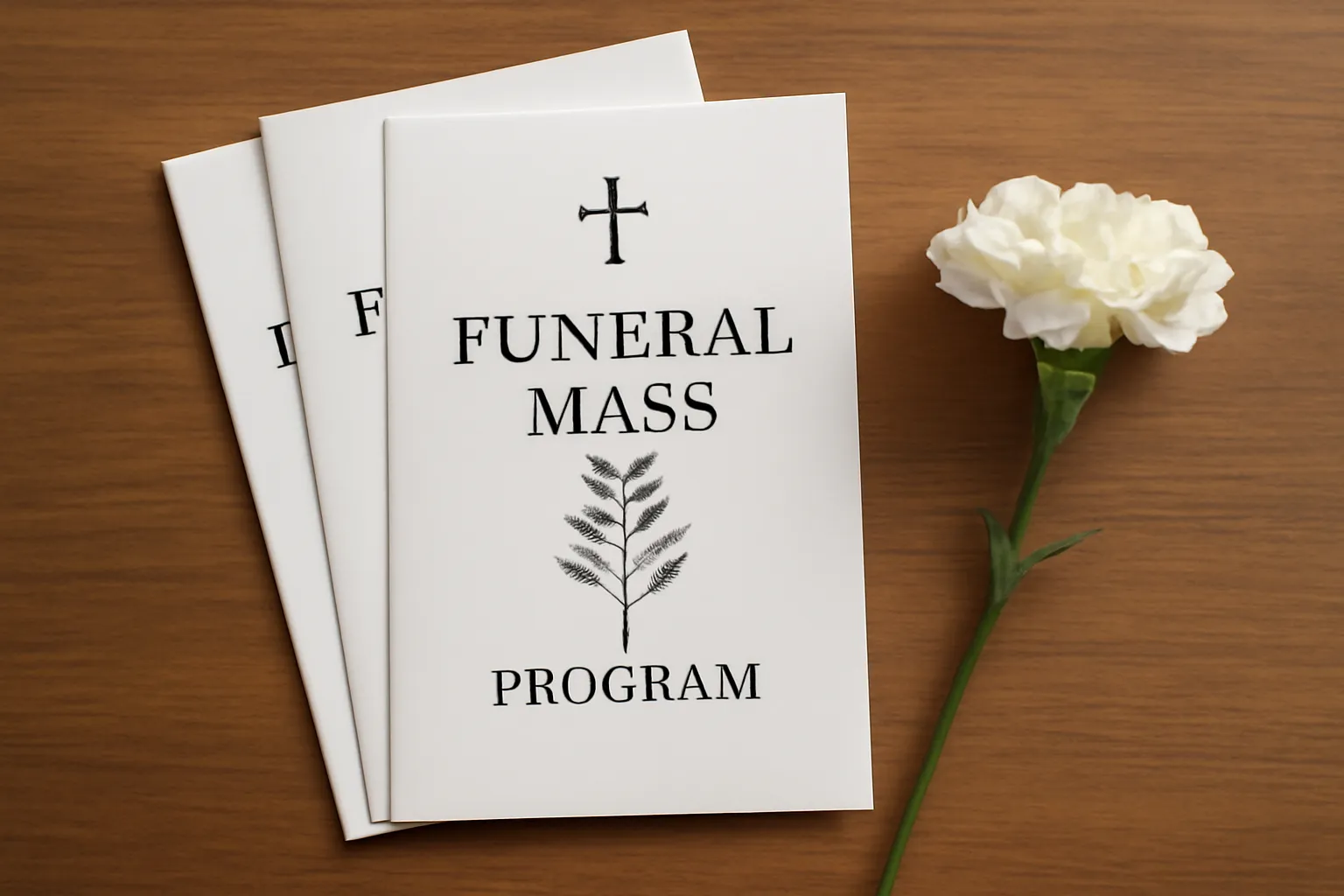
A funeral mass program serves multiple functions. It is a touchstone for attendees who may be unfamiliar with liturgical order, a memorial keepsake for the family, and a reference that helps worshippers participate more fully. For the reader, the program can provide:
Order of service and timing, so guests know what is next and how long the service will last.
Scriptural readings and prayers, offering a route through the Liturgy of the Word and the Liturgy of the Eucharist (where applicable).
Music selections and hymns, with page numbers or cues for the organist or pianist.
Names of family and friends who participate, including readers, gift bearers, and celebrants.
Acknowledgments and details about receptions, wakes, or community gatherings after the Mass.
Beyond practical information, a well-crafted program communicates dignity, gratitude, and hope. It can incorporate individual tributes, a brief biography, or notes about charitable requests in lieu of flowers, all while maintaining the liturgical integrity required by the ceremony.
Templates for funeral mass programs
Templates provide a reliable framework that you can adapt to fit the family’s wishes, local customs, and church norms. Below are several templates you can consider, each tailored to different contexts. Use them as starting points, then customize with names, readings, and music details.
Traditional Catholic Mass Template
This template follows a classic Catholic funeral Mass structure, including the Introductory Rite, Liturgy of the Word, Liturgy of the Eucharist, and the Concluding Rite. It is suitable when a parish priest or pastor will preside and when the full Mass is desired.
Cover page: Full name of the deceased, dates of birth and death, funeral Mass date, parish name, and city.
Order of Service:
Opening hymn or entrance music
Greeting and opening prayer
Placing of the pall (if applicable) or symbolic gesture
Liturgy of the Word: First Reading, Psalm, Second Reading, Gospel Acclamation, Gospel
Homily or reflections (usually by the presiding priest)
Prayer of the Faithful (Petitions)
Liturgy of the Eucharist: Preparation of the Gifts, Eucharistic Prayer, Communion
Communion hymn or silent time
Concluding rites and blessing
recession and closing music
Readings: Titles, verses, and page numbers or hyperlinks to the missal or parish booklet.
Prayers: Intercessions, responses for the assembly, and any special intentions.
Music: Composer, title, and brief notes about the occasion.
Acknowledgments: Thank you to family, parish staff, and volunteers.
For families who prefer a concise, dignified service with fewer liturgical elements, this template keeps the essentials intact while reducing program length.
Cover page: Name, dates, service date, venue
Order of Service:
Entrance and welcome
First Reading and Psalm
Gospel reading and brief homily or reflection
Prayers of the faithful
Liturgy of the Eucharist (if applicable) or a blessing and concluding prayer
Closing song and procession
Music and hymns with titles and times
Acknowledgments and reception details
Ecumenical or Interfaith Template
When family members come from diverse traditions, a flexible, inclusive template can honor multiple faith perspectives while preserving a respectful, liturgical tone.
Cover with deceased’s name and a unifying theme (e.g., “In Peace, we remember”).
Order of service:
Brief opening words or invocation (neutral or option for a faith leader to speak)
Liturgy of the Word or readings from chosen sacred texts
Reflections or a eulogy
Prayers or meditations
Closing acknowledgment and farewell
Music selections that can be appreciated across traditions
Interfaith notes for attendees and instructions for participation
Memorial Mass Template (No Eucharist, or reduced liturgy)
Some families opt for a memorial Mass without the distribution of Communion, maintaining the Mass structure with readings, prayers, and reflections.
Cover details
Order of service:
Entrance song
Introductory rites and readings
Homily or reflections
Prayers of the faithful
Rite of remembrance and blessing
Closing song and farewell
Notes about the absence of Communion and any special prayers
Key elements of a mass program: what to include and why
The following elements are common across most funeral Mass programs. Depending on tradition, some may be omitted or substituted.
Cover page with essential identifiers (name, dates, venue, order date).
Order of service organized by segments and times or cues, to guide participants.
Readings from Sacred Scripture or notable texts, including citations and optional page references.
Eucharistic prayers (for Mass) and details about communion procedures, reception, and participation guidelines.
Prayers of the faithful or intercessions, including specific intentions (e.g., for family, the sick, the deceased).
Music selections: hymns, anthems, or instrumental pieces; include performers or arranging details when relevant.
Names of participants: readers, cantors, altar servers, pallbearers, and celebrant’s name.
Acknowledgments and thanks to clergy, funeral home staff, and friends who offered support.
Reception information or instructions for after‑service gatherings.
Design and layout tips for effective funeral programs
A clear, aesthetically restrained design helps attendees follow the liturgy without distraction. Consider the following guidelines to balance readability with reverence.
Size and orientation: Common sizes include 5.5×8.5 inches (half sheet), 8.5×11 inches (letter), or a tri‑fold layout for a larger surface. Choose a size that fits your printing method and accessibility needs.
Typography: Use legible fonts; reserve one serif for headings and one sans‑serif for body text. Maintain a minimum contrast ratio for readability.
Color palette: Subtle tones—creams, grays, or muted blues—are traditional and respectful; reserve bold colors for family mementos or accents if desired.
Hierarchy: Clearly distinguish headings (order of service, readings, music) from body text. Use larger type for key sections and bullet icons for quick scanning.
Photography and imagery: If used, keep images tasteful and understated—family silhouettes, a single flower, or a simple memorial motif.
Accessibility: Provide larger font options, high‑contrast print, and an option for braille or audio versions if needed.
Printing quality: Select a durable paper or cardstock, and consider matte finishes that reduce glare in church lighting.
The language you choose should reflect the tone of the service and the family’s preferences. Here are sample passages you can adapt for different parts of the program.
Introductory note: “We gather to remember and give thanks for the life of [Name], who blessed us with kindness, faith, and love. May we find comfort in each other’s presence and in the hope of eternal life.”
Reading caption: “A reading from the Book of Wisdom: [Insert Reading Text].”
Prayer of the faithful example: “For the family and friends of [Name], that they may be comforted by God’s peace and supported by a caring community, let us pray to the Lord.”
Eucharistic prayer note (if applicable): “Let us lift our hearts in praise as we join in the sacrifice of thanksgiving through Christ our Lord.”
Closing blessing: “Go in the peace of Christ, to love and serve the Lord in the days ahead.”
Practical considerations for printing and distribution
The logistics of transforming text into a physical or digital program are important to get right, especially when you are balancing time, budget, and accessibility.
Print runs: Estimate the number of attendees, not just the number of family guests. It’s prudent to print 10–15% more than the expected turnout.
Digital versions: Create a downloadable or mobile-friendly version for guests who prefer virtual access or for a church livestream audience.
Durability: If the service includes a procession or outdoor elements, choose weather‑resistant paper or laminate the cover.
Language options: If your community includes speakers of other languages, consider bilingual or multilingual versions of the program.
Budget considerations: A simple, elegant design can be just as meaningful as a more elaborate one; prioritize readability and reverence over ornate embellishments.
Variations by tradition and cultural practice
Funeral Mass programs can reflect different liturgical traditions and cultural preferences. Below are some common variations you may encounter or wish to consider.
Catholic Mass with cremation: Some families choose cremation; the Mass may occur before cremation, after cremation (with a memorial Mass), or as a combined rite. The program should clearly indicate the sequence and any special prayers or readings.
Rites for children or youth: When the deceased is a child or young person, the program may include a lighter segment of music, a photo montage, or a brief tribute that honors the unique life lived.
Military or public service honors: If the deceased served in the armed forces or held a public role, the program can include a short acknowledgment, a poem about service, or a moment of silence.
Ecumenical and interfaith services: These programs emphasize shared themes of life, memory, and consolation, while allowing room for readings from multiple traditions.
Flexibility is essential when compiling a mass program. You want to honor tradition without stifling personal storytelling, and you want to ensure that the program remains accessible to all attendees.
Clear cues and page numbers help attendees follow the flow, especially during transitions like the entrance, Communion, or final blessing.
Personal tributes can be included with care—short handwritten notes, a brief biography, or a photo page—without overshadowing the liturgical core of the Mass.
Consistency in font, layout, and tone across the entire program avoids confusion and creates a calm, respectful presentation.
Sample outlines: how to assemble a program from scratch
If you’re starting from zero, here is a straightforward outline you can fill in. Adjust according to your local parish guidelines and the family’s wishes.
Cover page: Name, dates, service date, venue, celebrant’s name, and a short theme line (optional).
Introductory notes: Brief message about the service and intent (e.g., “In gratitude for a life well lived”).
Readings and prayers: First Reading, Psalm, Second Reading, Gospel, Prayers of the Faithful.
Reflection: Homily or family tribute (if allowed by the presider).
Great Prayer and Eucharist: Details for Mass with or without Communion.
Closing rites: Final blessings, sign of peace, and closing song.
Reception details: Time and place of any post‑service gathering.
Examples of wording for different sections
Here are concise examples you can adapt. Modify the placeholders to fit your loved one and family.
Cover page example: “In loving memory of [Full Name] (1950–2024). Funeral Mass at [Parish Name], [City], on [Date]. May his/her memory be eternal.”
Reading caption: “First Reading: Wisdom 3:1–9”
Prayers of the faithful example: “For the family of [Name], for healing and peace; for all who mourn; may we be supported by the grace of God.”
Digital accessibility and ongoing memorials
In today’s connected world, many families create companion digital programs to accompany the printed version. This can be particularly helpful for relatives who cannot attend the Mass in person or who want to revisit the service later.
Video captions and accessible PDFs ensure readability for all.
Online memorial pages link to the program, add tributes, and offer charitable giving options.
Print-to-digital continuity: Ensure that the online version mirrors the printed content and uses consistent naming conventions for easy cross‑references.
Common mistakes to avoid when designing a funeral mass program
Even with the best intentions, certain pitfalls can undermine the program’s effectiveness. Here are some frequent missteps to avoid.
Overloading the page with too much text or decorative elements that hinder readability.
Ambiguity about the order of service or participant roles; always provide explicit cues and titles.
Inaccurate readings or names: double‑check spelling, liturgical citations, and author credits.
Inflexibility: failing to accommodate a family’s need for a memorial tone or interfaith elements.
Budget overruns: overly elaborate design can drive costs up; prioritize clarity and reverence.
Conclusion: shaping a faithful and meaningful keepsake
A well‑crafted funeral mass program is more than a schedule; it is a reflection of love, memory, and hope. By combining clear structure, thoughtful wording, and compassionate design, you can create a document that helps the community participate in the rite, honors the deceased, and supports the family through their loss. Whether you adopt a traditional Catholic Mass template, a simple service outline, an ecumenical approach, or a memorial Mass without the Eucharist, the core goals remain the same: provide guidance, celebrate a life well lived, and offer a beacon of comfort to those who grieve.
Guía completa para diseñar banners respetuosos y efectivos para funerales En eventos conmemorativos, el banner funeral —también conocido como banner fúnebre o lona conmemorativa— cumple una función central: comunicar homenaje, memoria y dignidad. Este artículo ofrece una guía amplia y práctica para diseñar banners funerarios que sean respetuosos, claros y...
Meaning, Presence, and the Gentle Refrain: What “Do Not Stand Beside My Grave and Weep” Teaches Us Across generations and cultures, the sentiment often carried by the lines commonly paraphrased as “Do Not Stand Beside My Grave and Weep” speaks to a paradox: the ache of loss is a living...