The Mackintosh’s: The Ultimate Guide to the Classic Toffee Brand
Welcome to an in-depth exploration of Mackintosh’s Toffee, a confection that has lived in the shadows of bigger chocolate names while maintaining a deeply devoted fan base. This guide covers the origins, the recipe character, the brand’s journey through time, packaging, culture, and practical tips for enjoying and preserving this iconic piece of British confectionery heritage. Whether you encountered this treat as a child in a tinsmith-red or blue-wrapped box, or you’re hearing the name for the first time, this article aims to give you a complete, well-rounded picture of the Mackintosh’s family of toffees and their enduring appeal.
Origins and History: How Mackintosh’s Began
Founding in Halifax and the early recipe
The story of Mackintosh’s Toffee begins in the late 19th century in the town of Halifax, England. A confectioner named John Mackintosh (often remembered simply as the founder with his surname carried into the brand) launched a small shop that sought to create a toffee with a distinctive balance of sweetness and butter-rich depth. The recipe—though guarded by tradition—centered on classic toffee components: sugar, butter, and a touch of dairy to round out the sweetness. The result was a toffee with a glossy finish, a robust bite, and a lingering aftertaste that invited you to return for another square. The ethos of belief in craftsmanship is audible in the very naming of the product: the Mackintosh’s Toffee name is proof that the creator’s reputation and the product itself became inextricably linked.
For shoppers and families, the early Mackintosh’s toffee quickly became a staple in tearooms, newsagents, and school lunchboxes. The toffee’s texture—crackling and dense without being brittle—earned it a reputation for reliability: a treat that could hold up to busy, bustling days while still delivering a satisfyingly buttery, caramel-forward flavor.
Growth, recognition, and a shifting confectionery landscape
As the Mackintosh family of toffees gained popularity, the brand expanded beyond the original shop and started appearing in regional and eventually national markets. The toffee’s success did not just come from taste; packaging, timing, and distribution played important roles as well. The Mackintosh name became synonymous with a reliable, high-quality candy that offered a sense of home and tradition—elements that would prove durable as the English confectionery scene evolved through the 20th century.
Over time, the Mackintosh’s brand became part of larger corporate portfolios, a common fate for many regional favorites as the confectionery industry consolidated. The story of Mackintosh’s Toffee is thus as much about the product itself as it is about the industrial shifts that shaped British sweets in the postwar era. The toffee continued to be a popular choice in shops, gas stations, and family homes, celebrated for its consistency and comforting flavor.
Product Profile: What Mackintosh’s Toffee Is Like
Ingredients, texture, and sensory profile
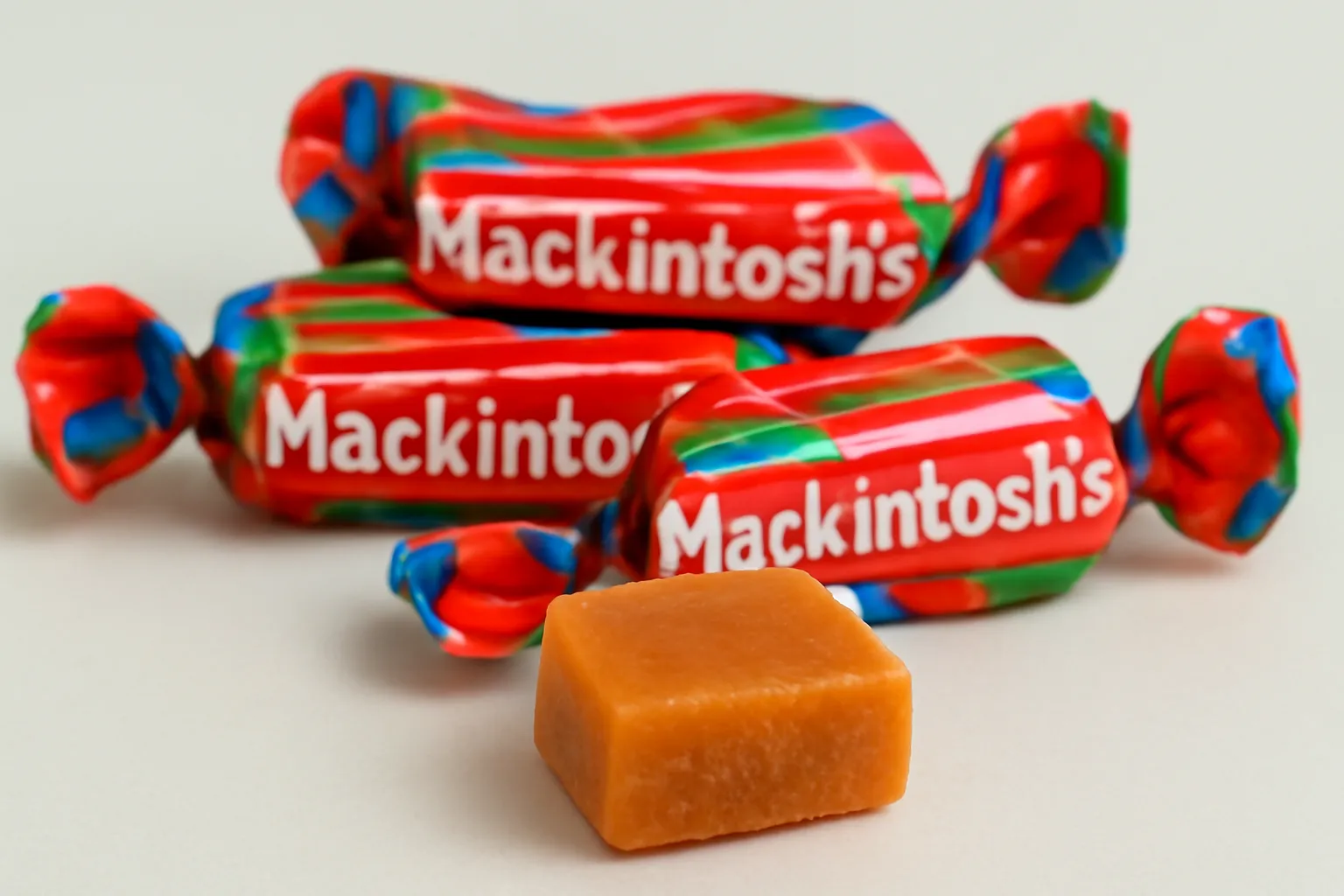
While exact proprietary formulations are closely held, the classic Mackintosh’s Toffee is built around a few core elements. Expect a recipe that centers on sugar, butter, and golden syrup or similar sweeteners, with dairy contributing a creamy undertone. The result is a toffee with a hard-crack texture that snaps when bitten, followed by a buttery, caramel-rich mouthfeel that lingers with a gentle sweetness. The surface sheen is typically glossy, a sign of proper cooking and the precise sugar-to-fat ratio that prevents sticky or chewy misfires.
In sensory terms, Mackintosh’s Toffee offers:
Sharp initial snap that yields to a smooth, velvety center
Buttery depth balanced by a pronounced caramel note
Long, clean finish with a hint of caramelized sugar
Regional names and branding variations
Across the years and geographies, you may encounter variations of the same product under different naming conventions. Some people refer to it simply as Mackintosh’s Toffee, while others use the shorthand Mackintosh’s or simply “the classic toffee from Mackintosh’s.” In marketing materials—when they appear in nostalgia-focused campaigns—the product often carries a sense of heritage and craft, underscoring the long-standing tradition behind the treat.
Brand Journey: From Family Recipe to a Iconic Brand
Merger and corporate evolution
In the arc of British confectionery, Mackintosh’s is a textbook case of a beloved regional name becoming part of larger corporate ecosystems. The brand’s governance shifted through a series of mergers and acquisitions that reflect broader industry trends:
The original Mackintosh’s recipes and brand presence were eventually integrated into larger confectionery portfolios as regional names were consolidated.
Later, Mackintosh’s Toffee became associated with a major York-based confectionery company, expanding its distribution beyond the North of England.
In the late 20th century, the brand activity in the United Kingdom moved under the umbrella of international firms that managed a portfolio of popular sweets, including many heritage brands.
Today, the Mackintosh’s identity persists primarily as a touchstone of nostalgia and heritage in the confectionery landscape. While the brand’s standalone, independent production may not be as common as it once was, its legacy lives on in packaging designs, the memories of longtime fans, and the continued desire for authentic, traditional toffees.
Packaging, Design, and the Visual Language of Mackintosh’s
Classic wrappers and how design reinforced memory
Packaging plays a pivotal role in the Mackintosh’s experience. The wrappers—typically featuring a blend of blue tones and vintage typography—signal a sense of quality and craft. For many shoppers, the packaging itself evokes nostalgia, as if the candy were a link to earlier generations—grandparents chatting at the kitchen table, a break during a long car journey, or a school lunchbox companion for the week. The physical wrapper matters, not only for protection but as a vector of memory, turning a simple candy into a small artifact of cultural heritage.
Modern packaging and the nostalgia economy
In contemporary markets, elements of Mackintosh’s packaging are often updated to align with current production standards, while still honoring the classic look. You may see references to heritage branding, a nod to the product’s long history, alongside safety and labeling updates demanded by today’s food regulations. The visual language remains intentionally restrained: a clean, timeless aesthetic that emphasizes the toffee’s character—butter, caramel, and craftsmanship—over flashy gimmicks.
The Cultural Footprint: Mackintosh’s in Popular Consciousness
Nostalgia, memory, and shared experiences
One of the strongest elements of Mackintosh’s is its emotional resonance. For many people, toffee has symbolic weight—short moments of comfort during tough days, or the simple joy of a shared treat during a family gathering. The Mackintosh’s story dovetails with broader narratives about heritage foods and heritage brands that survive across decades and even centuries by remaining true to core qualities. This is not merely a confection; it is a memory marker, a taste that travels with generations and across regions.
Collector culture: wrappers, memorabilia, and learning about a brand
Because Mackintosh’s Toffee sits in a nostalgic niche, it has inspired collector interest in vintage wrappers and memorabilia. Fans and historians often catalog wrapper designs, color schemes, and logos as artifacts, using them to trace shifts in packaging technology and branding preferences over time. For enthusiasts, the toffee becomes a portal into a broader history of British sweets, retail practices, and the everyday lives of past decades.
How to Enjoy Mackintosh’s Today: Tasting, Pairing, and Serving Ideas
Tasting notes and best practices
When you enjoy Mackintosh’s Toffee, a few simple approaches can enhance the experience:
Let the toffee rest at room temperature for a few minutes if it has been chilled; this helps the surface soften slightly, releasing aroma and making the initial crack more satisfying.
Pair with a hot beverage like tea or coffee to balance the sweetness with warmth and bitterness. A light, unsweetened tea can cut through the richness nicely.
Try a classic pairing with a dairy note, such as a touch of cream or milk, to create a gentle, dessert-like bite.
Serving ideas for gatherings
In social settings, Mackintosh’s Toffee can be presented as:
Part of a retro dessert platter alongside shortbread, fruit, and other timeless sweets
Wrapped as favors for weddings or nostalgic parties, where the candy acts as a memento and conversation starter
Included in a tea-time spread for a British-inspired gathering that celebrates comfort foods
Where to Find Mackintosh’s Today: Availability and Access
Retail and online availability
Today, you can often find Mackintosh’s Toffee in:
Nostalgia-focused shops and specialty grocers that curate heritage brands
Online retailers that stock classic confectionery and limited-edition runs
Outlet stores and regional markets where traditional sweets maintain a loyal following
Tips for locating authentic Mackintosh’s products
To maximize your chances of finding an authentic Mackintosh’s experience, consider:
Checking product labels for provenance and ingredient lists; older batches may emphasize dairy-forward recipes
Looking for packaging that aligns with the brand’s heritage aesthetic (blue-toned wrappers, classic typography)
Exploring confectionery catalogs and heritage brands’ websites, which sometimes feature limited editions or reissues
Storage and Quality: Keeping Mackintosh’s At Its Best
Optimal storage conditions
To maintain peak texture and flavor, store Mackintosh’s in a cool, dry place away from strong-smelling foods. Exposure to humidity or heat can cause the toffees to lose their crispness or become sticky. When stored properly, a sealed package can retain quality for several weeks, and even longer when kept in a cool pantry or refrigerator, though refrigeration can alter texture slightly upon warming.
Handling and freshness tips
Keep away from moisture to preserve the signature crack and gloss
Avoid prolonged exposure to direct sunlight, which can fade colors on wrappers and affect flavor perception
If you purchase in bulk or as part of a mixed box, ensure the seals are intact to prevent staling
Legacy and The Mackintosh’s Today: What Remains of the Brand
Continued influence in confectionery culture
Even as corporate ownership has shifted and some product lines morph over time, Mackintosh’s Toffee remains a symbol of classic British confectionery values. The brand’s legacy endures in the fond memories of countless fans and in the ongoing appreciation for traditional toffee’s artistry—the careful balancing of sweetness, fat, and heat to achieve the coveted crack and melt-in-the-mouth finish.
What the future could hold for Mackintosh’s
Looking ahead, there is always room for revival, reissues, or modern reinterpretations that respect the core characteristics of the original toffee while offering new experiences for contemporary palates. Possible directions include
Limited-edition flavors or packaging that celebrate milestones in the brand’s history
Collaborations with other heritage brands to create cross-brand confectionery experiences
Educational pieces or museum-style displays that highlight the craft of traditional toffee making
The Mackintosh’s Guide: Practical Takeaways
Key facts to remember
Mackintosh’s Toffee is a storied hard toffee with a buttery, caramel-forward profile
The brand has a long-standing association with Halifax and the broader tradition of English confectionery
Ownership and branding have shifted across decades, but the product remains a nostalgia-driven favorite for many
Why this toffee remains relevant
The enduring relevance of Mackintosh’s Toffee rests on a few steadfast pillars: quality ingredients, a reliable texture that pleases both old and new fans, and a deep sense of heritage that resonates in a modern market hungry for authentic experiences. As long as new generations discover the combination of a crisp snap and a soft, buttery interior, Mackintosh’s Toffee will likely maintain a cherished place on sweet-shop shelves and in memory alike.
Conclusion: The Enduring Appeal of Mackintosh’s
In the pantheon of classic British sweets, Mackintosh’s holds a unique, enduring position. It is more than a candy; it is a slice of confectionery history that has traveled through time with a consistent formula and a recognizable aesthetic. From its Halifax beginnings to its place in modern nostalgia markets, Mackintosh’s Toffee demonstrates how a well-made, simply composed treat can cross generations. If you are seeking a connection to the past, a moment of comforting sweetness, or simply a well-made piece of toffee that stands out for its texture and depth of flavor, Mackintosh’s Toffee offers a quintessentially British experience that continues to delight, educate, and inspire discussions about the craft of candy making.