Our Father Prayer Interpretation: Meaning, History, and Practical Insights
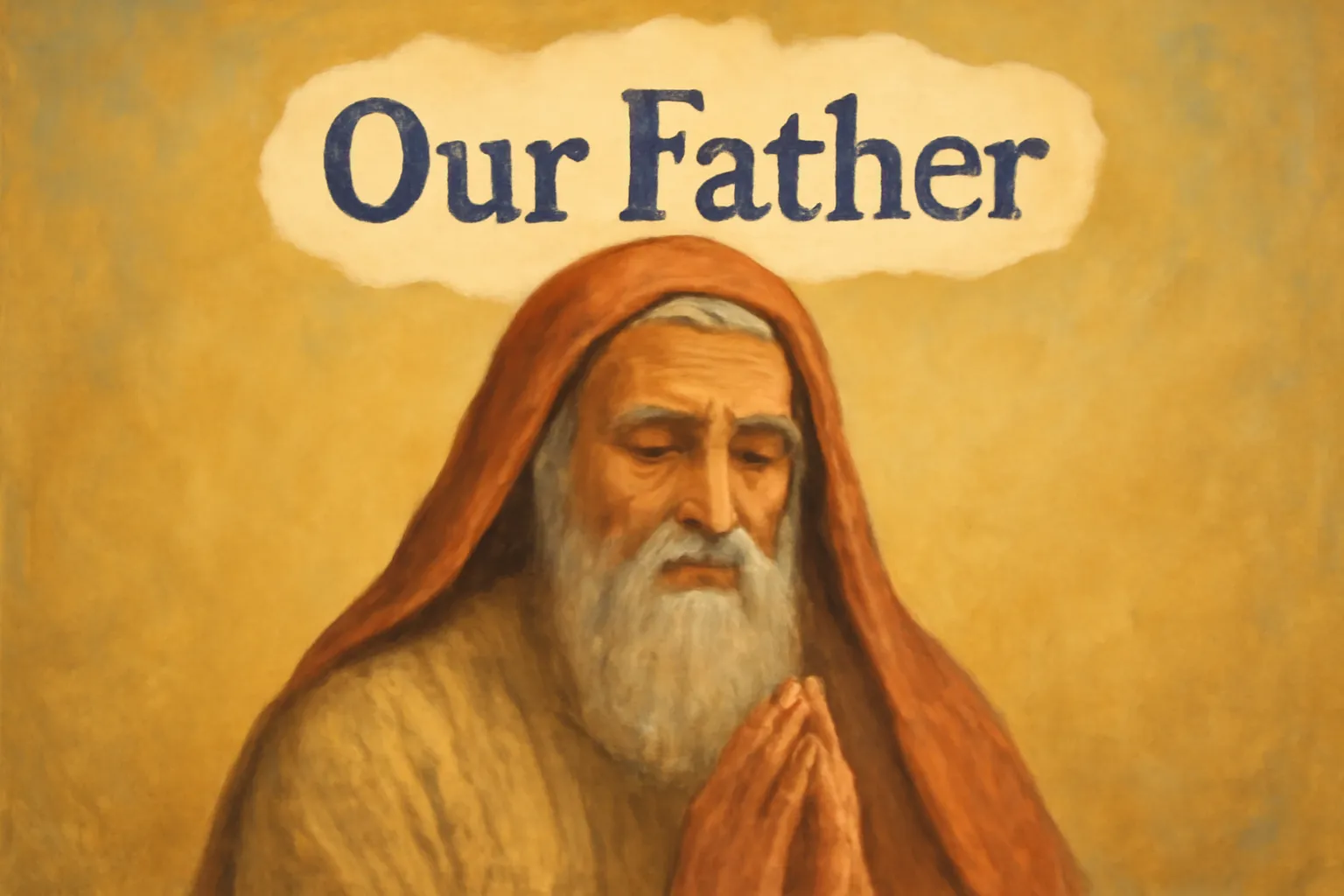
The Our Father, commonly known as the Lord’s Prayer, is one of the most influential and widely memorized prayers in the Christian tradition. Its compact form conceals a depth of theology, spirituality, and practical guidance that has shaped personal devotion, catechesis, and public worship for centuries. In this article, we explore the Our Father prayer interpretation from multiple angles: its meaning and structure, the historical development behind the words, and practical ways to apply its themes in everyday life. We will use variations of the phrase our Father prayer interpretation to illuminate different facets of the topic and to help readers connect with the text in fresh ways.
Whether you approach it as a devotional routine, a catechetical text, or a liturgical centerpiece, the Our Father invites a posture of worship, dependence, and ethical imagination. By examining the interpretation of each petition, we can discern how this ancient prayer speaks across cultures and eras, offering guidance for personal growth, communal life, and engagement with a world in need of justice, mercy, and hope.
Meaning and Structure: Interpreting the Seven Petitions
A fruitful Our Father interpretation begins with the recognition that the prayer is not merely a set of requests but a compact catechesis on the nature of God, the purpose of life, and the rhythm of faith. The seven petitions can be grouped into two main parts: worship and supplication. The first three petitions orient us toward God’s name, reign, and will; the remaining four petitions focus on our needs and ethical life within God’s ongoing work in the world.
1) The address: Our Father in heaven
The prayer begins with a relational address. By naming God as Our Father, it establishes intimacy, trust, and responsibility. The phrase in heaven signals transcendence and sovereignty—God is not confined to a local temple or a private memory, but rather stands over all creation. This combination of closeness and majesty invites believers into a shared life with a parental God who guides, disciplines, and blesses. In this Our Father interpretation, the opening words set a tone of reverent dependence and mutual belonging within a wider cosmic order.
2) Hallowed be thy name
The first petition asks that God’s name be held holy, esteemed, and honored in word and deed. This is not primarily about worship as sentiment; it is a call for alignment: personal conduct, communal speech, and institutional life should reverence the holy name. In the Our Father prayer interpretation, “hallowed” becomes a project of transformation—cultivating integrity in families, schools, churches, and nations so that God’s name is not profaned by hypocrisy or indifference.
3) Thy kingdom come, thy will be done
These petitions move the focus from God’s name to God’s reign and purposes. Thy kingdom come expresses longing for the present and future realization of God’s just and loving rule. Thy will be done signals humility, surrender, and participation in God’s plan. In a broad Our Father interpretation, these phrases challenge believers to cooperate with God’s purposes—advancing justice, mercy, and peace in everyday life, not only in distant eschatological hopes.
4) On earth as it is in heaven: daily bread
The petition Give us this day our daily bread acknowledges dependence on God for daily provision and sustenance. The addition of “daily” emphasizes trust day by day rather than accumulating abundance. A robust Our Father interpretation sees this as both material provision and spiritual nourishment—food, shelter, health, work, and the inner nourishment of faith and community life. It also invites gratitude, generosity, and responsible stewardship of resources shared with others.
5) Forgive us our trespasses, as we forgive those who trespass against us
Here the prayer moves into the moral dimension of life. The request for forgiveness acknowledges human fallibility, guilt, and the desire for reconciliation. The companion condition—as we forgive—frames forgiveness as reciprocal and social: forgiveness received from God requires forgiveness extended to others. In this Our Father interpretation, forgiveness is not a one-off act but a habit that liberates heart and community from cycles of resentment, retaliation, and hatred.
6) And lead us not into temptation, but deliver us from evil
This double petition addresses spiritual danger and moral vulnerability. Rather than implying that God leads people into sin, most contemporary translations interpret lead us not into temptation as a request for divine help in resisting temptation and avoiding pathways that lead to harm. The plea deliver us from evil expands the horizon to include all forms of spiritual, social, and personal danger. The Our Father interpretation here emphasizes discernment, resilience, and the empowerment of grace to stand firm in the face of trial.
In sum, the seven components of this prayer form a coherent arc: address and reverence, longing for God’s reign, daily dependence, moral renewal, and steadfast protection. This is the core of a thoughtful Our Father prayer interpretation that remains relevant for personal devotion and communal life alike.
Historical Background: How the Our Father Became a Central Text
To fully appreciate the Our Father interpretation, it helps to examine its origins, transmission, and reception throughout the history of Christian faith. The Lord’s Prayer appears in two New Testament settings and rapidly became a model for prayer in early Christian communities, shaping both private devotion and public liturgy.
Origins in Jesus’s teaching
In the Gospels of Matthew and Luke, Jesus teaches his disciples to pray with a model that begins with Our Father and continues with a sequence of petitions. Scholars often distinguish between the two accounts: Matthew’s version is longer and appears in a primarily Jewish-Gentile audience context, while Luke’s is shorter and situates the teaching in response to the disciples’ request for instruction on prayer. The Our Father interpretation within these texts presents Jesus as offering a concrete, accessible framework for prayer that centers God’s identity, God’s will, and life in the community of faith.
The shift from Aramaic to Greek to Latin and beyond
Early Christian communities translated and transcribed the prayer from its probable Aramaic roots into Greek and then into Latin and other vernacular languages. The Latin form, often called the Pater Noster, became a cornerstone of Western Christian liturgy and catechesis. Over the centuries, translations varied slightly, but the essential sense remained: prayer modeled on a God who acts as Father, a life oriented toward God’s reign, and a daily rhythm of dependence and mercy. This historical trajectory is an important part of any Our Father interpretation, because it shows how the prayer traveled through cultures and eras while maintaining its core meaning.
Liturgical and devotional usage through the ages
From early Christian communities to medieval monasteries, the Great Tradition used the Lord’s Prayer as a primary teaching tool. It appears in baptisms, catechetical instruction, monastic hours, and public worship. The form of the doxology—an explicit final blessing or praise—varied across traditions, which leads to different manuscript endings and liturgical placements. This diverse history enriches the Our Father interpretation by highlighting how communities have wrestled with meaning, emphasis, and practice in different contexts. Understanding these centuries of practice helps readers see that the prayer is not a fixed formula but a living discipline that invites ongoing interpretation and application.
Textual Variants and Translations: A Global Perspective
Translations of the Lord’s Prayer reflect linguistic nuance and theological emphasis. While the core petitions remain constant, small variations in wording can illuminate different interpretive angles. The Our Father interpretation is broader when we consider how variations affect emphasis and accessibility in diverse Christian communities.
Key variants in English
Our Father who art in heaven, hallowed be thy name.
Thy kingdom come. Thy will be done on earth as it is in heaven.
Give us this day our daily bread, and forgive us our trespasses, as we forgive those who trespass against us.
And lead us not into temptation, but deliver us from evil. For thine is the kingdom, and the power, and the glory forever. Amen.
Variations across languages and traditions
Pater Noster in Latin-speaking communities, with occasionally explicit doxologies added in worship.
In some traditional English versions, the final doxology is appended separately: For thine is the kingdom, and the power, and the glory, forever. Amen.
In many modern translations, the final doxology is omitted in the main text and added as a concluding margin or doxology in specific liturgical contexts.
Greek and Arabic renderings reflect emphasis on God as Father and the communal dimension of forgiveness and deliverance.
These textual variants are not mere curiosities; they reveal how translators and communities have wrestled with the balance between continuity with tradition and clarity for contemporary readers. A thoughtful Our Father interpretation accounts for these differences while maintaining fidelity to the prayer’s central claims about God’s identity, the coming of God’s Kingdom, and the call to ethical life.
Theological Themes in the Our Father: Core Motifs to Reflect On
Beyond the literal petitions, the Our Father interpretation points to broad theological themes that recur across Christian thought and practice. These themes provide a lens for spiritual formation, social witness, and personal ethics.
God as Father: Relational trust and divine care
Seeing God as Father emphasizes a relationship built on trust, love, and discipline. It invites believers into a confident, childlike dependence while challenging them to embody that same trust in their relationships with others. The parental imagery simultaneously dignifies human life and grounds moral responsibility in a benevolent, sovereign creator.
The reign of God: Kingdom and righteousness
The petitions for kingdom come and will be done align with a vision of God’s reign characterized by justice, mercy, and peace. This is not merely a private piety but an invitation to participate in the transformation of social structures, institutions, and cultural norms—so that what God intends as common good becomes actualized in communities, workplaces, and public life.
Provision and gratitude: Daily bread and generosity
When we ask for daily bread, we acknowledge material dependence and the mutual obligation to care for others. The interpretation of this petition can lead to practices of generosity, stewardship, and a shared economy where needs are met with solidarity rather than scarcity or hoarding.
Forgiveness and reconciliation: Ethical formation
Forgiveness in the Our Father interpretation has both vertical and horizontal dimensions: God’s forgiveness of us and our forgiveness of others. This dual emphasis fosters personal healing, makes communal life possible, and addresses cycles of grievance that can destroy relationships and communities.
Protection and moral discernment: Resisting harm
The final petitions emphasize moral discernment—avoiding paths of temptation and seeking deliverance from evil. Theological interpretation here includes spiritual formation for resilience, the courage to resist corruption, and practical wisdom in making choices that honor God and protect the vulnerable.
Practical Insights: How to Translate the Our Father into Everyday Practice
Interpreting the Our Father prayer interpretation is not only about belief but about disciplined living. The following practical approaches help readers embody the prayers’ themes in daily routines, family life, work, and community involvement.
Guided prayer practices: A routine anchored in the petitions
Begin with reverence: Reflect on Our Father in heaven, dwelling on God’s closeness and sovereignty before moving to requests.
Honor God’s name: Consider ways your words and actions honor the sacredness of God’s name in conversations at home, work, and online.
Invite God’s reign: Pray for reforms in your community that reflect justice, mercy, and peace—schools, neighborhoods, and government institutions.
Seek daily provision and generosity: Acknowledge daily needs, practice gratitude, and look for opportunities to share resources with those in need.
Practice forgiveness: Name someone you need to forgive or someone who has wronged you; choose a path toward reconciliation and reconciliation’s pace may vary.
Ask for discernment and deliverance: Be honest about temptations or pressures in your life and seek practical steps to resist harmful paths and secure protection for others.
Use in family life: Prayer as formation
The Our Father interpretation can become a daily family routine. Parents can model the petitions for children, illustrating concepts like generosity, mercy, and ethical responsibility. In family prayer, the petitions become a shared vow to support one another’s growth toward a more just and compassionate life.
In education and catechesis: Teaching with depth
In teaching settings, the prayer serves as a concise curriculum for discussing theology, ethics, and spiritual practices. Lessons might explore questions such as: What does it mean for God to be “Father”? How does the petition for daily bread shape our sense of material needs? How can forgiveness change a community’s culture?
In worship and devotion: Public and private integration
Public liturgies often include the Lord’s Prayer at key moments, reinforcing communal identity and shared ethics. Private devotion may focus on reflection on each petition, journaling insights, or turning the themes into concrete commitments—such as acts of mercy, involvement in justice initiatives, or personal renewal.
Contemporary Applications: Relevance Across Contexts
Although the Our Father interpretation arises from ancient texts, its themes resonate in modern life across diverse contexts. Here are some avenues where the prayer remains a living instrument of faith and social imagination:
In times of crisis and uncertainty
The opening address reassures a community that is anxious about safety or relative power in a volatile world.
Requests for daily bread and protection emphasize practical resilience and solidarity with the vulnerable.
Forgiveness and deliverance become pathways to collective healing and restorative justice.
In family and community justice
The petitions to honor God’s name and enact God’s will encourage ethical leadership and accountability.
Daily provision leads to policies that reduce poverty and inequality, while forgiveness supports reconciliation in broken relationships.
Deliverance from evil invites protections for the marginalized, the harmed, and the oppressed.
In interfaith and ecumenical dialogue
Because the Lord’s Prayer is shared across many Christian traditions, its Our Father interpretation can serve as a bridge for dialogue about common values—human dignity, justice, and mercy—while still allowing space for distinctive doctrinal emphasis.
Common Misunderstandings in the Our Father Interpretation
Like any ancient text, the Lord’s Prayer has been subject to misreading. Clarifying these misunderstandings can deepen understanding and practice:
It is only a personal prayer: While it is suitable for private devotion, the Lord’s Prayer was given to a community of disciples and has always functioned in communal worship and instruction.
It guarantees material abundance: The petition for daily bread focuses on daily provision and *trust* in God—not a guarantee of excess or prosperity theology.
It absolves believers from action: The call for God’s will and kingdom requires ongoing moral discernment and active participation in God’s work in the world.
It has a single, fixed ending: Some traditions include the doxology as part of the main text; others treat it as a liturgical addition or as a separate concluding blessing. Both approaches reflect healthy, living prayer communities.
Conclusion: A Living Guide for Faith, Song, and Service
In its succinct cadence, the Our Father interpretation offers a robust framework for thinking about God, human longing, and ethical life. From its roots in the teachings of Jesus to its ongoing presence in contemporary worship, catechesis, and daily practice, this prayer remains a potent instrument for formation. The seven petitions invite believers into a dynamic relationship with God that encompasses reverence, justice, dependence, confession, forgiveness, discernment, and protection. To engage with the prayer is to join a tradition that has long viewed prayer as both a personal nourishment and a communal vocation—an invitation to live in alignment with God’s purposes in the present moment and for the future that God intends.
Whether you encounter the Lord’s Prayer as the Our Father prayer interpretation in a quiet morning routine, a class discussion, or a liturgical gathering, its enduring power lies in its ability to shape how we pray, how we relate to others, and how we imagine the world that God is renewing. By paying careful attention to each petition, honoring the historical development of the text, and applying its themes with practical wisdom, readers can cultivate a faith that is both deeply rooted and boldly engaged in the work of healing, justice, and mercy.
In sum, the Our Father interpretation is not a static doctrine but a vibrant practice. Its meaning is clarified not only by ancient language but by the ways in which believers live out its demands in daily life—understanding that the prayer is a shared project: to honor God, participate in God’s kingdom, care for neighbors, and seek protection from harm as the world moves toward the fullness of God’s grace.