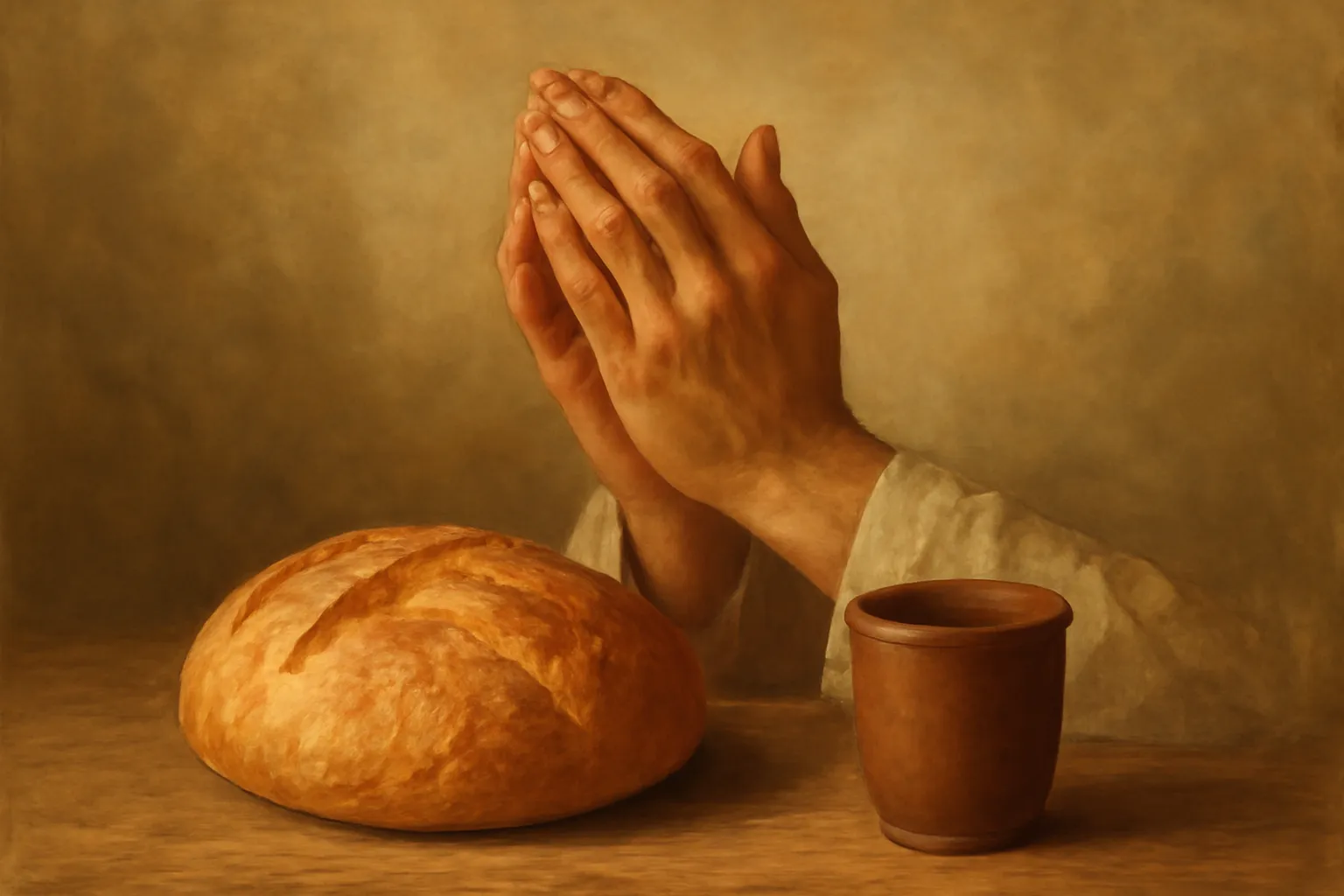
The Daily Bread Prayer: Meaning, Origins, and How to Pray It
The Daily Bread Prayer is a compact, powerful petition found in the Lord’s Prayer that has guided Christians through centuries of daily devotion. This article offers an in-depth exploration of its meaning, origins, and practical guidance on how to pray it. Along the way, we’ll examine how different translations and traditions render the line “Give us this day our daily bread”, and we’ll explore variations that expand its semantic breadth while preserving its core intention: dependence on God for provision, nourishment, and daily trust.
When believers speak of the Daily Bread Prayer, they typically refer to the section of the Lord’s Prayer that reads, in its most familiar form:
“Give us this day our daily bread.”
This short phrase sits within a larger prayer that Jesus taught his followers, inviting them to address God as Father, to seek God’s will, and to petition for daily needs. The phrase bread here functions on multiple levels: it is a concrete request for physical sustenance and a symbolic request for spiritual nourishment, community support, and the daily rhythms of life experienced under God’s providence.
Meaning and Theological Significance
To unpack the significance of daily bread is to see several interwoven themes that have sustained Christian prayer across cultures and eras.
The Bread as Physical Provision
First and foremost, the petition acknowledges daily provision. In a world of uncertainty, the prayer models a posture of dependence: not asking for abundance, but for what is necessary for today. The word bread evokes nutritious sustenance—food that sustains life—yet it also points to the broader means by which communities thrive: work, fair wages, farmers’ labor, and a social framework that ensures access to basic needs.
The Bread as Spiritual Nourishment
Beyond physical sustenance, many theologians read bread as a metaphor for spiritual nourishment. Just as the body requires daily food, the soul requires daily grace, truth, and the presence of God. In this sense, the prayer invites believers to seek ongoing sustenance through Scripture, prayer, communal worship, and acts of service that feed the immune system of faith—the trust that God provides and cares for creation.
The Bread as Communal Provision
Another layer is social and communal: “our daily bread” signals that provision is not purely personal but shared. The prayer’s plurals point to a community ethic where the needs of neighbors, strangers, and even enemies are held in view. Instances of bakers, laborers, and merchants receiving daily bread remind us that provision is linked to the integrity of systems—economic justice, stewardship, and solidarity.
The Bread as a Testimony of Trust and Dependence
Finally, the phrase champions a rhythm of trust. By asking for daily bread, believers acknowledge that God is the source of all good gifts and that human beings are finite and fallible. The prayer becomes a daily recommitment to rely on God rather than on wealth, status, or human planning alone.
Origins and Biblical Roots
Understanding the origins of the Daily Bread line means tracing its place within the Lord’s Prayer as recorded in the Bible, and surveying how early Christians understood and used this petition.
Biblical Sources: Where the Line Comes From
Matthew 6:11 (NRSV): “Give us this day our daily bread.”
Luke 11:3 (NRSV): “Give us day by day our daily bread.”
The Lord’s Prayer sits within Jesus’ teaching on prayer in the Sermon on the Mount (Matthew 6) and also appears in Luke’s gospel in a version that emphasizes day-by-day provision. The key Greek term behind daily is epiousios, which scholars frequently translate as daily or for the day. This nuance carries import: the prayer expects ongoing, dependable provision rather than sporadic or extravagant abundance.
How Early Christians Understood “Bread”
Early Christian communities interpreted bread both literally and symbolically. In a primarily agrarian society, daily sustenance was a lived reality. Yet bread also carried sacramental and metaphysical resonance: it prefigured Jesus as the “bread of life” (John 6:35) and became a symbol in the Eucharist for Christ’s body given for others. In daily prayer, the bread petition thus joined concrete needs with spiritual nourishment, linking ordinary life with the divine life.
Variations Across Translations and Traditions
While the core petition remains the same, translations and traditions offer slight but meaningful variations. These differences illuminate different theological emphases, liturgical practices, and linguistic choices.
Textual Variants in the Lord’s Prayer
Give us this day our daily bread (Common English translations, including many Protestant bibles).
Give us day by day our daily bread (Luke 11:3 or Luke’s phrasing in some translations).
Give us today our daily bread (NIV and others using contemporary language).
Give us this day our bread for today (paraphrastic renderings in some devotional editions).
These variants underscore a subtle shift: some emphasize the immediacy of daily life (“today,” “day by day”), while others foreground the ongoing rhythm of provision. The Greek word epiousios underpins these nuances, and translators weigh how best to convey its sense of daily reliance in modern English.
Differences in the Closing Doxology
Although the focus here is the bread petition, it is useful to note that the closing doxology in some Christian traditions adds a concluding line such as “For thine is the kingdom, and the power, and the glory, forever. Amen.” The presence or absence of this doxology reflects theological emphases rather than the core request for daily sustenance. Some liturgies, especially in Protestant contexts, omit it in the spoken prayer but preserve it in printed liturgies or in silent reflection.
How to Pray the Daily Bread Prayer: Practical Approaches
For many believers, praying the Daily Bread Prayer becomes a reliable anchor in morning and evening routines, in times of need, or as a communal act in worship. Here are several practical approaches to incorporating this petition into daily life.
Traditional, Line-by-Line Recitation
One method is to read or recite the Lord’s Prayer in full, then pause to reflect on the bread petition line by line. This approach fosters intentionality: you consider not only physical needs but also the ways God sustains the soul, the responsibilities you hold toward others, and the trust you place in divine provision.
Contemplative Variation
In a contemplative practice, you can focus on the present moment’s needs, whispering the line, and then letting the word bread resettle in your heart as a symbol of daily grace. You might pair the line with a moment of silence, gratitude, or an act of service toward someone in need.
Morning and Evening Routines
Some practitioners prefer to say the Lord’s Prayer at specific times of day. In the morning, the request for daily bread can frame the day with trust in God’s provision. In the evening, it can serve as a reflection on the day’s blessings and a petition for continued care through the night.
In congregational worship, the prayer often follows a pattern: adoration, confession, thanksgiving, and supplication. The bread petition may be placed after petitions for spiritual nourishment and before prayers for daily needs, or interwoven with prayers for justice and mercy as communities address hunger and poverty.
Practical Variations to Deepen Understanding
To widen the semantic field of the Daily Bread Prayer, consider these variations and practices. Each variation keeps the core intention intact while inviting fresh reflection on means, needs, and responsibilities.
Daily bread as daily grace: Reframe the line to focus on daily gifts beyond food—grace, strength, and courage provided each day.
Bread as justice: Prayers for bread for all, including the hungry and marginalized, connect daily provision with social action and empathy.
Bread and hospitality: Reflect on how daily provision enables hospitality toward strangers, guests, and the vulnerable.
Bread for the body and bread for the soul: Pair the petition with a parallel focus on spiritual nourishment (Scripture, worship, community).
Personal and communal prayers: Alternate between personal needs and collective petitions so that both self-care and community welfare are honored.
Different Christian traditions render the bread petition in distinctive ways, which can influence practice and understanding. Here are a few practical wording strategies you might encounter or adopt:
“Give us today our daily bread.” Emphasizes immediacy and present-day needs.
“Give us day by day our daily bread.” Highlights continuity and dependence across days.
“Give us this day our bread for today.” A more literal, pastoral phrasing in some devotional books.
“Provide for us today what we need for today.” A paraphrase that foregrounds need and provision rather than the specific term “bread.”
Theological Reflections: Bread as a Covenant and a Call
Beyond personal piety, scholars and theologians often consider the Daily Bread line in light of broader biblical theology, including creation, covenant, and social ethics.
Covenant Faithfulness and Provision
God’s provision is presented not as a one-off act but as a covenantal rhythm—God provides each day as God has sustained people in generations past. This frames daily bread as covenantal trust rather than a mere economic transaction.
Economic Justice and Human Dignity
The petition can be read as a challenge to systems that fail to provide for daily needs. When communities recite this line, they confront issues of hunger, poverty, fair wages, and access to resources. The prayer thus becomes a moral impetus for economic justice and solidarity with the vulnerable.
Daily bread invites believers to a balanced life: trust in God’s care paired with responsible action. It acknowledges human limits while empowering people to work toward arrangements—whether through charity, policy, innovation, or voluntary service—that help meet daily needs without fostering dependency without dignity.
For readers who want to bring this line into daily life in concrete ways, the following practical steps can help.
Start with intention: Begin prayer time by naming the intention to seek daily provision and nourishment for self and others.
Pair with action: After praying for daily bread, commit to at least one concrete act of provision—sharing food, donating, volunteering, or supporting a cause addressing hunger.
Reflect on gratitude: Each day, acknowledge the ways God has provided, even in small details like a meal, a friend’s support, or restful sleep.
Pray for others: Include neighbors and strangers who lack food or security, expanding the petition from personal need to communal care.
Journal your prayers: Keep a brief journal noting when you prayed this line and any observations about daily provision or spiritual nourishment.
Across traditions, the Lord’s Prayer—including the bread petition—serves as a unifying core while allowing space for interpretation and practice that reflects local culture, language, and social realities. Whether recited in a quiet chapel, sung in a parish hall, or whispered in a living room, the line about daily bread remains a shared reminder of dependence, grace, and communal responsibility.
In Catholic practice, the Lord’s Prayer is often followed by a doxology that frames the entire prayer within the worship of God. The bread line, in particular, resonates with liturgical readings about God’s providence and the community’s charisms. In Orthodox liturgies, the prayer appears in a language steeped in the faith’s ancient tradition, where bread imagery aligns with offerings of the Eucharist and daily bread sharing. Protestant communities may highlight simplicity and accessibility, encouraging everyday application—prayer paired with action in feeding the hungry and supporting social justice.
In a word, the Daily Bread Prayer remains enduring for its compact clarity and expansive reach. It asks for what is needed for the day, while inviting believers to consider the source of that provision, the responsibilities that accompany it, and the way daily nourishment points to God’s larger work in the world. It is a line that can anchor a person’s morning, guide a family’s meal planning, and inspire a community to address systemic hunger and injustice. By exploring its meaning, origins, and varieties, readers gain a richer sense of how a single petition can carry both personal consolation and public witness.
Below are concise answers to common questions readers may have about this petition.
Q: Why is bread used as the image for daily provision? Bread is a universal symbol of sustenance in many cultures. It represents the basic material needs of life and, in Christian theology, it also carries spiritual resonance as nourishment for the soul and as a sign of God’s care.
Q: How does “daily bread” relate to social justice? Because the petition is plural (“our daily bread”), it invites reflection on the provision of others. Many readers interpret it as a call to address hunger, poverty, and systems that prevent people from obtaining basic needs.
Q: Are there safe modern adaptations of the prayer? Yes. Communities may adapt language to reflect contemporary speech while preserving the prayer’s core meaning, always mindful of reverence and communal identity.
As you consider The Daily Bread Prayer: Meaning, Origins, and How to Pray It, you may find that the phrase invites you to hold together two truths: that God provides for daily needs, and that your daily life is a response to that provision—one that invites gratitude, justice, and generous action toward others. May your practice of this prayer bring both comfort and responsibility, daily nourishment for the body and for the soul.
Introduction: Reading the Light–Darkness Dialogue in Scripture In the vast tapestry of the Bible, the pair Light and Darkness functions as more than a description of what we see when we blink in a cave. They are enduring symbols that mark moral choices, spiritual states, and cosmic realities. This article...
In a world that often feels chaotic and uncertain, many people instinctively reach for control—trying to shape outcomes, steer events, and manage feelings. Yet Scripture invites us into a different posture: a life marked by surrender to God’s sovereignty and a trusting reliance on His wisdom. This article gathers biblical...
Overview: What Are Bible Scripture Checks and Why Do They Matter? In an age of abundant information, verifying biblical passages is a crucial skill for students, pastors, teachers, students of theology, and curious readers alike. Bible scripture checks refer to the deliberate process of confirming the accuracy, provenance, and meaning...
Increasing bible knowledge is more than accumulating facts about a book; it is a lifelong journey toward greater understanding, wiser living, and clearer teaching. This article offers five practical ways to increase Bible knowledge and grow in Scripture understanding—through daily reading, thoughtful study, intentional memory, communal learning, and faithful application....