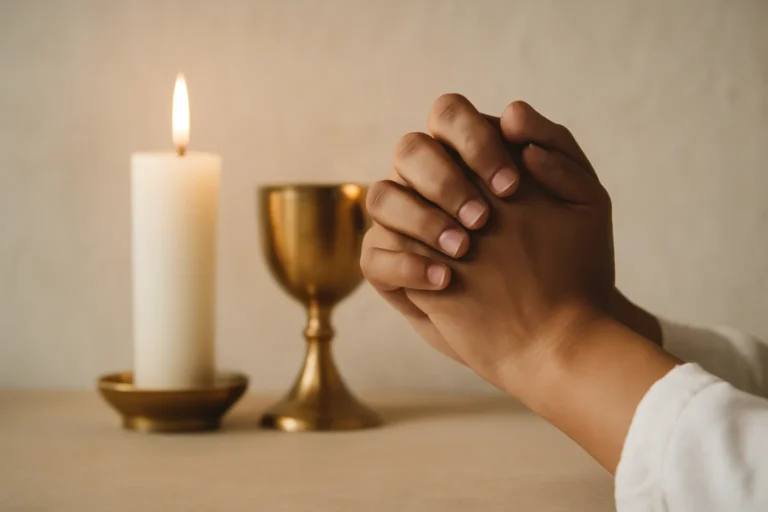
Prayer After Communion: Prayers, Reflections, and Guidance
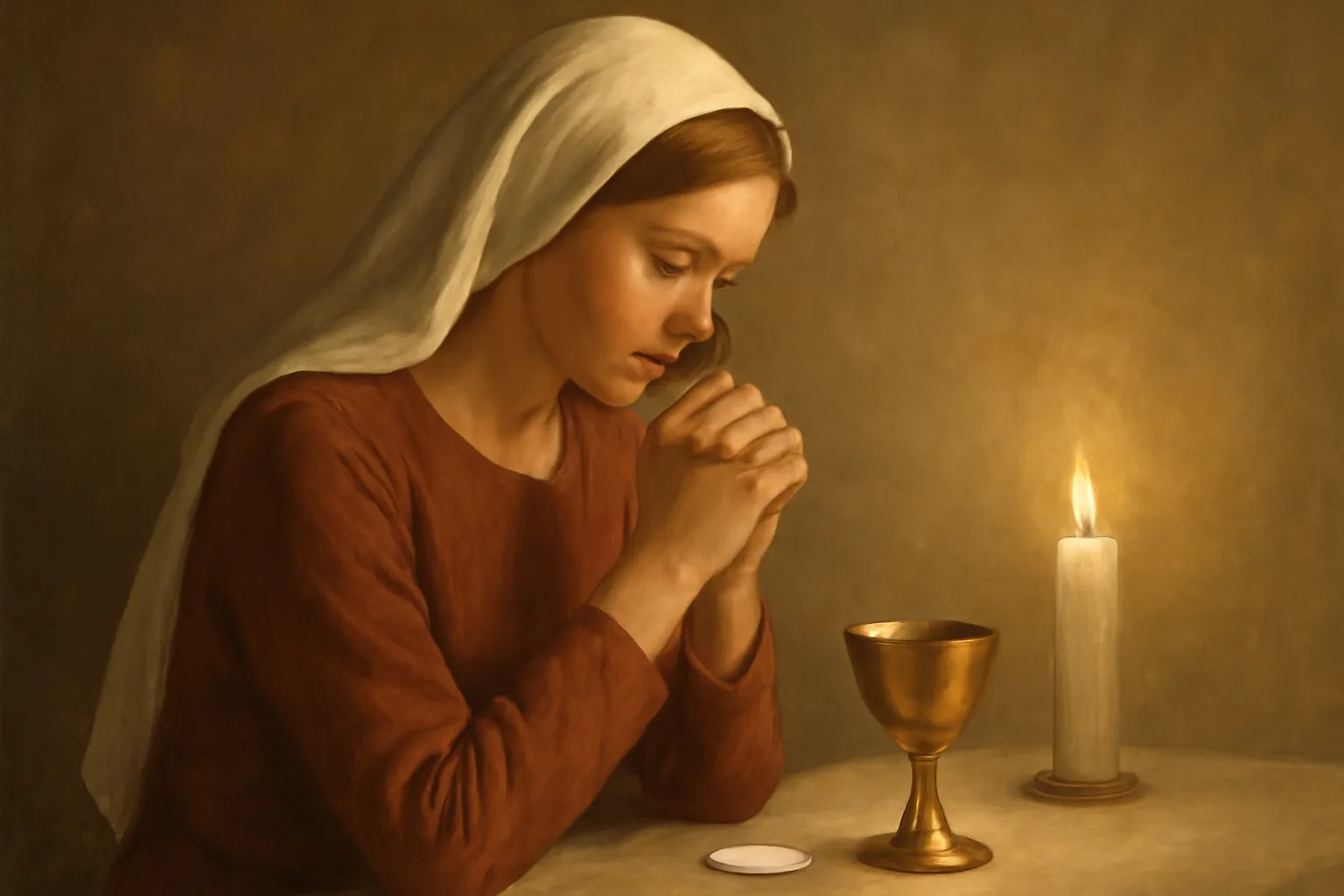
After receiving the Eucharist, many believers pause to enter a deeper течn oración, contemplation, and renewed commitment. Prayer after communion is not a single moment but a cadence of listening, gratitude, and mission that helps the faithful translate sacramental grace into daily life. This article explores the purpose, forms, and practical guidance for post-Communion prayer, offering a variety of variations of prayer after communion and concrete examples to nourish personal devotion and communal worship.
Understanding the purpose of prayer after communion
In Christian liturgical life, the moment of communion is not a private act alone but a shared mystery. It binds each believer to Christ and to the body of believers gathering for worship. The post-Communion prayer serves several interrelated aims:
Thanksgiving for the gift of the Body and Blood of Christ and for the grace received in the sacrament.
Adoration of Christ truly present in the Eucharist, acknowledging the divine mystery with reverence.
Transformation as grace is contemplated and interiorized, shaping attitudes, decisions, and behaviors.
Petition and intercession for others, for the church, and for the world, grounded in the shared nourishment of the sacrament.
Missioning a commissioning to go forth in service, justice, mercy, and witness to the Gospel.
Across traditions, the form and emphasis of post-Communion prayer may vary, but the underlying logic is consistent: grace received at the table is meant to bear fruit in the life of the believer and in the life of the community. In that sense, post-Communion prayer is a bridge between what has been celebrated and how believers live it out in the world.
Forms of post-Communion prayer
There are several common elements that can be present in post-Communion prayers, regardless of tradition. These include thanksgiving, adoration, intercession, and reflection on the implications of the sacrament for daily life. Below are some typical forms you may encounter or adapt in your own prayer practice.
Prayers of Thanksgiving
Thanksgiving after Communion expresses gratitude for the grace received and for the ongoing presence of Christ in the life of the believer. It often acknowledges the nourishment of the soul and seeks to respond with generosity toward others.
Example (original):
Heavenly Father, we give you thanks for the gift of your Son, who is truly present among us in this holy meal. We thank you for the grace that sustains us, for the strength to love you more deeply, and for the call to share your mercy with a world in need. May we be faithful stewards of this grace, today and every day. Through Christ our Lord. Amen.
Prayers of Adoration
Adoration after communion centers the worshiping heart on the mystery of God’s presence. This form emphasizes reverence, love, and the recognition that the sacrament draws us into the eternal life of the Trinity.
Example (original):
O gracious Lord Jesus, you who are truly present in the Blessed Sacrament, I adore you with all my heart. Your small and ordinary appearance hides your infinite majesty, yet you draw near to me with mercy and truth. May my life reflect the light of your presence, and may I ever seek to do your will with joy and fidelity. Amen.
Prayers for Guidance and Mission
These prayers seek discernment to translate sacramental grace into concrete action—acts of charity, justice, mercy, and outreach. They invite a response to God’s call in everyday life.
Example (original):
Lord, as I share in this meal of grace, guide me in the way of truth and love. Open my eyes to the needs around me, strengthen my hands for humble service, and knit my heart to the hearts of those who suffer. Help me to live the Gospel with courage and gentleness, today and always. Amen.
While the sacrament itself is a sign of union with Christ, post-Communion prayer can also include a posture of ongoing conversion—recognizing where we have fallen short and inviting God’s mercy to renew our minds and hearts.
Example (original):
Merciful God, in this moment of communion you call me to become more like you. I confess my distractions, my impatience, and my failures to love as you love. Cleanse me, renew me, and grant me a spirit-shaped by humility and courage to walk in your ways. May your grace transform my words, thoughts, and actions today. Amen.
Silence, Contemplation, and Listening
Often the most profound post-Communion practice is a period of quiet listening—allowing God to speak beyond words, inviting the heart to rest in divine love and to discern how to respond in the week ahead.
Guided silence can be short (a minute or two) or longer, depending on the liturgical setting and personal devotion. In silence, one may receive impressions, resolutions, or memories of people and needs to hold in prayer.
Sample prayers after communion: varied expressions
To illustrate the range of post-Communion prayers, here are several original options across styles and lengths. Feel free to adapt language to your own tradition, setting, and vocal style.
Prayer after Communion: a brief thanksgiving
Brief thanksgiving (original):
Gracious God, we thank you for your presence in this sacred meal. Nourish our souls with your grace, sustain our hope, and renew our desire to love you more and to serve others with a joyful heart. Through Jesus Christ, our Lord. Amen.
Prayer after Communion: adoration and praise
Adoration and praise (original):
O Lord of majesty, you humbly dwell with us under the forms of bread and wine. We praise you for the mystery of your love, for the gift of your Son, and for the tender work of the Holy Spirit within us. May we behold your glory with grateful hearts and worship you every day in truth and in spirit. Amen.
Prayer after Communion: for discernment and mission
Discernment and mission (original):
Jesus, Bread of life, as we have feasted on your presence, help us discern where you would lead us this week. Open our doors to the hungry, our hands to the weak, and our voices to speak truth with compassion. Let the grace we received become a living sign of your kingdom in our homes, workplaces, and communities. Amen.
Prayer after Communion: intercession for others
Intercessory prayer (original):
Merciful God, we lift up those who are in need and those who suffer. May your healing light shine upon the sick, your steadfast love sustain the anxious, and your justice bring relief to the oppressed. We commend to you our families, friends, and neighbors, praying that all may find hope in your mercy. Through Christ our Lord. Amen.
Prayer after Communion: simple, contemplative version
Contemplative version (original):
Quiet God, you entered my life in a moment of grace. Hold me in your peace, fill me with your love, and lead me in your truth. May I remain more fully present to you this day and every day, living as your child who bears your light into the world. Amen.
Guidance for personal prayer after communion
To help individuals cultivate a meaningful practice after receiving the Eucharist, consider the following practical steps. These guidance points blend liturgical rhythm with personal devotion, and they can be adapted to different worshiping communities.
Pause and anchor: Immediately after communion, take a short pause to acknowledge the presence of Christ and to settle the mind. A few quiet breaths can signal the transition from reception to reflection.
Posture and reverence: Sit or kneel in a posture that fosters humility and attentiveness. Physical stillness often aids inner listening.
First gratitude: Begin with a concise expression of thanks for the gift just received. Gratitude clears the ground for further prayer and disposition.
Prayer with Scripture or a short verse: If helpful, repeat a brief verse or meditate on a Scripture passage related to the Eucharist (for example, John 6 or 1 Corinthians 11). Let the Word dwell in you.
Choose a form: Select one of the forms described above—thanksgiving, adoration, intercession, or mission—and remain with it for several minutes.
Intentional resolutions: Bring to mind one concrete action you can take this week in response to this grace (e.g., visit a lonely neighbor, forgive a grievance, or offer time for prayer with someone in need).
Gentle finish: Conclude with a short prayer of surrender to God’s will and a blessing for others. End with “Amen” or another appropriate doxology according to tradition.
Guided post-Communion practices by Christian tradition
Different Christian families emphasize distinct phrases, rhythms, and postures after communion. Here is a concise overview of common patterns in several traditions, aiming to equip readers to adapt prayers to their context while honoring sacred heritage.
Catholic and some Anglican-leaning practices
In Catholic and many Anglican settings, the post-Communion moment often blends quiet personal prayer with a short liturgical formula of thanksgiving or intercession. Practitioners may:
Remain in the pew for a brief period of contemplation after receiving the sacrament.
Offer a personal Thanksgiving after Communion prayer before moving to the next activity (e.g., announcements, dismissal, or distribution of communion to the homebound).
Sing a quiet hymn of praise or a benediction to close the immediate post-Communion phase.
Anglican and Episcopal practice
In Anglican and Episcopal churches, post-Communion prayers often follow the rite of Holy Communion with another short prayer of thanksgiving or a period of silent reflection, sometimes concluding with a blessing or the dismissal. The structure tends to be pastoral and flexible, encouraging personal encounter with Christ after the sacrament.
Orthodox and Eastern traditions
Eastern liturgical practices emphasize the continuity of prayer after communion with a sense of union with the Church Triumphant and the ongoing work of the Holy Spirit. After communion, the faithful may offer personal prayers, recite short litanies, or join in a brief communal prayer that reaffirms their commitment to live the gospel. The atmosphere often emphasizes reverence, contemplation, and a deep sense of mystery.
Lutheran and other Protestant traditions
Many Protestant churches encourage a brief moment of thanks after communion, followed by reflections on the implications for daily life. The post-Communion practice may be simple—a short prayer, a reading, or a meditation—focused on gratitude, service, and witness.
Reflections on post-Communion prayer: themes to ponder
A thoughtful approach to prayer after Communion invites believers to consider several recurring themes. These help to keep the sacramental experience alive as one moves into daily life.
Union with Christ: Recognizing that the sacrament binds us to Jesus and to the whole Church in a living communion.
Gratitude and generosity: Gratitude expands into generosity—sharing time, gifts, and love with others.
Holiness and mission: Grace calls for personal holiness and a decisive, practical witness to the Gospel.
Hope amid difficulty: The grace received sustains hope, even in trials, and empowers perseverance in faith.
Daily conversion: Post-Communion prayer is not a solitary moment but a seed for ongoing conversion in the person’s life.
Common mistakes and how to avoid them
Like any spiritual practice, post-Communion prayer can become routine or superficial if not approached with intention. Here are some common pitfalls and practical tips to avoid them:
Rushing through the moment: Take at least a couple of minutes to be still and listen rather than rushing to the next obligation.
Turning it into a private ritual devoid of others: Remember that the Eucharist unites the whole body of Christ; allow your prayer to be deeply personal while remaining rooted in community.
Overloading with content: Choose one or two concise prayers or themes to focus on; quality of attention matters more than quantity of words.
Forgetting discernment: End with a moment of discernment about concrete actions you will take, rather than simply recounting the sacrament’s beauty.
Practical tips for beginners and seasoned practitioners
Whether you are new to post-Communion prayer or have practiced it for years, these practical tips can help deepen your experience:
Keep a simple journal to jot down brief insights, resolutions, or people you want to pray for after communion.
Use a short, repeatable phrase to focus your thoughts during quiet time—for example, a line from a prayer, a Scriptural verse, or an invented personal motto that centers you on love and service.
Invite others into the practice by encouraging a family or small group to share a brief post-Communion moment or a common intention for the week.
Experiment with posture and setting; some find kneeling or sitting in a pew helpful, while others prefer a quiet space at home for extended contemplation.
Variations of post-Communion prayer to broaden understanding
The vocabulary of post-Communion prayer can be extended beyond typical phrases to encompass various spiritual disciplines. Here are examples of variations designed to broaden semantic breadth while remaining rooted in the same sacramental reality:
Liturgical variation: Incorporate a short responsive prayer in which the congregation joins in saying a shared line after the Eucharist, reinforcing communal identity.
Contemplative variation: Allow for a longer period of silent reflection in which individuals listen for a personal word or impression from God, then write it in a journal.
Intercessory variation: Focus the post-Communion moment on intercession for local needs, civic life, and international concerns, linking Eucharistic hospitality to social action.
Charismatic variation: Include a brief moment of spontaneous expression—a whispered prayer or a short spontaneous blessing—within a structured format.
Ecumenical variation: Adapt language so that it resonates across different Christian traditions while preserving the central mystery of Christ’s presence in the Eucharist.
Incorporating post-Communion prayer into daily life
Post-Communion prayer is most fruitful when it becomes a bridge to ordinary living. Here are ways to carry the grace of the Eucharist into everyday moments:
Moments of kindness: Let gratitude overflow as acts of kindness toward family, colleagues, and strangers.
Acts of service: Volunteer your time, talents, or resources to those in need, reflecting the self-giving love you just received.
Healthy rhythms: Maintain a regular prayer routine that includes a brief time after meals, after waking, or before sleep to sustain the sense of God’s presence.
Community witness: Share in small groups or with a spiritual friend how the Eucharist shapes your daily choices and relationships.
Closing reflection: the ongoing life of grace
Prayer after communion invites believers to turn sacramental joy into everyday fidelity. The Eucharist is not merely a memory of a historical event but a living encounter that forms new creation in the soul—a life in which love, truth, mercy, and justice become visible signs of God’s reign. By cultivating a deliberate practice of post-Communion prayer, individuals and communities nurture a posture of gratitude, worship, discernment, and mission that remains attentive to the Spirit’s invitations in each moment.
Conclusion: embracing a robust practice of post-Communion prayer
Whether you choose a brief prayer of thanksgiving after communion or a longer session of adoration, intercession, and contemplation, the key is intentionality. The goal is not merely to finish the liturgy with a pleasant feeling but to let grace deepen conversion, widen compassion, and empower service. By exploring variations of prayer after communion and integrating practical guidance, believers can cultivate a durable habit that sustains faith beyond the church building and into the fabric of daily life.
As you grow in your practice, remember that the sacred moment of communion is a gift with multiple depths: you receive Christ; you are united to the church; you are sent into the world as a witness to love. May your post-Communion prayers be a faithful response to this gift—an ongoing conversation with God that shapes your heart and your hands for the life you are called to live.
Prayers for After Communion: Short Prayers and Reflections Understanding the Moment After Communion In the Catholic liturgy, the moment after receiving the Eucharist is a sacred pause—a time when the believer is invited to dwell in the mystery of Christ's presence, to offer gratitude, and to recommit oneself to living...