Psalm 126 belongs to the collection of Songs of Ascents (Psalms 120–134), a sequence of pilgrim prayers sung by Israelites on their way to Jerusalem. This chapter, set in a post-exilic mood, celebrates God’s deliverance and the restoration of Zion after captivity. In the NABRE, it invites communal memory: God’s past mercy becomes the basis for present joy and future hope. The psalm moves from astonished laughter to renewed confidence in God’s saving actions, urging gratitude, faithfulness, and trust in divine providence. As a liturgical hymn, it speaks to both historical restoration and the Church’s ongoing journey toward fullness in God.
Text and Context of Ps 126
Psalms 120–134 are the Songs of Ascents, sung by pilgrims in the journey to Jerusalem and by the returned community after the exile. Ps 126 functions as a communal testimony: a memory of liberation from Babylonian captivity and a celebration of God’s fidelity. The chapter envisions Zion restored, sacred laughter replacing sorrow, and the nations recognizing God’s mighty deeds. The setting is explicitly Zion-centered, yet the message extends beyond a single historical moment to the ongoing life of faith: God’s saving acts generate worship, hope, and renewed labor for the future.
Key Verses of Ps 126
Ps 126:1 — When the LORD brought back the captives to Zion
When the LORD brought back the captives to Zion, we were like dreamers.
The verse inaugurates a memory of extraordinary deliverance, inviting readers to witness how God’s intervention changes a people’s reality. It frames the entire psalm as a testimony of divine faithfulness and shapes the community’s identity around gratitude, awe, and praise.
Ps 126:2 — Then our mouth was filled with laughter
Then our mouth was filled with laughter, and our tongue with shouts of joy.
This verse marks the visible fruit of God’s action: communal joy becomes a sign to the nations. Laughter and praise express a transformed public conscience that witnesses to God’s saving power.
Ps 126:3 — The LORD has done great things for us
The LORD has done great things for us; we are glad indeed.
A confession of grace received, this line anchors the psalm in gratitude. It situates human joy within the larger frame of God’s saving history and invites ongoing trust in God’s mercy.
Ps 126:4 — Restore our fortunes, O LORD
Restore our fortunes, O LORD, like streams in the desert.
The plea expresses longing for renewal and abundance. The image of streams in the desert evokes replenishment, hope, and the turning of barren places into places of blessing through God’s providence.
Ps 126:5 — Those who sow in tears shall reap with shouts of joy
Those who sow in tears shall reap with shouts of joy.
This verse links current hardship with future harvest, teaching trust in God’s timing. It presents suffering as a path toward a deeper, communal rejoicing that testifies to God’s faithfulness.
Ps 126:6 — He who goes forth weeping bearing the seed for sowing
He who goes forth weeping bearing the seed for sowing shall come home with shouts of joy, carrying their sheaves.
In the closing verse, the psalm assures that faithful labor in sorrow will be rewarded with triumph. The imagery of carrying sheaves expresses culmination in blessing and communal restoration, a theme that resonates with gospel hope and the Church’s mission.
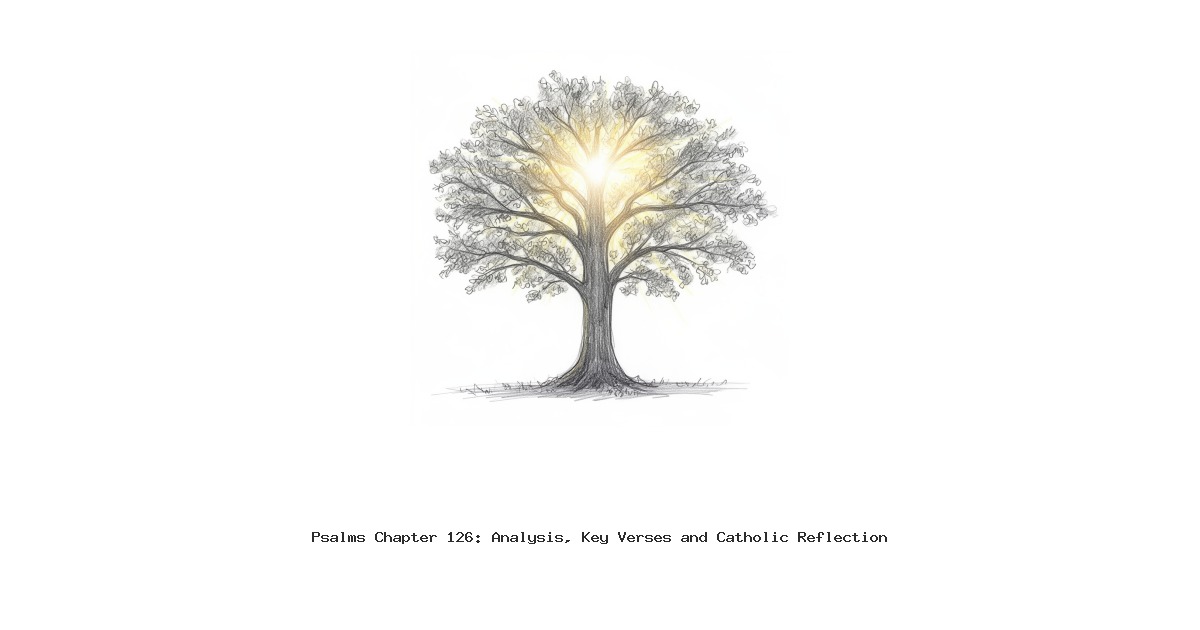
Patristic writers and later magisterial commentary read Ps 126 as a model of how God’s past deliverances shape present devotion. The Fathers often interpret the return from exile as a figure of salvation applied to the Church’s life: exile from sin, liberation through grace, and the ongoing hope of consummation. The psalm’s movement from lament to praise aligns with Catholic teaching on divine providence, gratitude, and active faith in God’s promises. In liturgical and devotional settings, Ps 126 is seen as a call to trust God in hardship and to give witness through joy-filled worship.
This Chapter in the Liturgy
Ps 126, a member of the Songs of Ascents, is used in the Catholic liturgical year in various contexts within the Liturgy of the Hours and Mass readings. Its themes of restoration, thanksgiving, and hope are invoked in seasons that emphasize God’s saving actions—especially in Sundays and feasts that celebrate God’s merciful deliverance and the renewal of faith after hardship. Local liturgical calendars may assign it to specific celebrations of redemption, Israel’s history, or the Church’s ongoing journey toward holiness.
Lectio Divina
Verse for contemplation: Ps 126:1 — “When the LORD brought back the captives to Zion, we were like dreamers.”
Meditation question: How has God’s past mercy shaped your hope and trust in today’s circumstances?
Short prayer: Lord, grant me the faith to trust Your saving work in my life, to rejoice in Your gifts, and to witness Your mercy to others. Amen.
A1: It reflects the return from Babylonian exile and the restoration of Zion, celebrating God’s deliverance and the community’s gratitude.
Q2: How does Ps 126 express communal faith?
A2: It speaks of shared joy, worship, and trust in God’s providence, inviting the community to remember and proclaim God’s deeds together.
Q3: How is this psalm interpreted in Catholic theology?
A3: It is read as a testament to God’s saving actions in history, a symbol of grace that renews hope, and a model for faithful practices of praise and perseverance.
Q4: How can I apply Ps 126 in daily life?
A4: Reflect on times of personal or collective restoration, cultivate gratitude, sow in hope even amid tears, and trust that God can turn sorrow into joy.
Psalms Forgiveness: Finding Mercy in Scripture The book of Psalms, a collection of prayers, songs, and poems spanning many generations, offers some of the most vivid and intimate expressions of forgiveness and mercy found anywhere in Scripture. Within these sacred songs, individuals and communities cry out for cleansing, confess their...
Catholic study of Psalm 9 (NABRE): context, key verses, patristic and magisterial insights, liturgical use, and Lectio Divina for prayer and study in daily life.