Psalms Chapter 135: Analysis, Key Verses and Catholic Reflection
Psalm 135 belongs to the final block of the Book of Psalms that extols the sovereignty and faithfulness of Yahweh. While the Psalter gathers a wide range of prayer, this chapter stands out as a robust liturgical hymn of praise and a corrective against idol worship. The speaker is the gathered people of Israel, blessing the Lord for his steadfast love and mighty deeds. Embedded in a temple-centered, covenant memory, Ps 135 invites worshipers to remember Egypt’s wonders, God’s supremacy over nations, and his faithfulness to Abrahamic promises. Its cadence and exhortations model communal response in the liturgy and worship.
Ps 135 is a communal hymn of praise organized as a liturgical address to Yahweh. The speaker is the assembly of worshippers in Israel, exhorting others to bless and praise the Lord for his goodness and mighty acts. The verses recount God’s intervention in history, especially his deliverance of Israel from Egypt and his governance of the nations, while contrasting the powerless idols with the living God. The setting is the temple precinct, bearing memory of covenant faithfulness, and the language moves from praise to warning about idolatry, ending with a call to blessing for priests and people alike.
Key Verses of Ps 135
Ps 135:1 — Praise the LORD! Praise the name of the LORD
Praise the LORD! Praise the name of the LORD.
The verse begins with a summons to praise, uniting the people in worship of Yahweh. It frames worship as acknowledgment of God’s identity and lordship. It also establishes the communal rhythm of praise that governs the entire psalm.
The verse anchors worship in God’s benevolence. It foregrounds gratitude as response rather than mere ritual. It invites believers to trust in God’s goodness as the motive for praise.
Ps 135:5 — For I know that the LORD is great
For I know that the LORD is great.
This verse proclaims the sovereignty of Yahweh over all gods. It grounds worship in the knowledge of God’s supremacy. It challenges the worshiper to orient life to the majesty of the one true God.
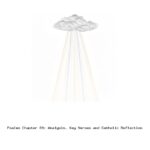
Ps 135:7 — He makes clouds rise from the ends of the earth
He makes clouds rise from the ends of the earth.
Here God’s power over natural phenomena is highlighted. Creation itself testifies to God’s governance. The verse serves as a counterpoint to idol worship by showcasing the living God’s control over the cosmos.
Ps 135:15 — The idols of the nations are silver and gold
The idols of the nations are silver and gold.
Idols are depicted as lifeless crafted objects. This verse contrasts worthless images with the living God who acts in history. It reinforces the refusal of idolatry and the call to worship the true God alone.
Ps 135:19 — Bless the LORD, O house of Israel
Bless the LORD, O house of Israel.
The final exhortation broadens the blessing to the whole covenant community. It links praise to fidelity within the family of God. The verse culminates in a corporate response of blessing and worship.
The Fathers of the Church and the Magisterium read Psalm 135 as a strong polemic against idolatry and a testament to Yahweh’s unique sovereignty. It is understood as a catechetical piece affirming the First Commandment: Yahweh alone is God and must be worshiped, while idols are powerless and man-made. The psalm also recounts redemptive history, reminding the faithful of God’s saving acts for Israel and calling readers to live in gratitude and obedience. In Catholic tradition, the psalm undergirds the worshipping life of the People of God and supports the spiritual discipline of turning away from false gods toward the one true God.
This Chapter in the Liturgy
In the Catholic Church, Psalm 135 is part of the Divine Office (Liturgy of the Hours) and is used in various hours as a hymn of praise and a reminder of God’s sovereignty. Its anti-idolatry message also makes it suitable for feasts and seasons that emphasize God’s saving deeds and mastery over creation. The psalm’s liturgical cadence helps the faithful join in a communal act of worship, aligning personal prayer with the faith of Israel and the Church’s worshiping community.
Lectio Divina
Verse for meditation: Ps 135:7 — He makes clouds rise from the ends of the earth.
He makes clouds rise from the ends of the earth.
Meditation question: In what ways do you witness God’s power in creation, and how does that invite trust during difficult times?
Short prayer: Lord, open my eyes to your sovereign care in daily life and strengthen my trust in your providence in every season. Amen.
Q1: What is the central message of Psalm 135? A: The central message is the worship of Yahweh and the rejection of idols, highlighting God’s sovereignty and mighty deeds on behalf of Israel.
Q2: Who speaks in Psalm 135? A: The gathered people of Israel, addressing one another in communal praise and exhortation to bless the Lord.
Q3: How does Psalm 135 relate to the First Commandment? A: It reinforces worship of the one true God and warns against idolatry by contrasting God with lifeless idols.
Q4: How is Psalm 135 used in Catholic worship? A: It is used in the Liturgy of the Hours and in various liturgical contexts as a hymn of praise and a reminder of God’s sovereignty over nations and creation.
Psalms Forgiveness: Finding Mercy in Scripture The book of Psalms, a collection of prayers, songs, and poems spanning many generations, offers some of the most vivid and intimate expressions of forgiveness and mercy found anywhere in Scripture. Within these sacred songs, individuals and communities cry out for cleansing, confess their...
Catholic study of Psalm 9 (NABRE): context, key verses, patristic and magisterial insights, liturgical use, and Lectio Divina for prayer and study in daily life.