Revelation Chapter 12: Analysis, Key Verses and Catholic Reflection
Revelation, the final book of the New Testament, uses spectacular visions to reveal the triumph of Christ over the powers of darkness. Chapter 12 introduces a dramatic cosmic drama: a woman clothed with the sun, a great red dragon, and the birth and exaltation of the Messiah. Written by John the Apostle during his exile on Patmos, the vision situates Jesus’ earthly mission within a larger spiritual conflict that involves angels, demons, and the faithful. For Catholics, Rev 12 invites reflection on Mary and the Church and on the ongoing witness of believers who resist evil through prayer, faith, and steadfast hope in divine providence.
Summary of the chapter: who speaks, what happens, where.
John presents a sequence of visionary signs perceived in heaven and on earth. A woman clothed with the sun, with the moon under her feet and a crown of twelve stars, stands before a great red dragon with seven heads and ten horns. The woman bears a male child who is destined to rule the nations; the child is caught up to God and his throne. The woman flees to a desert place prepared by God for 1,260 days, while war erupts in heaven between Michael and his angels and the dragon and his angels. The dragon is cast to the earth, and persecutory pressure against the woman’s offspring continues, revealing the ongoing cosmic conflict in which the faithful endure with divine aid.
Key Verses of Rev 12
Rev 12:1 — A great sign appeared in the sky
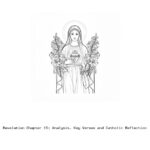
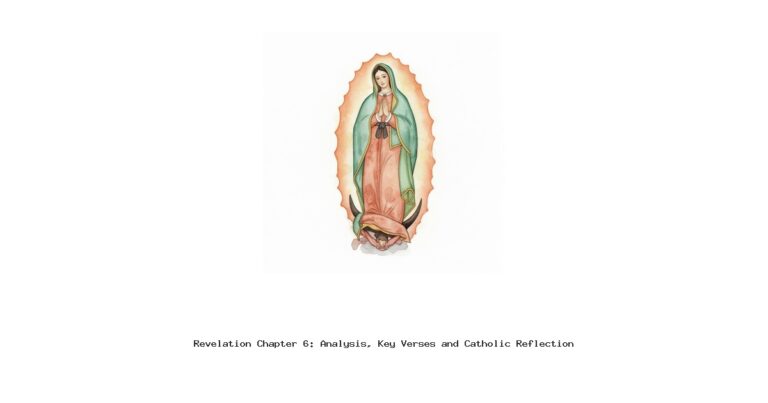
A great sign appeared in the sky, a woman clothed with the sun, with the moon under her feet and on her head a crown of twelve stars.
Theologically, this verse presents the scene as a cosmic sign that invites readers to interpret Israel and the people of God through Mary’s imagery. It foregrounds themes of radiant grace, royal imagery tied to the twelve tribes, and the celestial scope of salvation history. Catholic exegesis often reads this as both Mary’s figure and a symbol of the Church, highlighting God’s sovereign plan from eternity.
Rev 12:3 — Then another sign appeared in the sky
Then another sign appeared in the sky, a great red dragon, having seven heads and ten horns, and on his heads were seven diadems.
The dragon represents Satan in a grand, cosmic contest with the people of God. The elaborate description signals the magnitude and persistence of evil, yet also sets up the eventual triumph of God’s plan through Christ. Catholics understand this as the prelude to the child’s birth and the subsequent divine victory.
Rev 12:5 — The child she bore was caught up to God and his throne
She gave birth to a son, a male child, who is to rule all the nations with an iron rod. Her child was caught up to God and his throne.
This verse places Jesus’ mission within salvation history: a birth marked by authority over the nations, followed by a progression to the heavenly throne. It emphasizes Christ’s victory from the outset and the lifting up of the Messiah in heaven. The Church sees the child as Jesus and the moment of exaltation as a proclamation of Christ’s kingship.
Rev 12:6 — Then the woman fled into the desert
Then the woman fled into the desert, where she had a place prepared by God, in which she would be nourished for 1,260 days.
The desert motif communicates protection and divine providence amid persecution. The 1,260 days symbolize a divinely appointed period of testing and endurance, echoing Daniel’s apocalyptic patterns. Catholics interpret this as a spiritual reserve of grace granted to the faithful and the Church during times of trial.
Rev 12:7 — War broke out in heaven
War broke out in heaven. Michael and his angels fought against the dragon, and the dragon and his angels fought back.
This is a decisive moment in cosmic history: the archangel Michael leads the heavenly hosts against Satan. The victory here reaffirms that evil operates under God’s sovereignty and that Christ’s redemptive work is anchored in God’s definitive victory. Catholics view this as the assurance that the ultimate power belongs to God, even when Christians endure earthly hardship.
Rev 12:9 — The great dragon was hurled down to the earth
The great dragon—the ancient serpent, who is called the devil and Satan, who deceives the whole world—was thrown down to the earth, and his angels were thrown down with him.
The fall of Satan inaugurates the era of earthly conflict in which the Church must persist in faith. The text underscores deception as a tool of evil and highlights God’s triumph over the prince of lies. Catholics see this as a call to spiritual vigilance and fidelity to God’s truth.
Rev 12:12 — Therefore, rejoice, you heavens and you who dwell in them
Therefore, rejoice, you heavens and you who dwell in them.
With Satan’s fall, the cosmos is renewed in God’s saving work, and the heavens are called to rejoice in the Savior’s victory. This verse invites the Church to celebrate God’s providence and the steadfast fidelity of the saints. It also serves as a reminder of the spiritual rewards promised to the faithful who endure persecution.
Rev 12:17 — Then the dragon went off to wage war against the rest of her offspring
Then the dragon went off to wage war against the rest of her offspring, those who keep God’s commandments and bear witness to Jesus.
This concluding note frames the ongoing mission of the Church: to remain faithful to God’s commandments and to bear witness to Jesus amid trials. It underscores perseverance as a hallmark of Christian discipleship and confirms that the struggle against evil continues in every age through grace and fidelity.
Church Teaching on This Passage
The Catholic tradition reads Revelation 12 as a deeply symbolic portrayal of the cosmic battle between Christ and Satan, with the woman representing both Mary (as mother of the Messiah) and the people of God (the Church as the new Israel). The Fathers and later Magisterium emphasize that Revelation employs imagery to communicate spiritual truths about salvation history, grace, and perseverance in faith. Central to Catholic teaching is the interpretation of the child as Jesus and the dragon as Satan, whose defeat is accomplished through Christ’s earthly life, Passion, Resurrection, and Ascension, culminating in the Church’s mission to witness to the Gospel. The chapter invites reverent contemplation of Mary’s role as model of faith and of the Church’s ongoing spiritual warfare guided by divine grace.
This Chapter in the Liturgy
Revelation 12 is not a fixed, first-read lectionary text in the standard Sunday Mass cycle in most liturgical calendars. Its imagery, however, is frequently reflected upon in Marian feasts and in seasonal reflections during Advent and Christmas, when the Church contemplates Christ’s coming and the cosmic struggle between light and darkness. In the Liturgy of the Hours, passages from Revelation may be used in antiphons, responsories, or readings that draw on apocalyptic imagery to illuminate the victory of Christ and the perseverance of the faithful. Local calendars may vary, so pastors may highlight this chapter at different times.
“A great sign appeared in the sky, a woman clothed with the sun, with the moon under her feet and on her head a crown of twelve stars.”
Meditation question: How does the image of a woman clothed with the sun challenge me to discern the movement of grace in my life, and in what ways do I respond to spiritual warfare with faith, trust, and perseverance?
Prayer: Lord Jesus, grant me the eyes to see your victory at work in the world and in my life. Help me to cling to Mary’s faith and to the witness of the Church, so that I may endure trials with hope and grow in love of you. Amen.
FAQ
Who is the Woman in Rev 12?
The Catholic tradition reads the Woman as a dual symbol: Mary, the Mother of Jesus, and the People of God (the Church) who give life to the Messiah and persevere in faith. The text’s imagery of sun, moon, and twelve stars evokes Israel’s history and the new covenant in Christ.
What does the 1,260 days signify?
The 1,260 days (a symbolic period of 42 months or three-and-a-half years) represent a time of trial and testing allowed by God, culminating in deliverance and ultimate victory. It is a recurring apocalyptic figure pointing to God’s providential timetable rather than a precise chronicle of events.
Is the Dragon Satan?
Yes. In Catholic interpretation, the Dragon is the devil or Satan, the adversary of God, who deceives, persecutes the faithful, and seeks to thwart God’s plan. The imagery emphasizes the universal scope of evil and the necessity of divine assistance for the Church’s mission.
How does this chapter relate to Christ and the Church today?
Rev 12 presents the ongoing spiritual struggle between good and evil, foregrounding Christ’s victory and the Church’s witness. It invites believers to trust in God’s providence, imitate Mary’s faith, and persevere in faithful obedience to God’s commandments while bearing witness to Jesus in daily life.
Catholic NABRE study of Revelation 4: overview, paraphrased key verses, church teaching, liturgical use, Lectio Divina steps, and practical FAQs for reflection.
An in-depth Catholic study of Revelation 5 in NABRE, including text context, key verses with brief NABRE quotes, Church teaching, liturgical relevance, Lectio Divina, and practical reflections.