Revelation Chapter 19: Analysis, Key Verses and Catholic Reflection
Revelation is the final book of the New Testament, a vivid tapestry of prophecy and cosmic drama. Chapter 19 marks a decisive shift from judgment to triumph: Babylon’s fall gives way to the glorious return of Christ and the consummation of the Church’s union with the Lamb. In the NABRE, this chapter foregrounds praise in heaven and the victorious Bridegroom, linking cosmic liturgy with Christ’s final conquest over evil. For Catholics, Rev 19 sustains eschatological hope, invites fidelity amid trial, and presents the Church’s mission as both bride and warrior under God’s sovereign rule.
Rev 19 continues the climactic sequence that begins with the fall of Babylon the Great (Rev 18). It presents two interwoven scenes: a heavenly liturgy of praise (19:1-8) and the return of Christ as conquering King (19:11-16), followed by the defeat of the Beast and false prophet (Rev 19:19-20) and the slaughter of the wicked (Rev 19:21). The speakers include a great multitude in heaven, a voice from the throne, and the glorified riders and armies of heaven; the setting is the heavenly realm breaking into eschatological reality, emphasizing Christ’s sovereignty and the consummation of salvation. The overarching theme is the triumph of God’s justice, the elevation of the Lamb, and the prompture of final judgment in the lead-up to Revelation 20.
Key Verses of Rev 19
Rev 19:1 — After this I heard what sounded like the roar of a great multitude in heaven
After this I heard what sounded like the roar of a great multitude in heaven, crying out: Alleluia! Salvation, and glory, and power belong to our God.
The verse inaugurates a continuous chorus of praise that frames the ensuing cosmic victory. It signals the shift from judgment to the worshipful acknowledgment of God’s salvific deeds. Theologically, it foregrounds worship as the proper response to God’s righteous reign.
For true and just are his judgments; for he has judged the great harlot who corrupted the earth with her fornication, and avenged the blood of his servants is what she has done.
This verse connects divine judgment with divine mercy, underscoring that justice and salvation go hand in hand. It intimates the vindication of the martyrs and the punishment of evil. The text invites trust in God’s final ordination of history.
Rev 19:7 — Let us rejoice and be glad and give him glory
Let us rejoice and be glad and give him glory, for the wedding of the Lamb has come, and his bride has made herself ready.
The wedding imagery portrays the eschatological consummation of Christ and the Church. It emphasizes readiness, faithfulness, and the glorification of the saints. The verse invites believers to live in hope and virtue as they await the fullness of God’s kingdom.
Rev 19:8 — To her was given fine linen, bright and clean
To her was given fine linen, bright and clean, for the fine linen is the righteous acts of the saints.
The linen symbolizes the saints’ righteous deeds, now fitted for the Bride. It links moral formation to heavenly glory, reminding readers that holiness is essential to participation in divine life. The verse anchors eschatological joy in ethical discipleship.
Rev 19:9 — Blessed are those who have been called to the marriage supper of the Lamb
And he said to me, Write this: Blessed are those who have been called to the marriage supper of the Lamb.
This blessing highlights the inviter’s invitation to share in the divine feast. It also underscores the gracious call to union with Christ through the Church. The verse fosters a liturgical imagination of salvation as intimate fellowship with God.
Rev 19:16 — On his robe and on his thigh he has a name written: KING OF KINGS AND LORD OF LORDS
On his robe and on his thigh he has a name written: KING OF KINGS AND LORD OF LORDS.
The title proclaims Christ’s supreme sovereignty over all earthly powers. It casts the final victory in universal terms and confirms the Church’s faith in Christ’s ultimate authority. The verse is a liturgical anchor for Christology and ecclesial devotion.
The Fathers of the Church and the Magisterium read Rev 19 as a theologically rich depiction of Christ’s triumphant return and the consummation of the Church (the Bride) in holiness and glory. Augustine and other patristic writers emphasize the wedding imagery as the intimate union between Christ and his Church, not merely a future spectacle but a call to holiness today. The Church’s teaching also underscores that the violent imagery of judgment serves to reveal the final victory of justice and the defeat of the Beast and the False Prophet, pointing to the definitive triumph of God’s kingdom, as reaffirmed in the Catechism’s eschatological sections (cf. CCC 670-682). In liturgical and pastoral terms, Rev 19 invites Christian hope, fidelity, and worship that anticipates the coming of Christ in glory.
This Chapter in the Liturgy
Rev 19 informs Catholic liturgy especially through its strong emphasis on the kingship of Christ and the Bride’s wedding imagery. It is particularly associated with the Feast of Christ the King, which celebrates Christ’s sovereign authority over all creation and history (a key theme echoed in Rev 19:16). The chapter also resonates in Holy Week and Easter Vigil reflections on the Paschal mystery, eschatological hope, and the ultimate consummation of God’s plan for Creation. In short, Rev 19 shapes liturgical language and prayer that honor Christ as King and Bridegroom, who conquers evil and gathers his people into heavenly communion.
Lectio Divina
Verse for contemplation: Rev 19:7 — Let us rejoice and be glad and give him glory, for the wedding of the Lamb has come, and his bride has made herself ready.
Meditation question: How is Christ’s return a call to greater fidelity and holiness in my daily life as a member of the Church, the Bride of Christ?
Short prayer: Lord Jesus Christ, you are the Bridegroom and King. Help me to prepare my life for your coming, to clothe myself in righteousness, and to worship you with all my heart, now and at the hour of your coming. Amen.
FAQ
What is the “Beast” and Babylon in Rev 19? The Beast and Babylon symbolize systems of power and error opposed to God. In Catholic interpretation they represent forces opposed to faith and justice, culminating in their defeat at the return of Christ. They function as apocalyptic symbols demanding fidelity to Christ and repentance for believers.
How should we read the violent imagery in Rev 19? The Catholic approach reads the violence as symbolic language depicting ultimate divine justice and Christ’s victorious reign, not as a manual for violence. It points to the cosmic scale of salvation history and the defeat of evil. Readers are invited to interpret these images pastorally, focusing on conversion, hope, and justice.
Who is the Bride in Rev 19? The Bride is the Church, the people of God united with Christ. The wedding imagery expresses the intimate, loving union between Christ and his people. It also calls Christians to personal holiness and communal fidelity in preparation for Christ’s return.
What is the connection between Rev 19 and Christian life today? Rev 19 invites living in hopeful anticipation of Christ’s coming, participating in the Church’s liturgy as a foretaste of heavenly worship, and growing in righteousness so that the “linen” of our deeds is bright for the Bridegroom. It anchors eschatology in daily discipleship and worship.
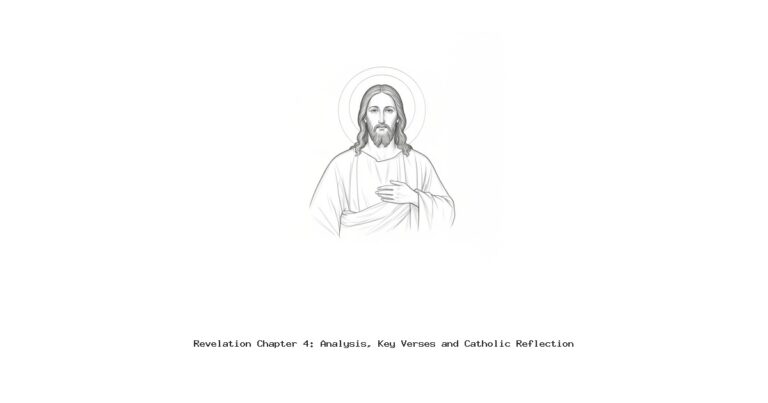
Catholic NABRE study of Revelation 4: overview, paraphrased key verses, church teaching, liturgical use, Lectio Divina steps, and practical FAQs for reflection.
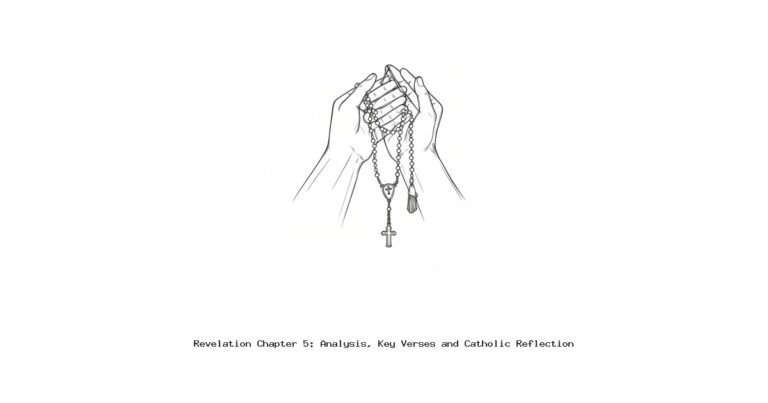
An in-depth Catholic study of Revelation 5 in NABRE, including text context, key verses with brief NABRE quotes, Church teaching, liturgical relevance, Lectio Divina, and practical reflections.