Revelation 22 closes the Bible’s last book and presents a culminating vision of the heavenly city, the river of life, and God’s final triumph. In NABRE, Rev 22 preserves the vivid imagery of light, water, and the tree of life, with the final exhortations and blessings. The chapter links creation’s beginning with its consummation, inviting worship, fidelity, and patient expectation. For Catholic readers, Rev 22 is not just a closing scene but an invitation to live in the light of Christ’s return and in reverent reading of Sacred Scripture.
Text and Context of Rev 22
Summary of the chapter: This final vision is given to John. An angel guides him through the heavenly city and the river of life as the throne of God and the Lamb shines with divine light. The text speaks of no more curse, no night, and the fullness of worship in the eternal presence of God, with the tree of life yielding healing leaves for the nations. It ends with a call to keep the words of this book and with the blessing of those who keep them, followed by a final doxology to the grace of Jesus Christ.
Key Verses of Rev 22
Rev 22:1 — Then the angel showed me
Then the angel showed me the river of the water of life, bright as crystal, flowing from the throne of God and of the Lamb.
The verse foregrounds the book’s eschatological focus on life, purity, and access to God through Christ. In Catholic exegesis, it frames the city as a place where creation is healed and communion with God is restored, a theme that threads throughout Revelation.
Rev 22:3 — There shall be no more curse
There shall be no more curse; the throne of God and of the Lamb shall be in it, and his servants shall worship him.
This sentence highlights the reversal of the fallen condition. It centers the church’s worship in the direct presence of God and the Lamb, the source of ultimate blessing and peace.
There shall be no more night there; they will not need the light of the lamp nor the light of the sun, for the Lord God shall give them light, and they shall reign forever and ever.
The absence of night signals perfect illumination by God. The text invites believers to interpret eternal life as participation in divine light and ongoing lordship in the new creation.
Rev 22:12 — Behold, I am coming soon
Behold, I am coming soon; my reward is with me to repay according to everyone’s deeds.
The promise of the Lord’s return anchors eschatological hope in personal accountability and divine justice. It reaffirms the certainty of Christ’s return and the universal scope of divine recompense.
Rev 22:17 — The Spirit and the Bride say, Come
The Spirit and the Bride say, Come. Let the one who hears say, Come. Let the one who is thirsty come forward, and let the one who wants the water of life take it as a gift.
This verse embodies the Church’s ongoing invitation to belief and grace. It foregrounds the Spirit’s role in calling the faithful to respond and emphasizes salvation as a gracious gift offered to all who thirst for God.
Rev 22:19 — And if anyone takes away from the words
And if anyone takes away from the words of the prophecy of this book, God will take away his share in the tree of life and in the holy city, which are described in this book.
The warning underscores the integrity and authority of Revelation. It calls readers to fidelity to Scripture and to resist distortion or marginalization of its message.
Rev 22:20 — He who testifies to these things says, Yes, I am coming soon
He who testifies to these things says, Yes, I am coming soon. Amen. Come, Lord Jesus.
The closing promise and prayer seal the book’s message with an urgent invitation to hope and fidelity. It frames Christian longing as oriented toward Christ’s return and the fullness of God’s kingdom.
Church Teaching on This Passage
The Fathers of the Church and the Magisterium stress that Revelation presents a symbolic and sacred portrayal of cosmic realities fulfilled in Christ. Catholic commentators like Augustine, Origen, and Jerome saw in Revelation a deep call to holiness, worship, and steadfast faith amidst trial, not a mere forecast of sensational events. The Catechism of the Catholic Church places Rev 21–22 within the Church’s eschatological teaching, affirming the final consummation of creation, the beatific vision, and the eternal life prepared for the faithful (CCC 1015-1030; 1020-1026). The text is read in continuity with biblical prayer and the Church’s magisterial teaching on the last things.
This Chapter in the Liturgy
Rev 22 is not a standard Sunday or weekday reading in the Roman Rite lectionary. It appears more often in the Church’s liturgical life through the Liturgy of the Hours or in catechetical, Bible study, or contemplative contexts. When read liturgically, the imagery of the heavenly city and the return of Christ invites eschatological reflection appropriate to seasons of anticipation—particularly Advent and the final weeks of the liturgical year—though it is not bound to a single season. Its themes continue to shape Catholic devotion to hope, prayer, and fidelity to God’s word.
Lectio Divina
Verse for reflection: Rev 22:17 The Spirit and the Bride say, Come
The Spirit and the Bride say, Come. Let the one who hears say, Come. Let the one who is thirsty come forward, and let the one who wants the water of life take it as a gift.
Meditation question: How does God’s invitation in this verse echo in my daily life and prayer, especially when I feel distant from grace or burdened by worldly concerns?
Prayer: Lord Jesus, open my heart to your gift of living water. Help me to heed the Spirit’s invitation and to respond with faith, hope, and love that endure to the end. Amen.
FAQ
1. Is Revelation 22 meant to be read as literal history or symbolic imagery?
Catholic interpretation sees Revelation as rich in symbolic imagery that conveys theological truth about God’s plan, not a precise, chronological map. It uses visible signs to express ultimate realities—the reign of God, the fullness of life, and the final victory in Christ.
2. What does the tree of life signify in Rev 22?
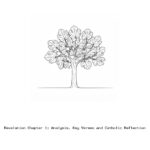
It represents eternal life, healing, and restored communion with God; its leaves heal the nations, signaling universal salvation in the new creation.
3. How should we understand the warning against adding or taking away from the words?
The warning guards the integrity of Scripture and the Church’s teaching authority. It invites readers to receive the canonical text with reverence and to resist distortion or personal novelty that would mislead others.
4. How can Rev 22 influence Catholic faith today?
It calls Christians to live in hopeful anticipation of Christ’s return, to worship God in truth, and to share the gospel’s message of salvation as a gift offered to all who thirst for life in him.
Catholic NABRE study of Revelation 4: overview, paraphrased key verses, church teaching, liturgical use, Lectio Divina steps, and practical FAQs for reflection.
An in-depth Catholic study of Revelation 5 in NABRE, including text context, key verses with brief NABRE quotes, Church teaching, liturgical relevance, Lectio Divina, and practical reflections.