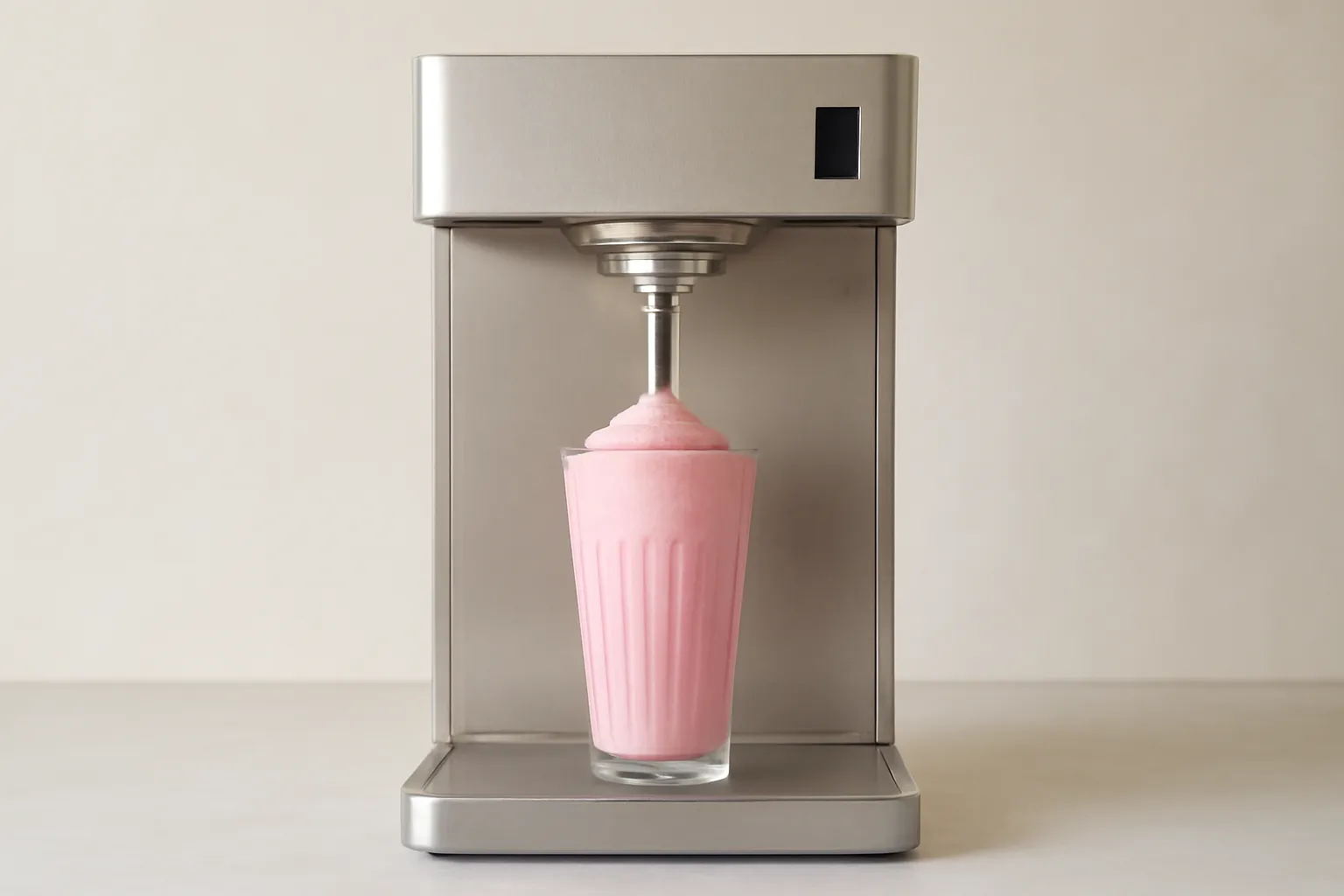
In a bustling cafe, the aroma of coffee mingles with the promise of a cold, creamy treat. Customers expect
consistency, speed, and flavor when they order shakes, malts, smoothies, or blended beverages. This is where commercial shake machines—also called commercial blenders or batch beverage mixers—play a pivotal role.
These pieces of equipment are designed to handle frequent, high-volume blending while maintaining quality on every cup.
If you’re outfitting a cafe, a handheld blender or a household blender simply won’t hold up to daily use. A cafe-grade shake machine or milkshake machine provides the durability, speed, and sanitation features needed to keep lines moving and customers happy. This buying guide walks you through what to look for, how to evaluate different models, and how to pick the best option for your specific operation—whether you run a small neighborhood cafe or a bustling latte-and-shhake concept.
What makes a commercial shake machine essential for cafes?
Throughput: In busy hours, the ability to blend multiple shakes quickly is critical. A capable batch blender or multi-tub machine reduces wait times and increases customer satisfaction.
Consistency: Uniform texture and flavor across drinks are a must for brand reputation. A high-quality commercial model delivers predictable results, even with different operators.
Durability: Commercial environments demand rugged construction, durable blades, and reliable motors that survive daily use and cleaning cycles.
Sanitation: Cafes must meet sanitation standards. Look for easy cleaning processes, dishwasher-safe parts, and materials that resist bacterial growth.
Maintenance and service: A well-supported machine with readily available replacement parts, warranties, and local service reduces downtime.
Space and footprint: A compact footprint or a multi-tub design that fits your counter layout can influence workflow and seating capacity.
In practice, shifts often demand a blend of speed, reliability, and ease of use. A good commercial shake machine should
be intuitive for staff, include safety features for blade access, and be simple to clean between batches. It should also support the kinds of beverages you serve most—milkshakes, smoothies, malted drinks, or frozen coffee beverages—without sacrificing performance.
Key features to look for in a commercial shake machine
Power, speed, and motor design
The heart of any commercial blender is its motor power and blade design. Look for a motor with ample horsepower (HP) or high-torque ratings suitable for thick frozen beverages. A common setup in cafes is a motor that delivers robust blending at 20,000+ RPM on peak (for short bursts) while maintaining control at lower speeds. A variable-speed or pulse control feature can help you fine-tune texture, especially for malted drinks or sugar-free recipes that require precise consistency.
Capacity, throughput, and batch size
Capacity matters for how many shakes you can produce before loading or cleaning. Options range from compact 2- to 3-quart capacity jars on countertop machines to larger multi-batch or multi-tub systems that can churn out several drinks in rapid succession. If your menu includes high-volume weekends or catering, you may prioritize machines with multiple blending stations or high-capacity jars to maximize throughput.
Build quality and materials
Stainless steel components, reinforced bases, and durable plastics that resist staining are common in professional-grade units. The jar or pitcher should be made of sturdy materials, with easy-grip lids and strong seals to prevent leaks when the machine is operating at high speed.
Blade design and blade life
A rugged blade assembly designed for frozen ingredients reduces the risk of dulling and ensures consistent blending. Interchangeable blades, easy blade replacement, and the ability to run with frozen ingredients without overheating are desirable traits.
Sanitation, cleaning, and hygiene
NSF certification, dishwasher-safe parts, chemical resistance, and clean-in-place (CIP) compatibility are important. Some machines offer built-in cleaning modes or self-cleaning cycles that simplify post-shift turnover.
Noise, energy efficiency, and operating costs
In a café environment, noise can influence the customer experience. Look for models with sound-reduction features or enclosed motor housings. Energy efficiency matters for long-term operating costs—pay attention to standby power consumption and the overall energy draw during typical use.
Safety and ergonomics
Features to consider include locking lids or interlocks, splash guards, and non-slip feet. Ergonomic control panels and accessible switches reduce operator fatigue during busy shifts.
Cleanability and maintenance
A design that discourages dried-on residue, with removable, dishwasher-safe parts and straightforward disassembly for routine maintenance, saves time and improves hygiene.
Warranty, service, and parts availability
A strong warranty and readily available parts are crucial. Check whether the manufacturer offers on-site service, quick replacement parts, and an established network of technicians in your area.
Choosing the right type of shake machine for your cafe
Countertop batch blenders (single- or dual-jar setups)
These units are ideal for cafes with modest daily volumes or limited counter space. A two-jar countertop batch blender can handle two flavors or two batch sizes in rapid succession, enabling a steady flow during peak times. They’re often the simplest to operate, with straightforward controls and fast cleaning.
Multi-tub batch mixers (two to four tubs)
For higher throughput, consider a machine with multiple blending tubs or jars. These systems can churn multiple drinks in parallel, dramatically reducing wait times during busy shifts. They’re especially useful in cafes with a fixed menu that benefits from quick product rotation or customization without sacrificing speed.
Slush/frozen beverage machines vs milkshake machines
If your beverage program includes slushies or frozen coffee drinks beyond conventional shakes, you may want a dedicated frozen beverage machine with a specialized refrigeration system and hardness settings. However, many cafes find a robust milkshake machine or professional blender can handle both shakes and other blended drinks when appropriately configured.
Portability and integration considerations
Some cafes prefer under-counter or modular units that tuck away when not in use, freeing up space for display or service. If you need a more flexible layout, a compact countertop model that can be moved easily might be the best fit.
Best models to consider for cafes: a practical framework
Rather than listing specific model numbers, this section provides a framework to identify the right model families and features that suit cafes of different sizes and menus. Use these categories as search terms when talking to suppliers, and pair them with on-site demos and staff trials.
All-around workhorse (balanced performance and value) — Look for a commercial-grade blender line that offers 2-3 jars, reliable motor power, and a broad warranty. These model families are designed to handle standard cafe shakes, smoothies, and malted drinks with consistency. They are one of the most versatile choices for cafés offering a core beverage menu.
Budget-friendly, high-return option — You can often find dependable performance in cafes that operate with tight margins by choosing a value-oriented commercial blender line. Expect solid build quality and straightforward controls, with an emphasis on ease of cleaning and durability of essential components.
High-volume, peak-hour heavy lifter — For cafés with long lines or weekend surges, consider model families designed for sustained throughput, multiple simultaneous blends, and quick turnaround. These lines typically feature larger jars or multiple blending chambers, reinforced motors, and robust service support.
Compact footprint or under-counter integration — If space is at a premium, search for compact or under-counter model families that still deliver on batch quality. These units are especially useful in coffee bars, limited-space cafe concepts, or mobile coffee carts.
When you search for these model families, focus on features such as two-bowl or three-bowl configurations, 100-120V electrical compatibility for standard café outlets, easy-clean design, and replacement parts availability. You can also consider self-cleaning cycles or built-in cleaning modes to minimize downtime between batches.
Brand-friendly guidance for selecting model families
Depending on where you shop, you’ll encounter these familiar lines in various configurations. While keeping in mind that model naming can vary by region and year, the following guidance can help you identify solid options:
Commercial-grade blender families from major manufacturers that emphasize durability, thicker jars, and powerful motors.
Multi-tub beverage machines that let you run several blends in parallel without bottlenecks.
Sanitation-forward designs with disassemblable parts and dishwasher-safe components for rapid turnover.
How to evaluate a candidate during a buying process
Define your menu and peak demand: List shakes, malts, and blended drinks you plan to offer and estimate daily throughputs. This informs capacity, speed, and multi-tub needs.
Measure your space: Determine available counter space, foot traffic patterns, and the ergonomics of staff movement during peak service.
Request live demonstrations or trials: If possible, arrange for a hands-on test with your staff to evaluate ease of use, texture results, and cleanup time.
Check documentation: Review owner’s manuals, sanitation guides, service manuals, and warranty terms before purchasing.
Compare running costs: Assess energy usage, maintenance parts pricing, and potential downtime costs for service interruptions.
Ask about service and support: Confirm response times, on-site service availability, and the supplier’s ability to provide replacement components quickly.
Sample evaluation questions for vendors
What is the maximum batch size per cycle, and how many cycles per hour can it handle?
Are all food-contact parts BPA-free and dishwasher safe?
Is there a self-cleaning mode, and how long does it take?
What is the warranty period on the motor, blades, and jars?
What service options are available locally, and what are the typical response times?
Maintenance and care to maximize life span
Daily and shift routines
A quick post-shift rinse, a wipe-down of the exterior, and a weekly inspection of gaskets and seals can prevent leaks and reduce downtime. Keeping lids, seals, and jars clean helps maintain texture consistency across drinks.
Periodic maintenance and parts
Plan for periodic blade inspections and replacements, gasket checks, and jar wear. Stock a small inventory of common replacement parts to reduce downtime. The most frequently replaced components are blades, O-rings, gaskets, and seals.
Cleaning and sanitation best practices
Use manufacturer-recommended cleaning agents and follow their CIP or manual cleaning schedules. Ensure parts that contact food are thoroughly dried before storage to prevent corrosion and mold growth. Maintain a clean, well-ventilated area around the machine to minimize moisture buildup.
Cost considerations and budgeting
The price of a commercial shake machine varies with capacity, build quality, and features. While you may find compact countertop models in the lower price range, robust high-volume machines with multiple jars or specialized features can command a higher upfront investment. Consider the total cost of ownership, which includes:
A well-chosen model should deliver a favorable return on investment by improving speed, consistency, and customer satisfaction. In many cafes, the right shake machine pays for itself through reduced labor time and a smoother service flow.
Operational tips for cafe managers and baristas
Menu planning to reduce strain on equipment
Consider grouping beverages by blending requirements. If you feature many frozen drinks, you may benefit from a dedicated soft-serve or frozen beverage mixer. For menus with a mix of shakes and smoothies, ensure your primary blender can handle both textures without overheating.
Staff training and consistency
Train staff on the standard blend times for each drink, portion control, and safe handling of blades. Provide a simple reference card near the machine to reduce guesswork and ensure consistency across shifts.
Maintenance scheduling for downtime planning
Build a routine for cleaning and maintenance into your off-peak hours. If you operate late-night or extra-shift, plan for maintenance windows to minimize customer disruption.
Frequently asked questions
Can a home blender be used in a cafe?
Home blenders generally lack the durability and warranty coverage of commercial shake machines, and may not hold up under daily cafe demand. They can be transitional for small pop-up concepts, but for long-term reliability and efficiency, invest in a true commercial-grade blender.
What is the typical lifespan of a cafe-grade shake machine?
With regular maintenance, most commercial units last several years. A reliable model with strong parts support and a good warranty is more important than chasing the highest possible initial price.
How do I choose between a multi-tub machine and a single-tub countertop blender?
If your cafe handles frequent, high-volume shakes with multiple flavors, a multi-tub system can dramatically improve throughput. If your menu is simpler or space is limited, a high-quality single-tub countertop blender with fast cleaning cycles may be the best fit.
Are there energy efficiency considerations I should prioritize?
Yes. Look for models with efficient motors, smart standby modes, and components designed for longevity. Energy-efficient equipment can lower operating costs over time, especially in high-volume settings.
Final recommendations and next steps
When selecting a commercial shake machine for your cafe, prioritize models that balance speed, reliability, and sanitation. Consider your menu, expected throughput, counter space, and staff training needs. Involve your kitchen or bar staff in the evaluation process to ensure the chosen machine matches real-world workflow and recipes.
Define your core beverage program and forecast peak volumes.
Choose between a countertop batch blender for flexibility and a multi-tub system for high-throughput needs.
Inspect build quality, materials, and blade design; confirm cleaning ease and sanitation features.
Verify warranty coverage, service availability, and part accessibility in your region.
Request a hands-on demo and keep a short list of questions for the vendor.
By following this guide, you can make an informed decision that supports consistent product quality, faster service, and happier customers. A well-chosen commercial shake machine is not just a piece of equipment—it’s a workhorse that underpins your beverage program and helps your cafe scale smoothly.