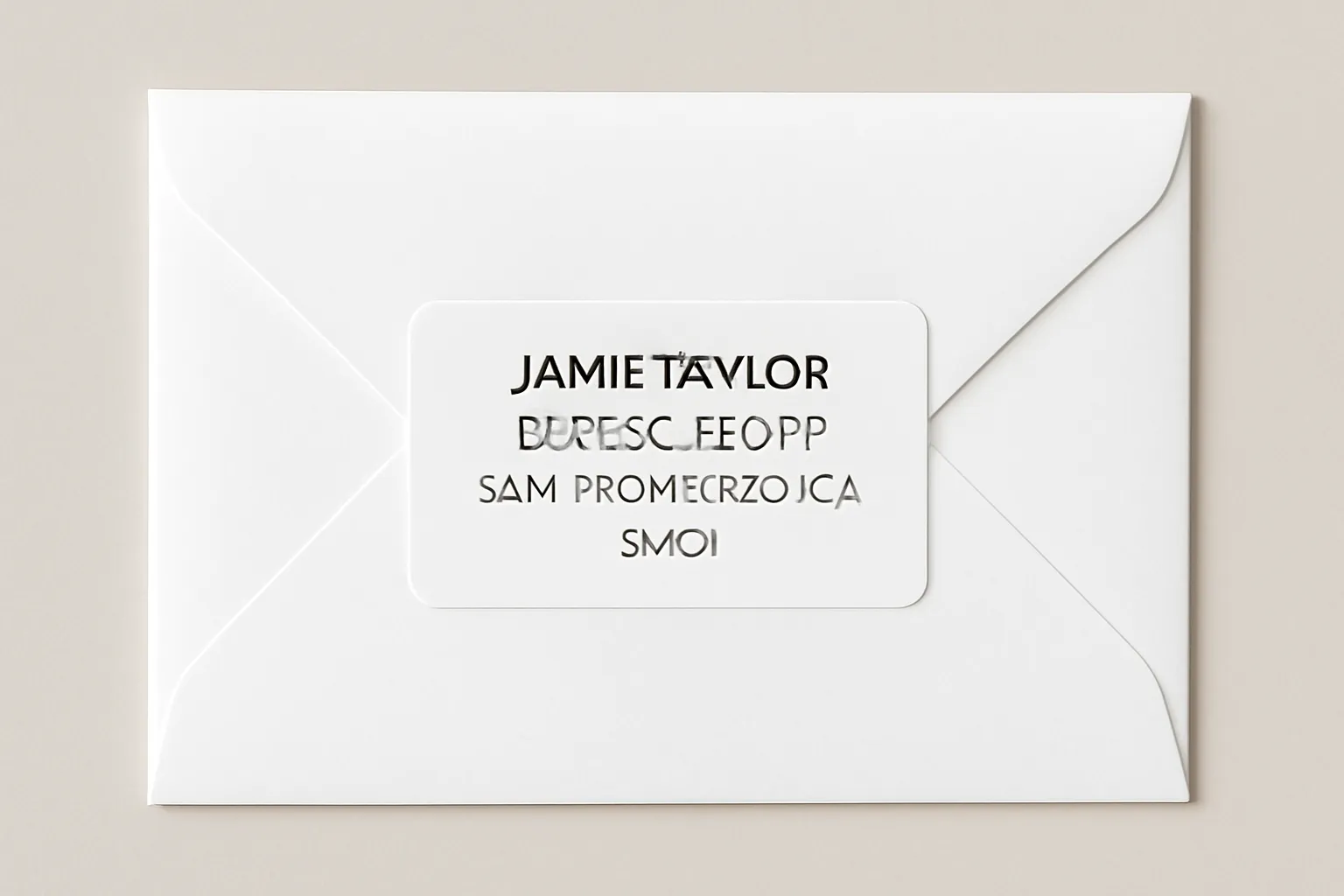
Modern Address Labels: Durable, Stylish Solutions for Your Mail
In a world where first impressions matter as much as the contents of a letter, modern address labels have evolved from plain stickers to sophisticated, durable, and expressive tools. They are no longer just functional identifiers; they are a core component of branding, organization, and efficiency in homes and businesses. This article explores the many facets of contemporary address labels, from the materials and durability that withstand the elements to the design choices that balance aesthetics with legibility. You’ll find practical guidance, current trends, and a comprehensive overview of how to select, design, and apply address labels for a wide range of use cases.
Today’s address labels serve multiple roles. They must stay affixed to a variety of surfaces, resist wear from sun, rain, cold, and handling, and present an address that is easy to read at a glance. At the same time, many users want style and customization—whether it’s a minimalist, professional look for business mail, a vibrant design for wedding invitations, or a branded label for products shipped to customers. The best label solutions combine durability, compatibility with printing equipment, and design versatility to meet these diverse needs.
Durable materials and weather resistance
Durability is a central concern for modern address labels. Depending on where mail and packages travel, labels can face humidity, rain exposure, sunlight, abrasion, and varying temperatures. The choice of material largely determines how well a label holds up over time. Below are the main material families and what makes them suited to different tasks.
Paper labels with protective coatings
Coated paper labels offer crisp print quality and are typically more affordable. They are ideal for indoor use, light weather exposure, and situations where recycling is a priority.
Matte vs. gloss finishes affect readability and glare. Matte finishes reduce reflections, which can improve legibility in bright light.
When used outdoors or on moisture-prone surfaces, consider a laminated overlaminate or a coated overlayer to extend life.
Vinyl labels
Vinyl labels are known for their durability and resistance to tearing, scuffing, and moisture. They are well-suited for outdoor mail, parcels, and temporary signage.
They tend to flex with curved surfaces (think round jars or bottles) and can seal around corners effectively.
Vinyl is often more forgiving when applying to textured or slightly oily surfaces, reducing the risk of peeling.
Polypropylene and other plastics
Polypropylene labels offer excellent chemical resistance and wipe-clean surfaces, making them ideal for shipping labels that might encounter damp or dirty environments.
They typically hold up in cold temperatures and can be used on refrigerated containers or cool environments without becoming brittle.
Some polypropylene labels are
transparent or translucent, creating a sleek look when placed over surfaces without obtrusive background color.
Laminates, UV protection, and coatings
Applying a laminate over the printed label can dramatically extend life by defending against scuffing, moisture, and UV fading.
UV-resistant inks and coatings help guarantee readability even after prolonged sun exposure, which is important for outdoor mailboxes or exterior packaging.
Weatherproof construction often combines water resistance with chemical resistance to prevent ink smearing from moisture or exposure to household cleaners.
Adhesive technology: permanent, removable, and repositionable
Permanent adhesives deliver maximum staying power and are suitable for most mail and shipping tasks where the label should not detach unintentionally.
Removable adhesives minimize residue and are ideal for temporary labeling, events, or surfaces you don’t want to damage.
Repositionable adhesives provide a balance between initial repositioning flexibility and eventual adhesion, useful for alignment during application.
Surface compatibility affects adhesive choice—porous, smooth, and textured surfaces each behave differently in terms of adhesion strength.
Styles and design: aesthetics meet practicality
Modern address labels come in a spectrum of aesthetics, from understated professionalism to bold, decorative statements. The design choice should align with the purpose of the mail, the brand identity (if applicable), and the legibility requirements of the recipient. Here are the main design considerations and options.
Minimalist versus decorative designs
Minimalist designs emphasize typography, generous white space, and high contrast. They are versatile and mail-ready for business correspondence.
Decorative designs can include color accents, logos, or custom borders for weddings, invitations, or branded shipments.
For bulk mailings, simplicity often reduces printing errors and ensures consistent readability across thousands of labels.
Typography, color, and legibility
Choose a legible font with adequate character size. Sans-serif fonts such as Arial, Helvetica, and Calibri or well-kerned serif fonts often provide strong readability at typical label sizes.
Ensure high contrast between text and background. Black text on white or pale backgrounds is a classic choice, though dark-on-light color schemes can also be effective.
Color can reinforce branding but should not compromise legibility. For example, a bold label with a branded color stripe can still keep address text highly readable.
Windowed vs. non-windowed label formats
Windowed labels are designed to align with an existing envelope window, making the recipient address visible through the window. These are common in home and business mailings that want to minimize printing complexity.
Non-windowed labels rely on full surface coverage, which can be useful for branding and for packaging where there is no envelope window involved.
Windowed formats reduce misalignment risk and can simplify mail preparation in large volumes.
Branding and custom logos
Including a brand logo or a color scheme helps recipients recognize the sender instantly and can increase perceived value of the mail.
For invitations and events, ornamental borders, monograms, or gradient accents can elevate the visual impact while maintaining readability.
Printing methods and technology
The printing method you choose affects cost, color fidelity, durability, and the ease of production. Each method has its sweet spot for different use cases, from high-volume business mail to one-off personalized invitations.
Laser and inkjet printing
Inkjet printing is accessible and versatile, good for short runs or customized labels. It’s compatible with standard home and office printers and can reproduce full color with good saturation.
Laser printing offers crisp text and high throughput for larger batches. It generally produces dense text with quick dry times and is compatible with most standard office printers.
Consider high-quality label stock compatible with your printer to avoid misfeeds and jams.
Thermal transfer and direct thermal printing
Direct thermal labels print without ink or ribbon but require heat-sensitive paper. They are highly susceptible to fading in sunlight and heat, so best for indoor or temporary applications.
Thermal transfer uses a ribbon to transfer ink onto the label. This method yields durable, long-lasting results suitable for outdoor use and abrasive environments.
Both methods can support variable data printing, which is valuable for personalized addresses and barcode-enabled shipping labels.
Printer compatibility and label formats
Most address labels come in standard formats compatible with popular printers. Common formats include sheets of rectangular labels with pre-cut shapes you peel and apply.
Before purchasing, confirm the label size and adhesive suitability for your printer’s output area and for the intended surface.
Some users opt for thermal label printers for durability and quick throughput in high-volume shipping scenarios.
Sizes and formats: standardization meets flexibility
Address label sizes are standardized to accommodate different envelope types, shipping needs, and branding preferences. Below are popular formats and practical guidance on where they fit best.
Common dimensions you’ll encounter
1″ x 2-5/8″ (a compact option for small envelopes and simple one-line addresses) — widely used for return labels and compact mailings.
1″ x 3-1/2″ (longer, with more room for the address and a small line for a name or company) — a staple for everyday correspondence.
1″ x 3″ (similar to 1″ x 3-1/2″ but slightly narrower) — flexible for mixed-height addresses.
2″ x 4″ or 2″ x 3″ (larger formats used for business cards-on-labels or product packaging) — ideal for branding and additional information.
Factor sheets or long-format labels for shipping boxes — allow multiple lines and larger font for readability at a distance.
Avery and other standard line considerations
Many label makers align with Avery or equivalent formats, providing a robust ecosystem of templates, software compatibility, and adhesive choices.
When planning a print run, consider purchasing labels in a format that matches your existing printer software templates to avoid layout mismatches.
Template alignment and margins are critical to ensure that the printed text sits squarely within the label boundaries and remains legible after application.
Durability in use: where and how address labels matter
Durability isn’t just about weather resistance; it’s about consistent readability, tamper resistance for certain shipments, and long-term legibility for archival purposes. Here are the practical considerations that influence how you choose a label for specific use cases.
Outdoor and high-visibility applications
In outdoor mailboxes, on outdoor containers, or on items transported through variable weather, weatherproof and UV-resistant labels maintain legibility longer.
The right combination of substrate and adhesive matters for surfaces with slight curvature or textured materials like corrugated cartons and metal doors.
Indoor use and archival labeling
Indoor labeling, such as on file folders, products stored in cabinets, or gift packaging, benefits from repositionable or removable adhesives that reduce residue on delicate surfaces.
For archival or long-term documentation, consider inks and substrates designed to resist fading and chemical interactions with common indoor environments.
Whether you’re labeling the postcards you mail from home, the products you ship to customers, or wedding invitations, following a structured process helps ensure successful results—every time.
Designing a clean and effective label
Start with a clear layout: name, street address, city, state/ZIP code, and country (where applicable). Consider including a secondary line for mail automation compatibility if needed.
Use high-contrast text and fonts sized for readability at typical viewing distances. A 9–12 point font is common for standard label sizes, but adjust for the label dimension.
Incorporate a subtle brand element when appropriate, such as a small logo or a color stripe, without overwhelming legibility.
Plan for margins and bleed: keep the essential address away from the edges to prevent clipping during cutting or misalignment.
Layout tips and best practices
Test print on plain paper before committing to label stock to verify alignment and spacing.
Use templates that align with the label stock you’ve chosen to minimize waste and misprints.
For bulk shipments, consider a consistent template across all labels to simplify data entry and reduce errors.
Application steps: adhesive, surface, and timing
Ensure the surface is clean, dry, and smooth for best adhesion. Wipe with a mild alcohol-based cleaner if needed and let it dry completely.
Peel the backing carefully, align the label, and press firmly from the center outward to avoid air bubbles.
Provide time for the adhesive to set, especially in cooler or humid environments where adhesives can take longer to cure.
Data privacy and compliance considerations
When handling personal addresses, consider privacy best practices. Avoid exposing sensitive data in public-facing materials, and use opt-in options for recipients where possible.
For organizations, ensure you conform to postal regulations and branding guidelines to maintain deliverability and professional appearance.
As consumers and organizations increasingly prioritize sustainability, address labels are evolving to minimize environmental impact without compromising performance. Here are the key angles to consider when selecting eco-friendly labeling options.
Materials and recyclability
Some paper-based labels use recycled content and are designed to be recyclable with paper waste streams.
Plastic labels (vinyl or polypropylene) may be recyclable depending on local facilities and plastic type; check regional guidelines before committing to a material.
Choose coatings and laminates that do not hinder recycling or composting processes where feasible.
Adhesives and waste reduction
Removable and repositionable adhesives can extend the life of a label without committing to a permanent bond, which is useful for temporary labeling needs.
Stock optimization and template reuse reduce waste—design labels that can be printed across multiple campaigns or shipments with minimal changes.
End-of-life considerations
When possible, choose materials that are widely accepted by local recycling programs. For packaging that goes to customers, consider explaining disposal options on accompanying materials.
Encourage customers and recipients to recycle the packaging and to reuse materials when appropriate, turning addresses into a routine part of responsible consumption.
Whether in a home setting, a small business, or a large organization, the right address label empowers logistics, branding, and professional presentation. Here are some common scenarios and the label types that best fit each one.
Residential mail and household organization
Thread a consistent look across all outgoing mail by using identifiable, durable labels for family correspondence, invitations, and holiday mail.
Use removable or static cling labels for temporary labeling on containers or bins during a move or seasonal organizing.
Small business packaging and shipping
For e-commerce or direct-to-consumer shipments, durable weatherproof labels with clear destination information improve courier handling and customer experience.
Incorporate branding, logos, and color accents to strengthen recognition and trust, while ensuring the address remains the primary focal point.
Events, invitations, and weddings
Elegant address labeling can elevate invitations and RSVP packages. A decorative label with a monogram or botanical accent can set the tone for the event.
For RSVP cards and return-mailers, choose durable labels that cooperate with envelopes and high-quality printing to maintain cohesion with the rest of the stationery.
Catalogs, bulk mail, and inventory labeling
Use standardized label formats for catalogs and bulk mailings to streamline processing and ensure consistency across thousands of units.
Inventory labeling benefits from durable materials and tamper-evident features if needed, especially for shipments that double as returns or warranty tracking.
The landscape of address labeling is expanding beyond traditional text-only labels. Here are some forward-looking trends that are shaping modern address labels for the next decade.
Smart labels: QR codes, NFC, and data integration
QR codes embedded on labels can link recipients to product pages, return policies, or delivery tracking. This adds value for e-commerce shipments and consumer engagement.
NFC tags offer contactless data transfer and can reveal extended information when scanned by compatible devices. They are particularly appealing for premium packaging and event experiences.
Incorporating smart data with static labels enables real-time updates at the point of delivery, enhancing tracking accuracy and customer satisfaction.
Customizable, dynamic design options
Digital printing advances allow on-demand, customized labeling with variable data. Each label can display unique recipient information, order numbers, or promotional codes without extra tooling.
Design software and cloud templates make it easier to maintain brand consistency while personalizing labels for individual customers or events.
Eco-conscious developments
New bio-based or compostable label substrates aim to minimize environmental impact while preserving durability.
Recyclability improvements and better end-of-life guidance help consumers dispose of or reuse packaging more responsibly.
Modern address labels have become a core element of practical mail handling, packaging aesthetics, and brand identity. By understanding the trade-offs between materials, adhesives, and printing methods, you can choose a label solution that is durable, legible, and on-brand—whether you’re labeling a stack of invoices, shipping hundreds of packages, or sending invitations to a special occasion. The best approach is to align your label choice with the surface you’ll apply to, the expected environmental conditions, and the printing equipment you have access to. Keep in mind the following quick guidelines as you select and deploy modern address labels:
Match the material and adhesive to the surface and environment: indoor, outdoor, smooth, or textured.
Prioritize legibility through high contrast, appropriate font size, and a clean layout.
Balance durability with sustainability by choosing materials that meet your recycling or composting goals and by minimizing excess waste.
Consider future needs, such as the potential for branding expansion or the integration of digital features like QR codes or NFC.
Test extensively in small batches before committing to large-scale production to catch alignment, printing, or adhesion issues early.
In short, the art and science of modern address labels lie in their ability to combine robustness with design. As mail and packaging continue to evolve in a digital-first world, the right label can enhance readability, protect your information, promote your brand, and simplify logistics—today and for years to come.