St Michael Symbolism: Meaning, Iconography, and Symbolic Significance
St Michael symbolism sits at the intersection of doctrine, art, and everyday devotion. Known as the Archangel Michael in Christian tradition, he functions not only as a heavenly messenger but as a powerful emblem of divine protection, moral courage, and spiritual warfare. Across centuries and cultures, his image has been used to convey complex messages about order, justice, and the cosmic struggle between good and evil. This article explores the meaning, the iconography, and the symbolic significance of St Michael, while offering a broad survey of how his symbolism has been interpreted, represented, and applied in religious, artistic, and secular contexts.
The figure of St Michael is rooted in scriptural, liturgical, and visionary literature. He is most famously associated with the biblical passage in the Book of Revelation that describes a heavenly war: Michael and his angels fighting against the dragon, who is identified with the devil, and ultimately defeating him. This scriptural frame anchors a broader symbolic program: Michael embodies divine protection, the defense of the faithful, and the administration of justice in the spiritual realm. When people encounter St Michael in art, prayer, or popular culture, they are typically engaging with a set of keywords that captures the essence of his symbol:
Protection and guardianship against danger, temptation, and harm.
Righteousness and the defense of what is morally right, not merely favored outcomes.
Spiritual warfare against malevolent forces, seen as combat in the celestial realm with tangible earthly echoes.
Justice and the ultimate triumph of good over evil.
Intercession—a bridge between humanity and the divine within a framework of care and mercy.
The symbolic repertoire of St Michael is versatile because it speaks to both universal human concerns (courage, protection, justice) and particular theological commitments (the reality of spiritual warfare, the sovereignty of God). In this way, St Michael becomes a multifaceted symbol applicable to prayer life, sacred art, and even secular contexts that seek to evoke strength, order, or moral resolve.
Theological Foundations
At the core of Michael’s symbolism is a robust sense of cosmic order under the sovereignty of God. In Catholic, Orthodox, and other Christian traditions, the archangels are not merely polite messengers; they are active participants in divine governance. Michael’s role as the “one who is like God”—a name that hints at ultimate allegiance and authority—places him at the heart of debates about heavenly hierarchy, angelic power, and the moral architecture of reality.
In theological terms, Michael is often invoked as a guardian against spiritual attrition, a steward of divine justice, and a symbol of holy courage for those facing danger or moral testing. This triad—protection, justice, courage—appears repeatedly in sermons, hagiographies, and devotional poetry, reinforcing a coherent frame for readers and believers to understand the imagery.
Iconography and Visual Language
The visual language of St Michael is among the most recognizable in Christian art. Across centuries and continents, artists have used a consistent set of motifs to express his identity and mission, while also innovating in ways that reflect local theology, culture, and aesthetic trends.
Traditional Western Depictions
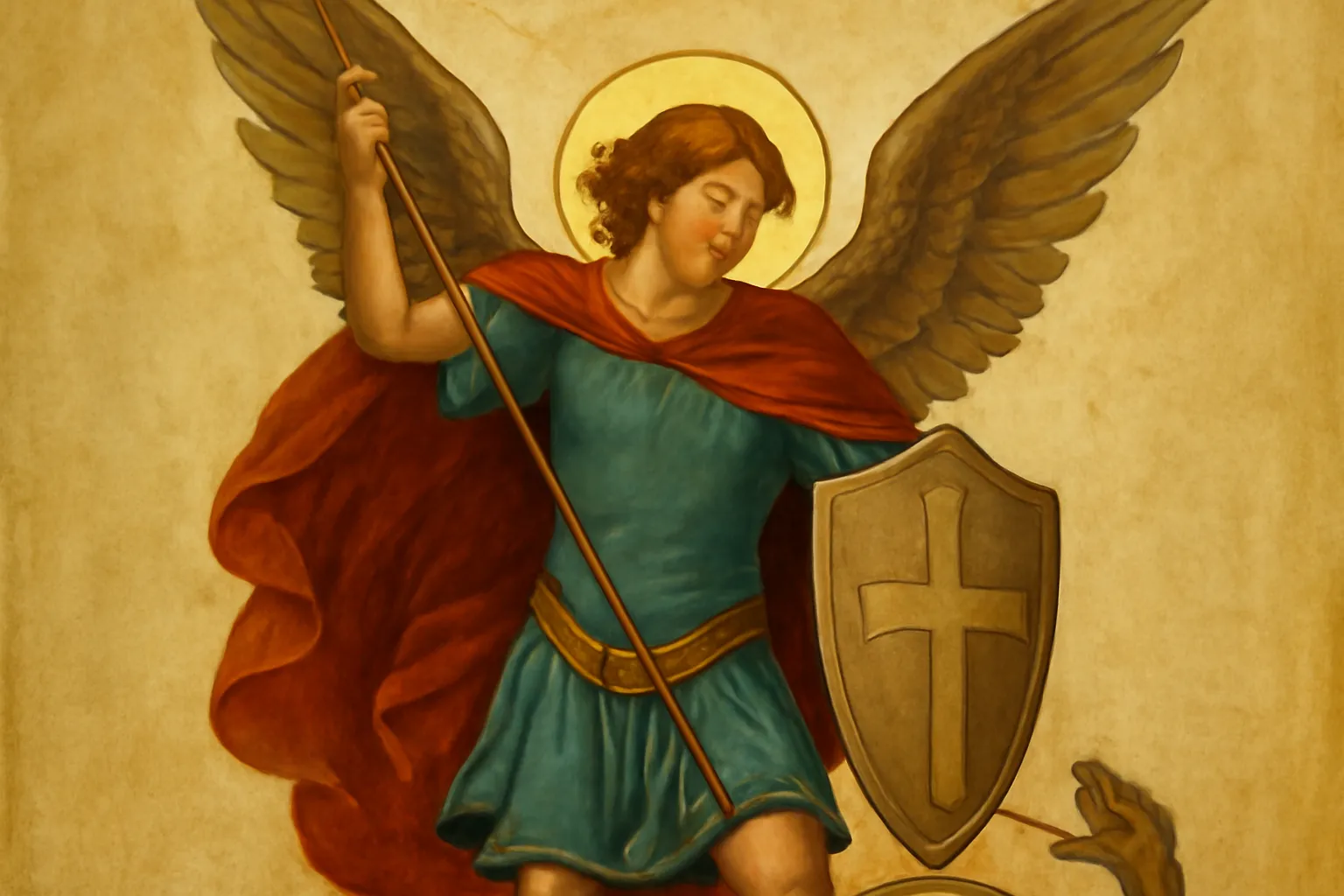
In Western art, St Michael is typically shown as a youthful, vigorous figure in full armor, often wielding a sword or lance and a shield. The shield may bear a cross, star, or other emblem of divine protection. A common companion in these images is the defeated dragon or serpent, a visible symbol of evil overcome by martial and spiritual virtue. The dragon is frequently shown beneath Michael’s foot, reinforcing the idea of the righteous warrior’s supremacy and the cosmic order restored.
The palette and iconographic details—gleaming metal, bright cloth, luminous halos, or a celestial glow—underscore the sense of sanctity and otherworldly power. The halo around Michael’s head signals his holy status, while his stance—balanced, ready, and resolute—conveys the discipline and resolve that accompany true guardianship.
Eastern and Orthodox Representations
In the Eastern Christian tradition, iconographic conventions place strong emphasis on the archangel’s role within the heavenly army. Michael is often depicted as a commanding yet serene figure, sometimes with a staff or sword, and always oriented toward the viewer with a sense of direct moral address. The Orthodox iconographic style tends to favor a less contrived physical pose and more symbolic painterly technique—rich color fields, delicate line work, and a focus on the spiritual weariness and triumph of the heavenly host.
In Orthodox liturgical imagery and church decor, Michael’s icon often sits as a sentinel near heaven’s gate or the iconostasis, reinforcing his function as guardian and guide. The visual rhetoric remains the same: an emblem of divine protection, a symbol of spiritual warfare, and a reminder of God’s victory over darkness.
Common Motifs Across Media
Armor and weapons as signs of readiness, not aggression for its own sake.
Wings—a characteristic mark of angelic beings that signals their heavenly origin and mobility between realms.
Dragon or serpent underfoot or in a demonic form, representing evil, temptation, or chaos subdued by divine power.
Scales or other instruments of judgment in some depictions, highlighting the theme of moral accounting and justice.
Light imagery—glow, sunburst, or radiant aura—to signal holiness and the clarity of divine purpose.
Color Symbolism in Michaelic Imagery
Color carries layered meanings in St Michael’s iconography. Blue often connotes heaven, truth, and fidelity; gold or yellow evokes glory and divine radiance; white or silver signals purity and righteousness; red can imply zeal and divine love, though it is used sparingly to avoid complicating the icon’s symbolic economy. The careful use of color helps convey the balance between strength and mercy, justice and protection.
Iconography in Context: Places, Practices, and Media
The symbolism of St Michael appears in a wide range of contexts beyond painting and sculpture. It informs liturgical practices, architectural design, devotional objects, and even modern branding in contexts where notions of protection and moral resolve are valued.
Liturgy and Devotion
The Feast of Saints Michael, Gabriel, and Raphael on September 29 (the Feast of the Archangels in the Roman Rite) is a key moment for the invocation of Michael’s intercession, particularly for protection and guidance. In Catholic and Anglican contexts, prayers to St Michael are often asked for defense against danger, deliverance from evil, and support in times of spiritual struggle. In Orthodox practice, the Synaxis of Michael and All Angels is celebrated with its own distinct liturgical cycle, emphasizing the archangel’s role as guardian of the divine order.
Architecture and Sacred Spaces
Churches and cathedrals frequently place images of St Michael in prominent locations—above entryways, on altars, or near vaults—where he can function as a guardian presence for worshippers. In architectural symbolism, his figure embodies the idea of heavenly protection that accompanies those who enter sacred space. In some monasteries and convents, Michael’s iconography accompanies pilgrim routes or processional spaces, reinforcing a sense of safety and divine accompaniment on a spiritual journey.
Art, Literature, and Popular Culture
Beyond churches, the archangel’s image has influenced literature, visual arts, cinema, and contemporary design. In literature, Michael is invoked as a model of courage and moral clarity, a character who can face fear with faith and integrity. In visual media, he often serves as a shorthand for moral choice, the victory of light over darkness, or the integrity of a righteous cause. Modern culture sometimes repurposes his symbolism to address themes of protection in a technological or urban landscape—for example, imagery of a guardian figure watching over a city, or a symbol of security and resilience in branding and civic campaigns.
Symbolic Significance Across Contexts
The enduring symbolic significance of St Michael emerges from his ability to be read in multiple ways without losing core meaning. Here are some of the most important interpretive threads.
Cosmic Order and Divine Justice
Michael’s narrative is closely tied to the idea of a cosmic order established by God. His victory over the dragon is not a private triumph; it signals that evil is limited by divine power and that justice will prevail. In sermons and catechesis, this is a reassurance to believers that the world is governed by a moral sovereignty greater than human forces. The image teaches patience, steadfastness, and trust in God’s plan, even when the struggle appears prolonged.
Protection in Personal and Public Life
On a personal level, people invoke St Michael as a guardian against fear, danger, and coercive forces—whether literal danger, such as illness or conflict, or metaphorical danger, such as moral compromise or despair. In public life, his symbolism can be invoked in contexts that require courage, leadership, or ethical resolve. The idea of a safeguarding presence resonates in schools, hospitals, law enforcement imagery, and community rituals, where the emblem of St Michael stands for safety, order, and resolute action in the face of harm.
Motivational and Psychological Dimensions
Beyond theology, St Michael’s symbolism translates into a set of motivational archetypes. The image of a fearless protector who confronts danger can be a psychological resource for people facing difficult decisions, moral dilemmas, or transformative experiences. In this sense, Michael’s symbolism becomes a resources reservoir—a narrative tool that helps individuals access courage, prioritize ethical values, and mobilize inner strength when confronted with personal or communal threats.
Comparative Perspectives: Michael and Other Archangels
In Christian tradition, St Michael sits alongside other archangels—most notably Gabriel and Raphael—each with distinct symbolic meanings. Comparing Michael to his peers helps illuminate what makes his symbolism unique, and what it shares with the broader archangelic framework.
Michael vs. Gabriel: Michael is primarily the warrior-protector and defender of the faith, whereas Gabriel is more often seen as a messenger who delivers crucial divine announcements. The juxtaposition highlights a balance between moral enforcement and prophetic communication.
Michael vs. Raphael: Raphael is frequently associated with healing and guidance on the journey, especially in travel and illness. Michael’s emphasis on protection and justice complements Raphael’s emphasis on healing, wisdom, and liberation. Together, they represent a coherent triad of guardian, messenger, and healer.
Iconography and devotion across traditions: While Western art emphasizes heroic combat and dragon-slaying scenes, Eastern icons often foreground the archangel’s role within the heavenly order and the cosmic battle in more contemplative terms. Both traditions preserve the core message of a powerful, faithful guardian who upholds divine justice.
Practical Applications: Engaging with St Michael Symbolism Today
The symbol of St Michael remains a living resource for individuals, communities, and organizations. Here are practical ways to engage with his symbolism in contemporary life.
Prayer and contemplation: Meditative or liturgical prayers invoking St Michael for protection, courage, and moral clarity can support decision-making and personal resilience.
Artistic and architectural choices: If you work in design or architecture, you can incorporate Michael’s iconography as a reminder of safeguarding and ethical purpose—whether in a church setting, a public building, or a personal space like a home shrine.
Educational and cultural programs: Use his symbolism to teach about themes of justice, moral decision-making, and the nature of spiritual warfare in a way that resonates across different ages and cultures.
Protected spaces and rituals: In communities or institutions that value safety and security, St Michael imagery can serve as a focal point for rituals of protection, resilience, and solidarity.
Literary and visual storytelling: Writers and artists can deploy Michael’s archetype to explore courage under pressure, the ethical dimension of leadership, or the fight against oppression.
It is important to approach St Michael symbolism with cultural sensitivity, especially when engaging with traditions outside one’s own. In Catholic, Orthodox, Anglican, and other Christian contexts, respect for liturgical norms and iconographic conventions enhances the authenticity and depth of the engagement. When adapting Michael’s imagery for modern use, one can honor its theological roots while translating its message into relevant contemporary language—emphasizing universal values like protection, justice, and moral courage.
Summary: The Enduring Power of St Michael Symbolism
St Michael symbolism is a rich, multi-layered field that has sustained religious devotion, inspired artists, and guided moral imagination for generations. From the martial realism of a knightly guardian to the contemplative serenity of a heavenly defender, St Michael communicates a single, enduring message: light is stronger than darkness, truth endures, and God’s justice is at work in the world, often through the courage and fidelity of those who stand firm against evil.
Whether experienced in a cathedral, a painting, a prayer card, or a modern cultural symbol, St Michael remains a powerful emblem of protection, justice, and spiritual strength. By attending to the layers of meaning—historical, theological, artistic, and practical—we gain a fuller understanding of how this archangel continues to speak to people across time and place.